





Content ITV PRO
This is Itvedant Content department
Exploring DMart Sales & Understanding Key Fields
Business Scenario
You have recently joined DMart, one of India’s leading retail chains, as a Junior Data Analyst Intern. Today is your first day at work, and you’ve been assigned to the Sales Analytics Team.
Before you start analysing anything, you need to understand the business and the data we work with.
In real-world analytics, jumping directly into analysis without understanding the dataset often leads to incorrect insights.
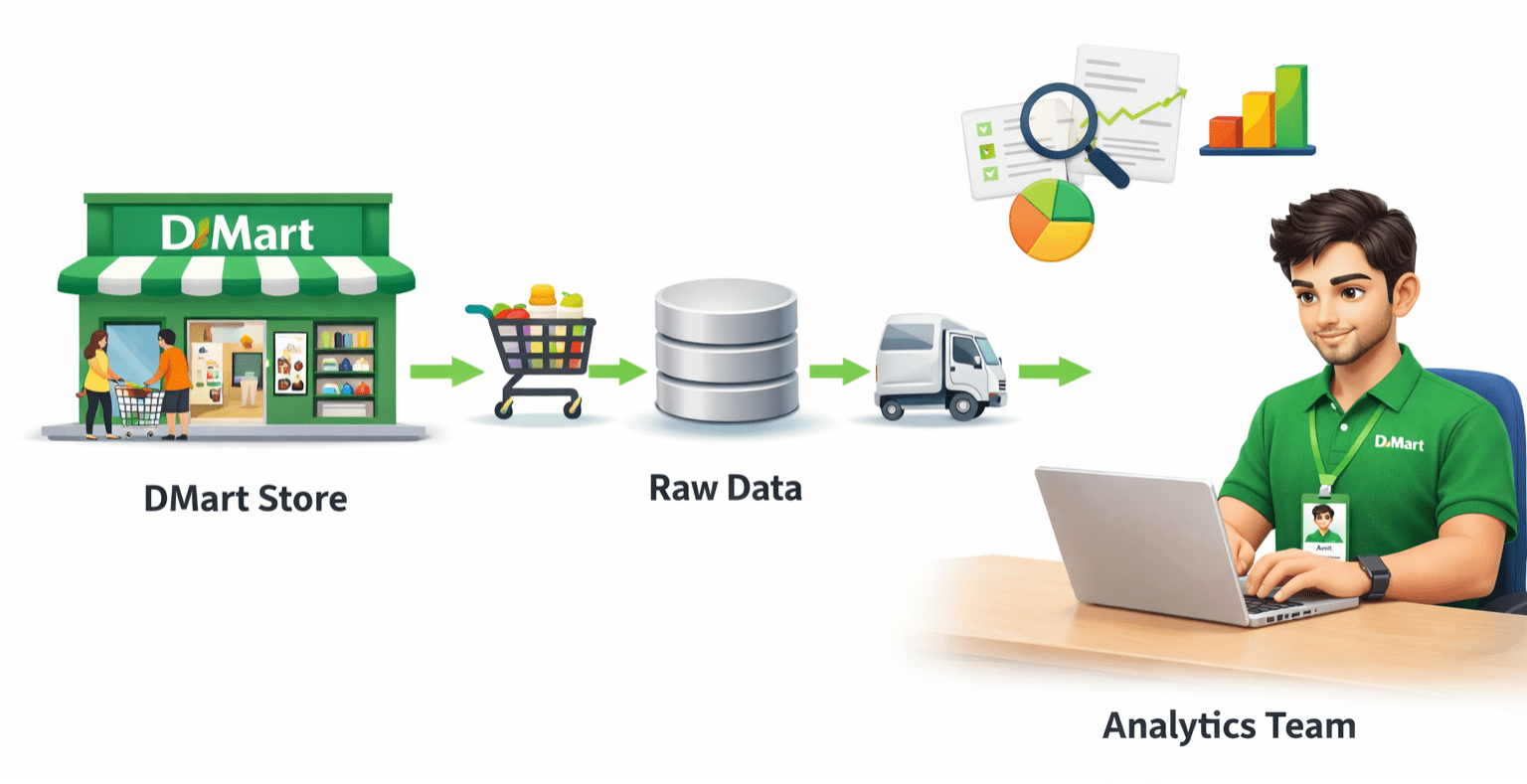
DMart operates across Multiple regions and sells products from different categories. Every Transaction - From Customer.
Purchase to delivery is recorded in the company internal system.This raw data is shared with the Analytics Team to track performance, identify trends and support business decisions.
Your Manager Provides you with the sales Dataset and explains that
Before Performing any analysis, your first responsibility is to:
Pre-Lab Preparation
1) Introduction to Data
2) Introduction to Git
In this task, you will begin by understanding the business problem and the structure of the dataset provided to you. This is a crucial first step in any data analysis workflow.
Task 1: Understand Business Context and Dataset Structure
Access the Dataset
1
Data set link - DeMart Dataset
Observe the Dataset Layout
2
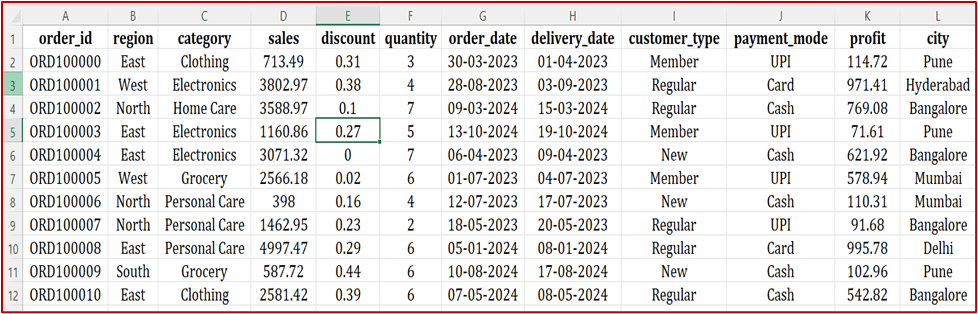
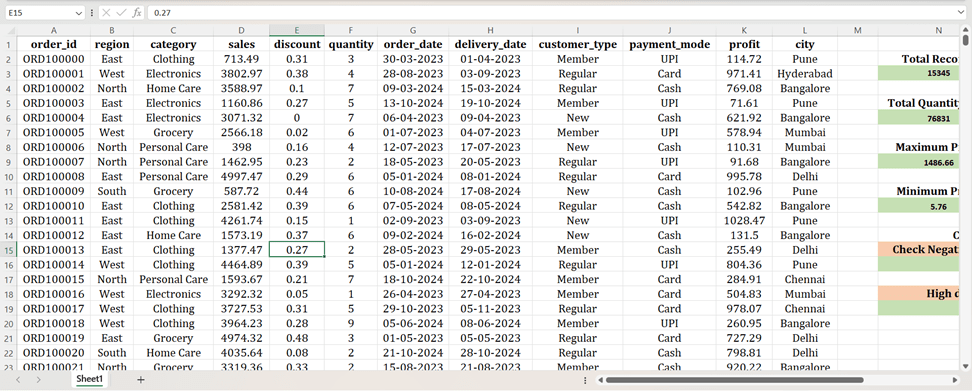
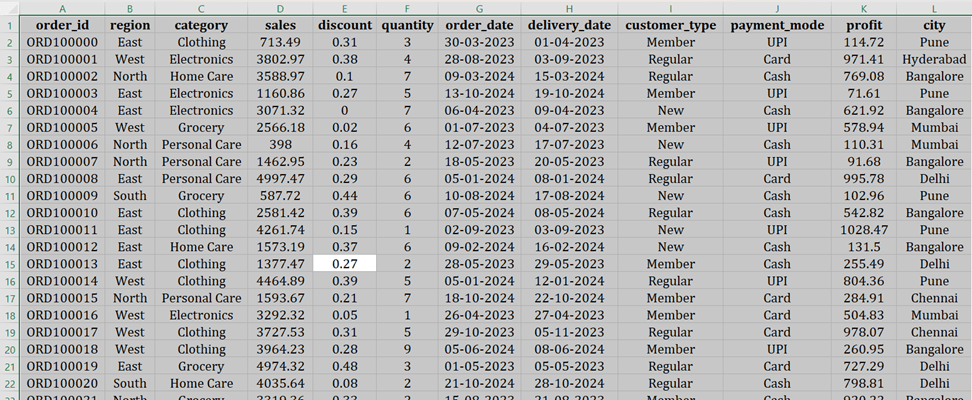
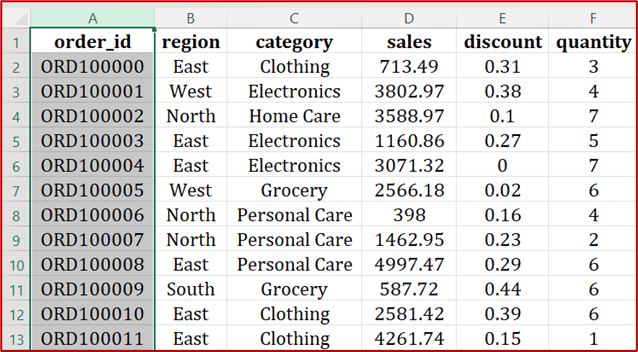
Once the dataset is open in Excel or Google Spreadsheet.Observe how the data is structured:
Observe the Dataset Layout
2
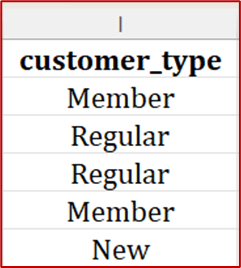
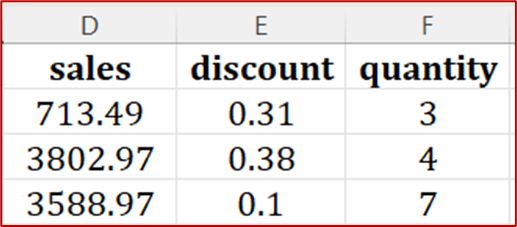
Carefully observe the dataset and understand what each column represents:
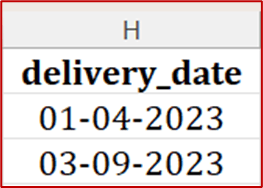
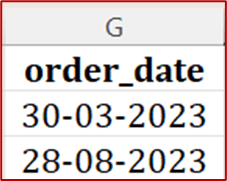
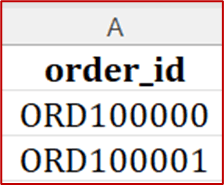
Order Information: order_id, order_date, delivery_date
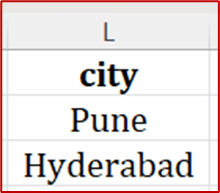
Location Information: region, city
Product Information: Category
Sales Metrics: sales, quantity, discount, profit
Customer Details: Customer_type
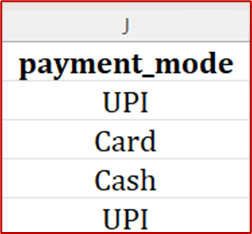
Transaction Details: payment_mode
Task 1: Explore Dataset to Identify Records, Regions, Product Categories, and Key Fields
In this task, you will actively explore the dataset using Excel to extract basic but important information.
This step helps you understand the scale, coverage, and structure of the data before performing any analysis.
Find Total Number of Records
Select the Dataset and Click on any cell inside the dataset.
1
Press Ctrl + A to select the entire data
2
Count Total Rows
3
Formula
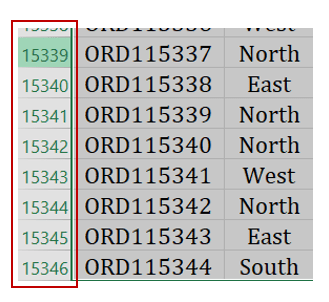
Total Records = (Last Row Number - 1) [(Exclude header row)]
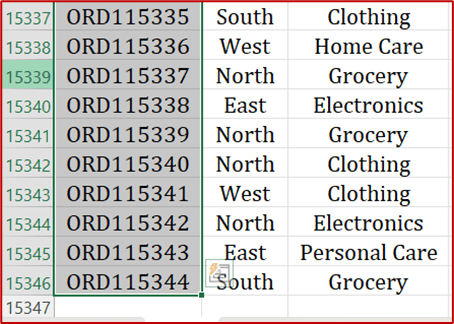
Alternatively Click on any column with continuous data (e.g., order_id)
4
Press Ctrl + Shift + ↓ and Observe the row number at the bottom
5
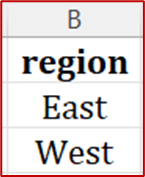
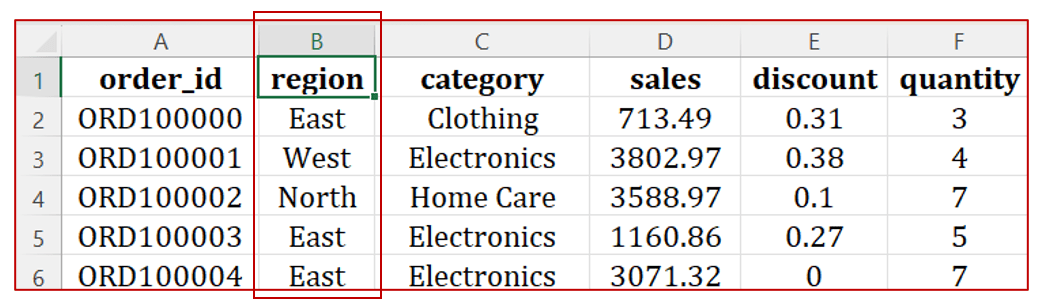
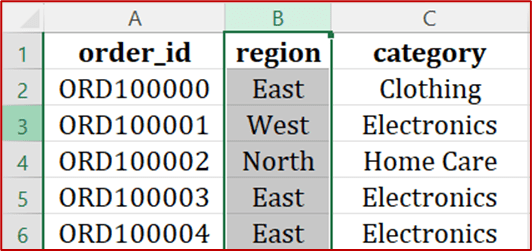
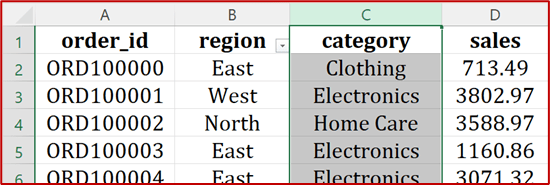
Locate Region Column and Find the column named region
6
Identify Unique Regions
Select the header row
7
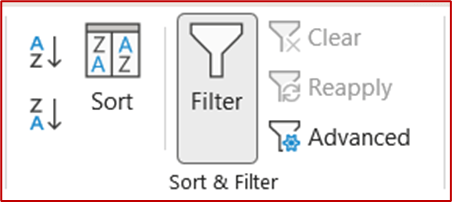
Go to Data Tab → Filter
8
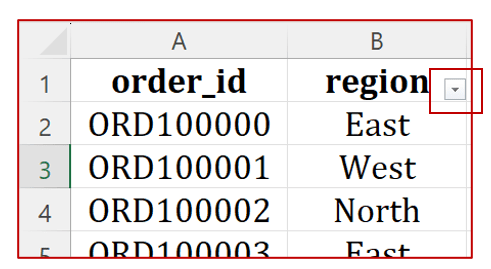
Click on filter, filter will be added to region column
9
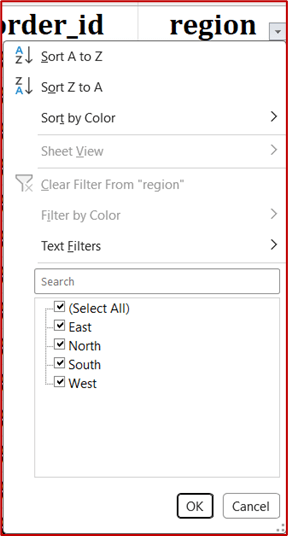
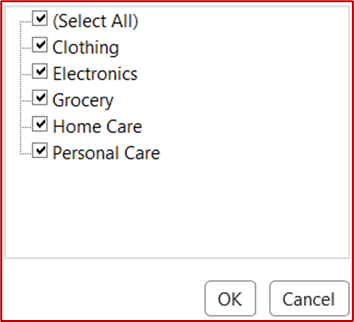
To View Unique Values, Click the filter dropdown as shown in above image on region and Observe all unique region names
10
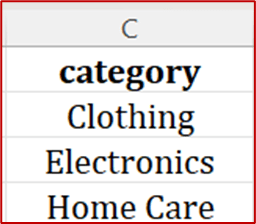
Locate Category Column
11
Apply Filter as discussed above and Click the filter dropdown on category
12
Identify Product Categories
Observe Values and note all unique categories available such as Clothing,Electronics,Grocery,Home Care and Personal Care.
Observe Header Row of the dataset
13
Read Column Names and Categorise Fields
14
Identify Available Fields (Columns)
Task 3: Apply Git Version Control (Setup, Upload, and Manage Changes)
After explaining the dataset, your manager adds that,
“In our team, we don’t just work on data locally. Every dataset, report, and analysis is managed and shared
through version control systems like Git. This helps us track changes, collaborate efficiently,
and maintain proper documentation.”
and maintain proper documentation.”
You are informed that:
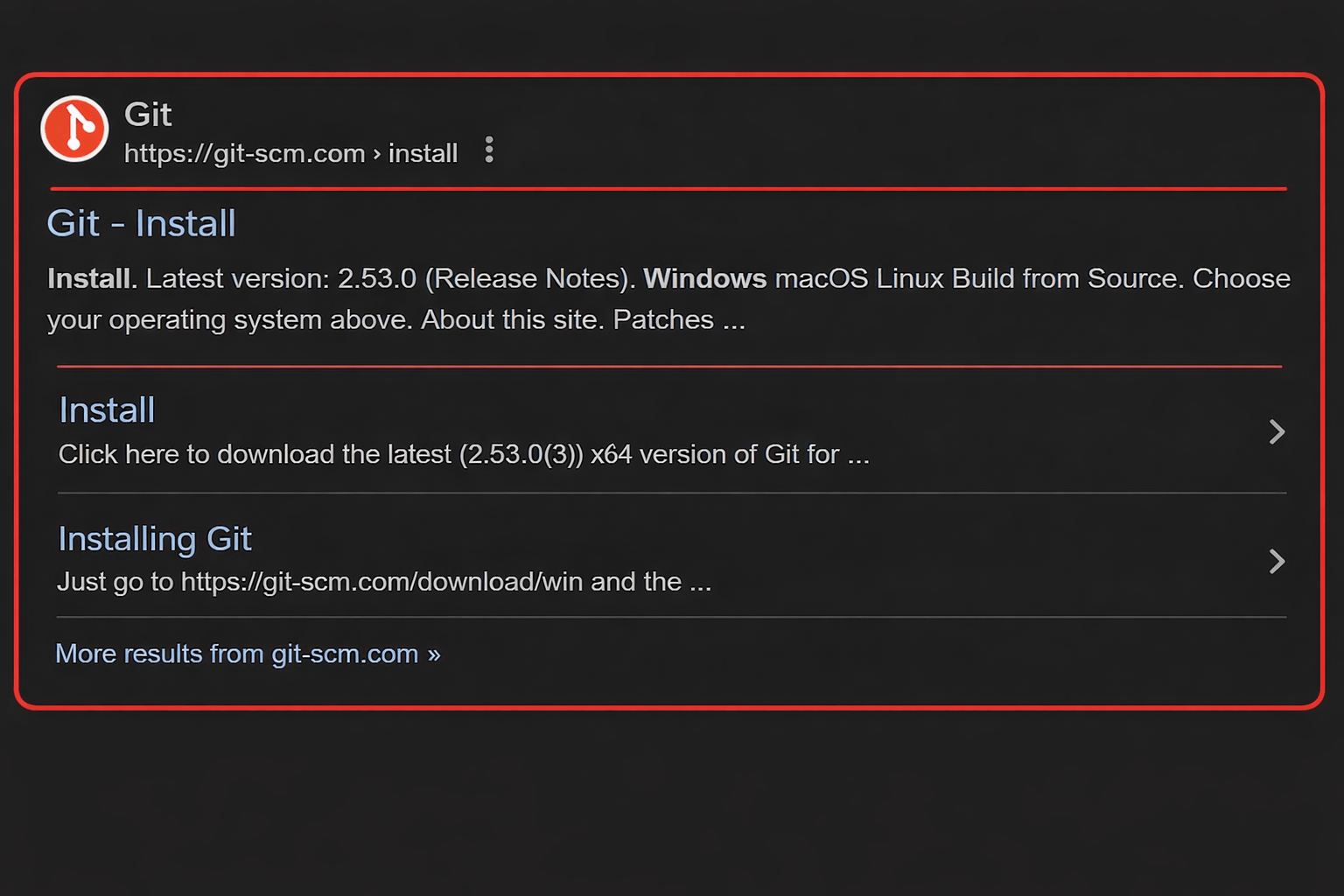
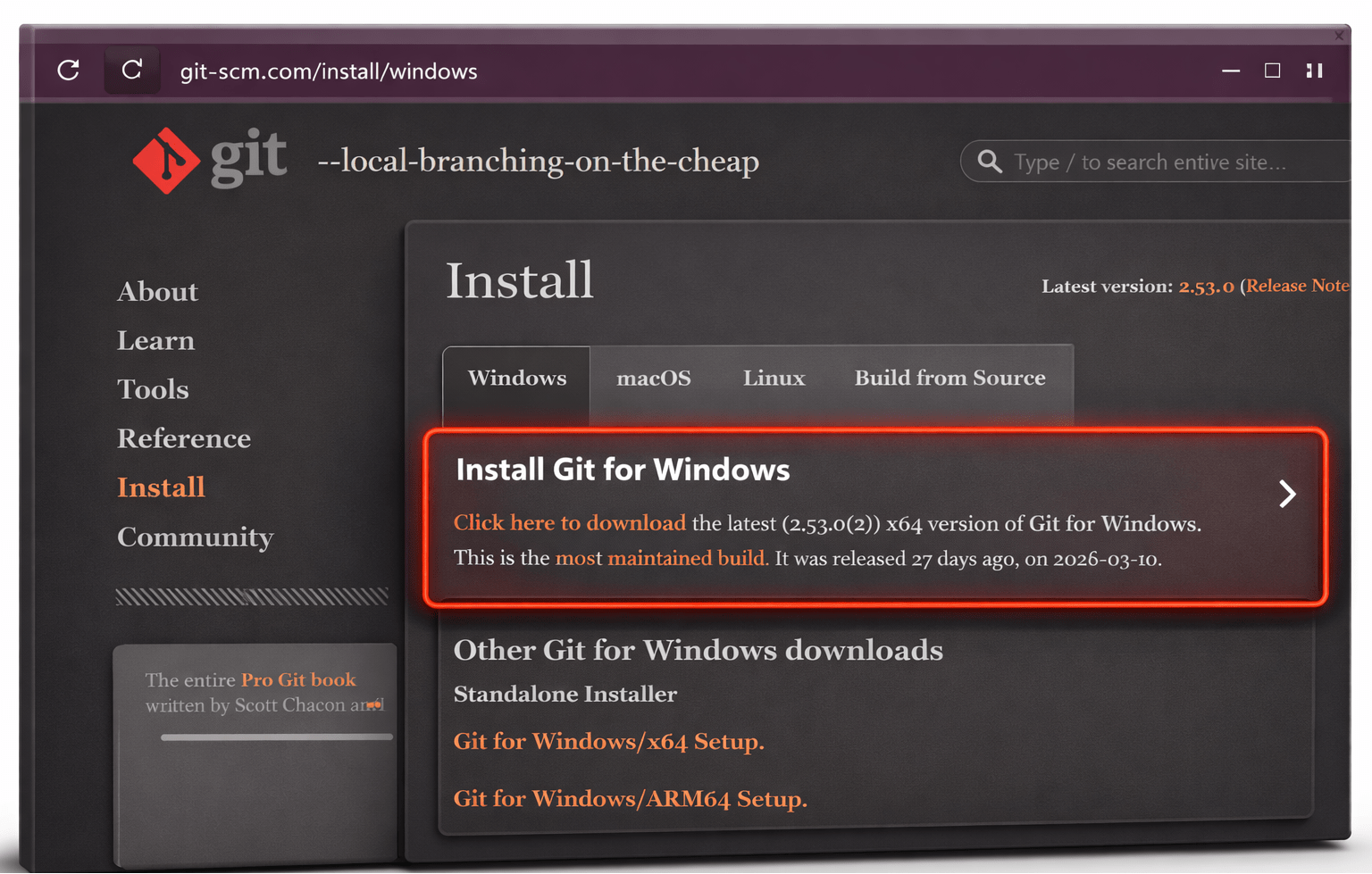
Search on google how to install Git
1
Select the Git install showed in the below image , it will redirect you to install section.
2
Select the Git install as per the operating system. In this case we are assuming Operating system to be Windows hence selecting install Git for windows Option.
3
After downloading you can See Git on your Machine
4
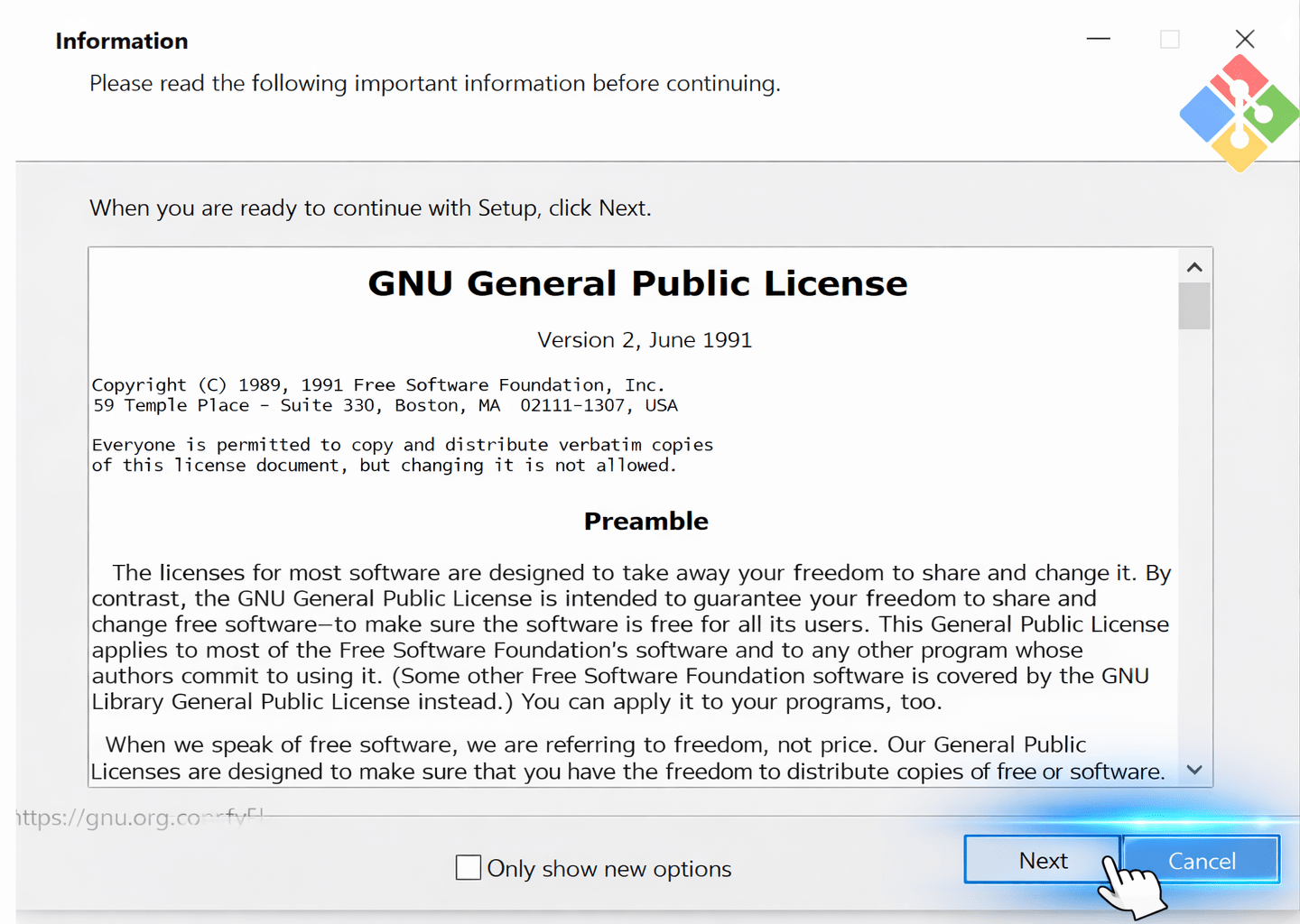
After clicking on that follow the instruction,Click on Next button
5
Click On this
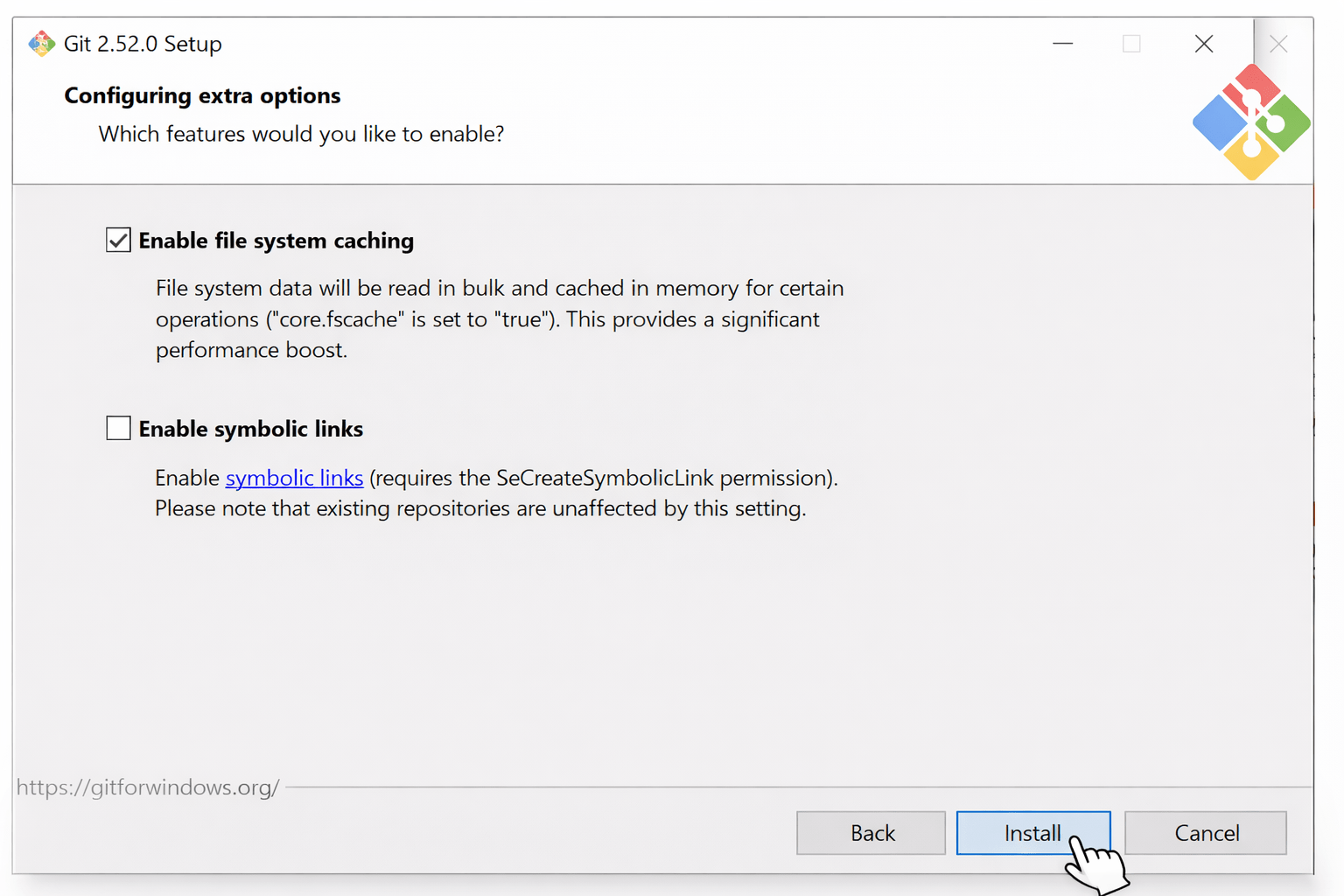
Click on install Button
6
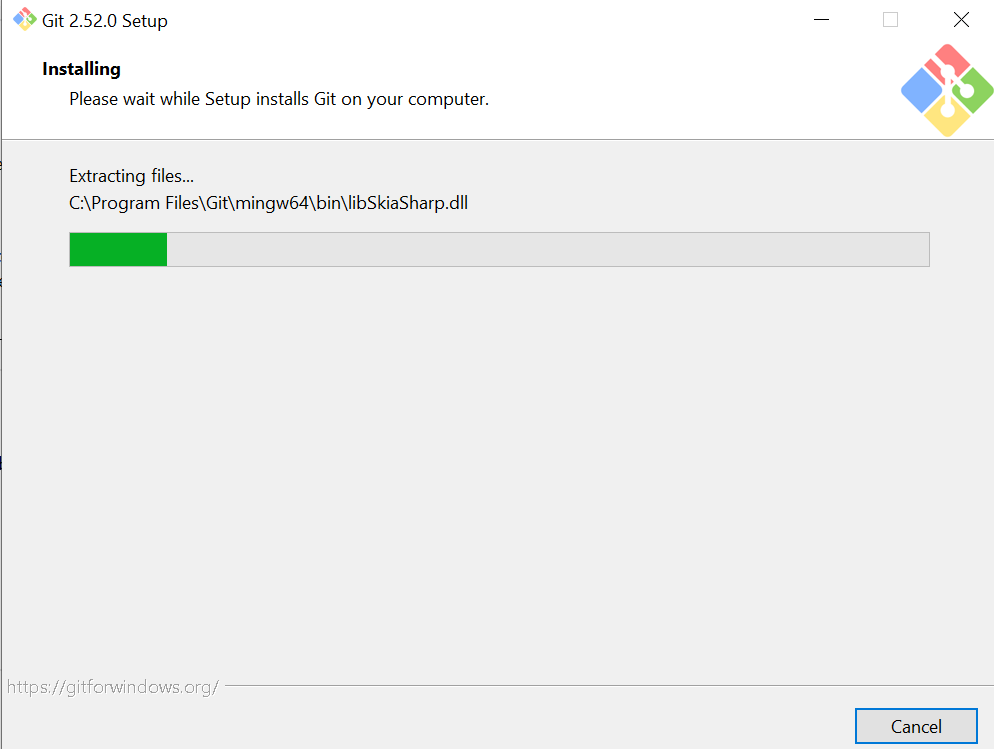
After Click on the Install you See Installation starts
7
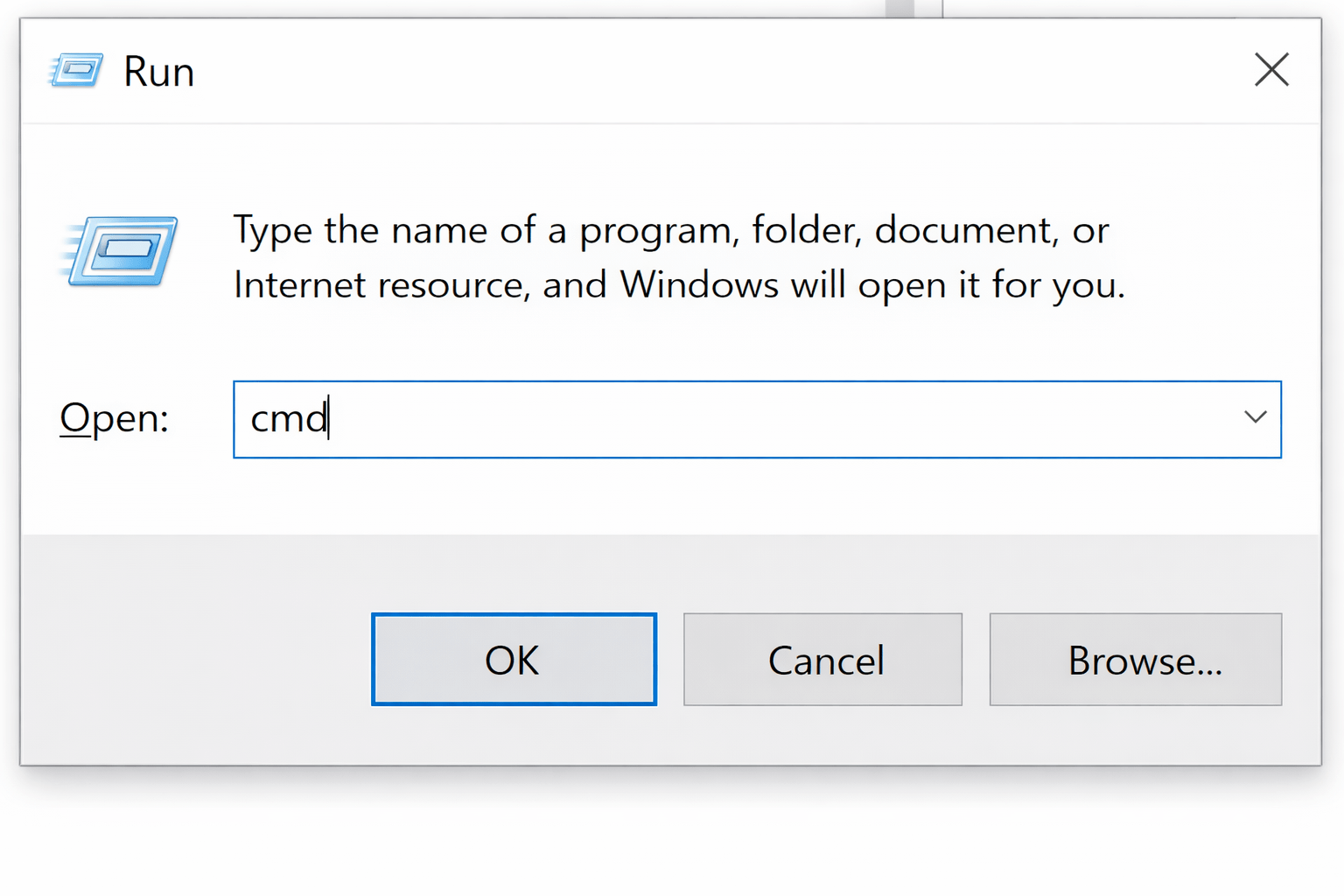
Open CMD as shown below
8
Type "git --version" as shown below and hit enter button. If you are able to see version number of install git software then its signify that installation was successfully completed on your Machine.
9
Task 1: Understanding BRD
Before you start building anything, you need to clearly understand what the client actually wants.So, let’s begin by understanding the BRD (Business Requirement Document) shared by the client.
BRD Full Form is Business Requirement Details.BRD like a plan for building a house. This plan helps the builder understand what to build.In the same way,BRD tells developers what the client wants to build
Click to download BRD : BiteBox_BRD.pdf
Activity
After going through BRD list down the Core Features and Web Pages in the tabulated Format as shown Below.
| Col 1 | Col 2 | Col 3 |
|---|---|---|
| Row 1 | ||
| Row 2 | ||
| Row 3 |
Formula
Profit = Revenue - Cost
Task 2: Create WireFrame
Now that you understand the requirements, don’t jump into coding yet. Before development, we always visualize the layout.
Now lets create a simple wireframe for the homepage.
A wireframe is like a layout plan of a house. Before building, you decide where rooms, doors, and windows will be placed.Similarly, a wireframe helps you plan where elements like headers, images, and buttons will appear on a webpage—before adding design or colours.
Task 3: Code Editor Installation
Good work on completing the planning phase.
Now we will start development. Before that, make sure your system is ready with the required tools.
In this step we will install the VS code editor that will help to Write code efficiently,Organize files , Run and test your application
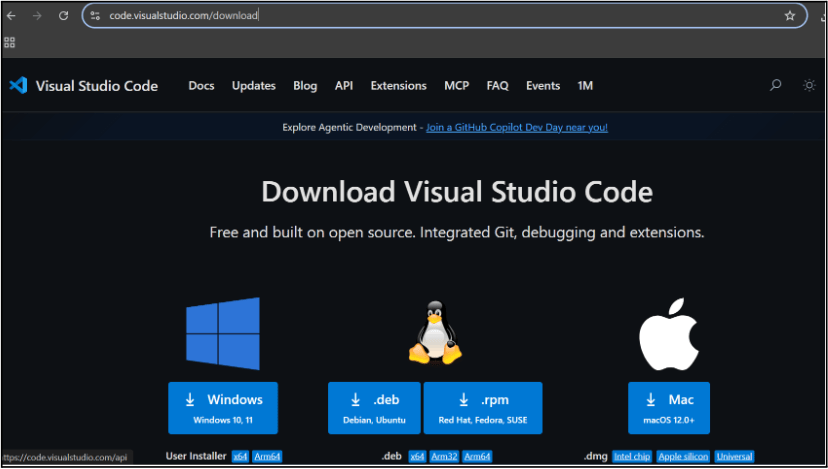
Go to the visual studio code official website
1
Click to download Homepage Wireframe : Homepage Wireframe
Choose your operating system(windows / Mac) and download the installation file.
Double click on the download app and Accept the agreement and click next
2
It is a long established fact that a reader will be distracted
b
Sub Steps
a
Double click on the download app and Accept the agreement and click next
public class MathSample {
    public static void main(String[] args) {
        int x = 10;
        int y = 20;
        int sum = x + y;

        System.out.println("The sum is: " + sum);
    }
}
public class MathSample {
public static void main(String[] args) {
int x = 10;
int y = 20;
int sum = x + y;
System.out.println("The sum is: " + sum);
}
}
public class MathSample {
public static void main(String[] args) {
int x = 10;
int y = 20;
int sum = x + y;
System.out.println("The sum is: " + sum);
}
}
Great job!
You have successfully completed your first lab on BiteBox Project Onboarding.
In this lab, you have: Understood the BRD, Created a wireframe, Set up your development environment, Organised your project structure, Run your first program
You are now ready to move to the next stage of development
Checkpoint
Next-Lab Preparation
Git Push
git push origin branchNameTopic : Working with a Text and Listin HTML
1) Power of HTML text tags
2) Customizing your style with CSS
3) Listing it right using HTML
4) HTML Link up , attributes of tag, block vs inline elements
Text box Width : 887
Business Scenario, Pre-lab Preparation, Next-lab Preparation, Task, Activity, Checkpoint : 90%.
Steps : 1,2,3 [Sub Steps - a,b,c]
Normal Text, Topic Name : 80%
Subtopic : 70%
Code Box font Size : 16px
By Content ITV