





Content ITV PRO
This is Itvedant Content department
Learning Outcome
5
Recognize the legal & ethical responsibilities in network scanning.
4
Interpret different port states reported by scanning tools.
3
Differentiate between various host discovery and port scanning
2
Understand importance of identifying active hosts on a network.
1
Explain the concepts of Host Discovery and Port Scanning.
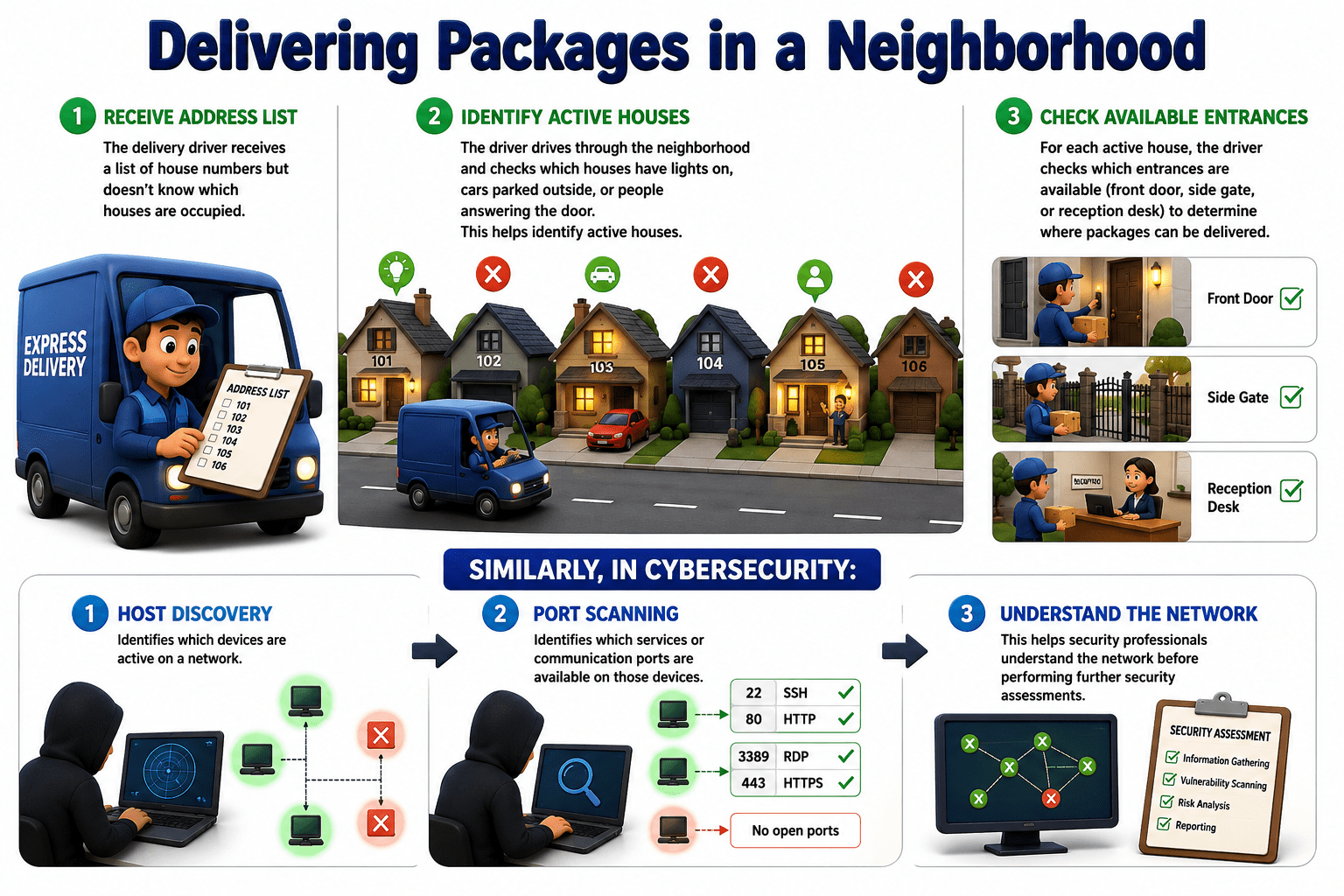
“Delivering Packages in a Neighborhood”
IDENTIFY ACTIVE HOUSES
The driver drives through the neighborhood and
checks which houses have lights on, cars parked outside, or people answering the door.
This helps identify active houses.
Next, for each active house, the driver checks which entrances are available, such as the front door, side gate, or reception desk
HOST DISCOVERY
Identifies which devices are
active on a network.
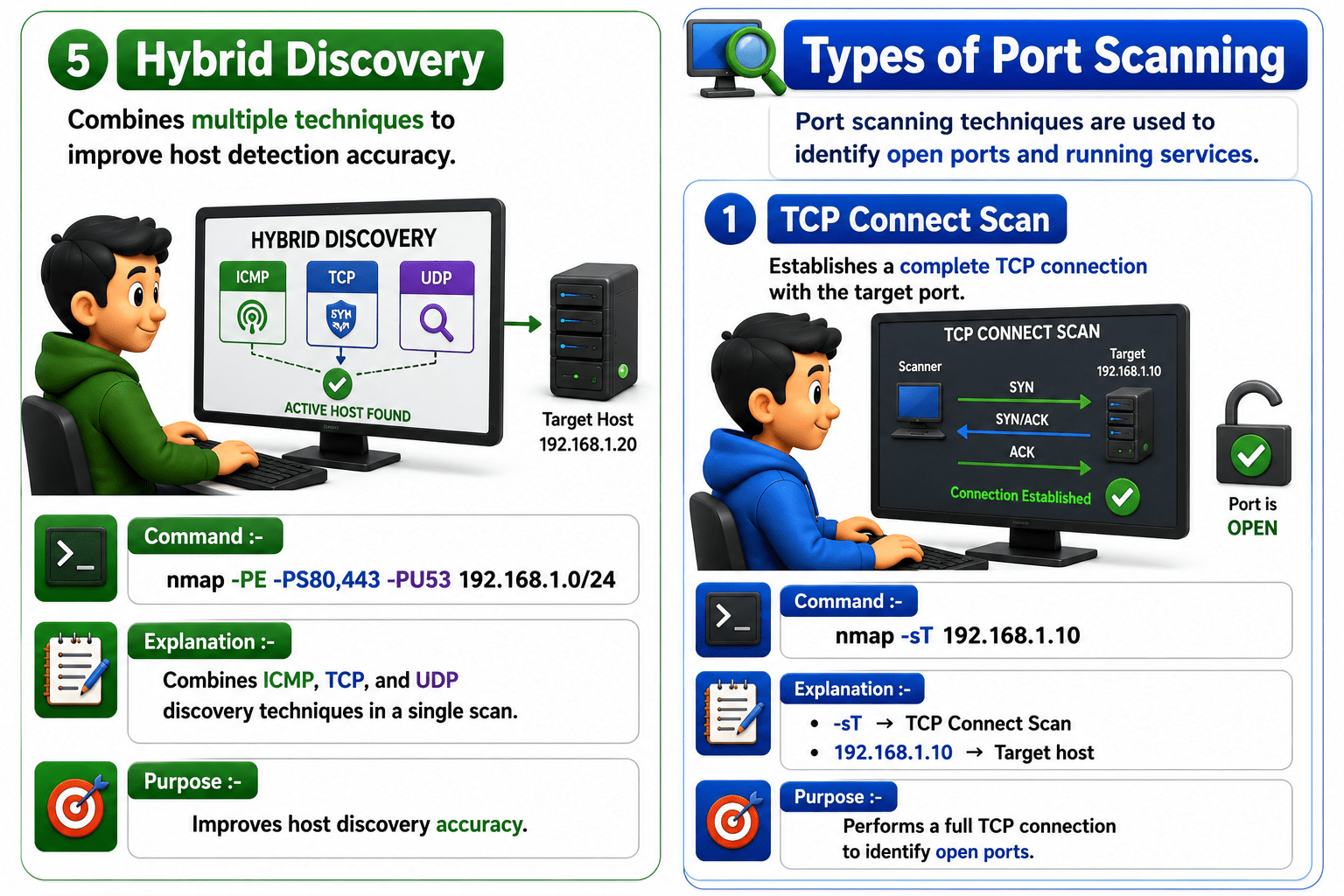
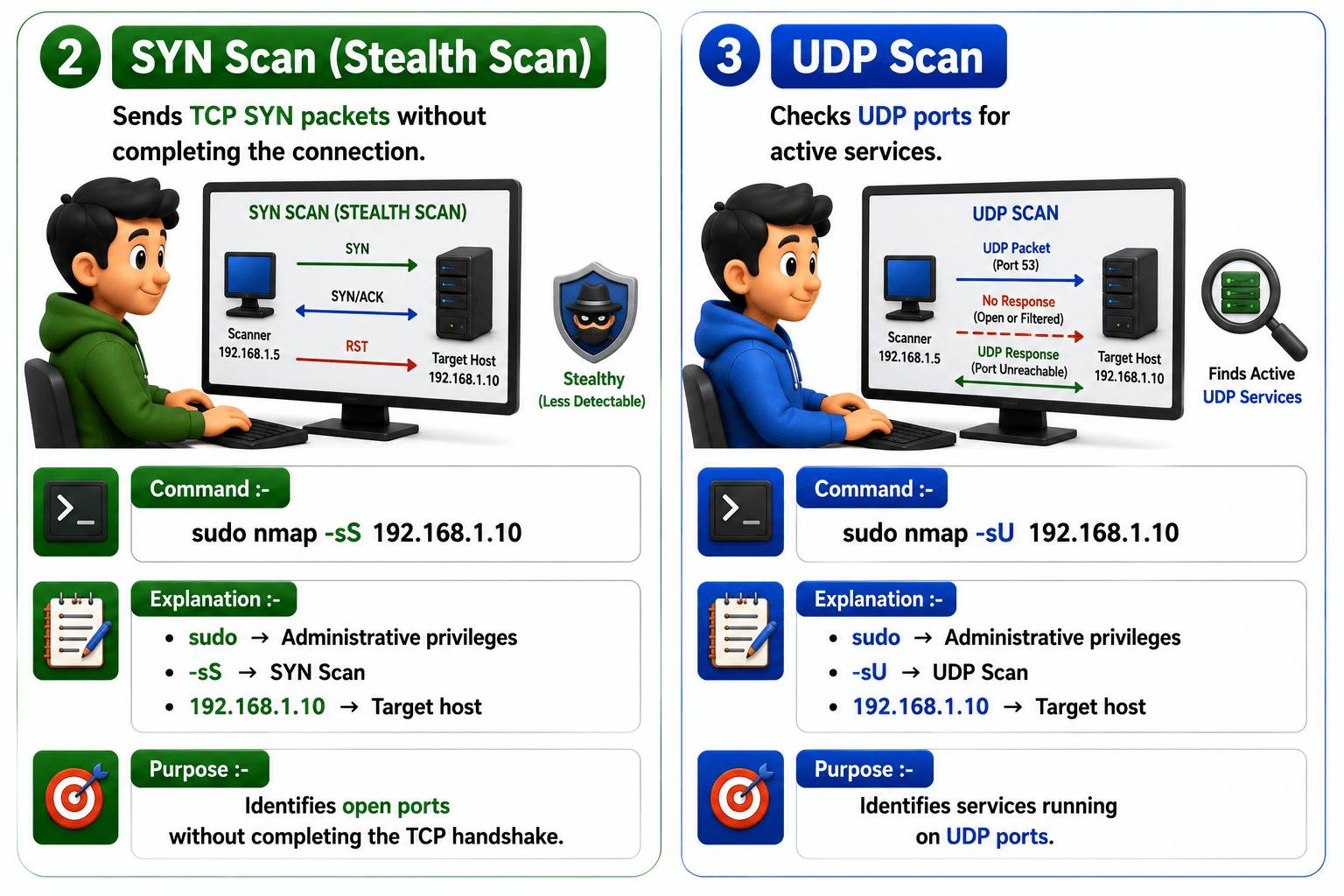
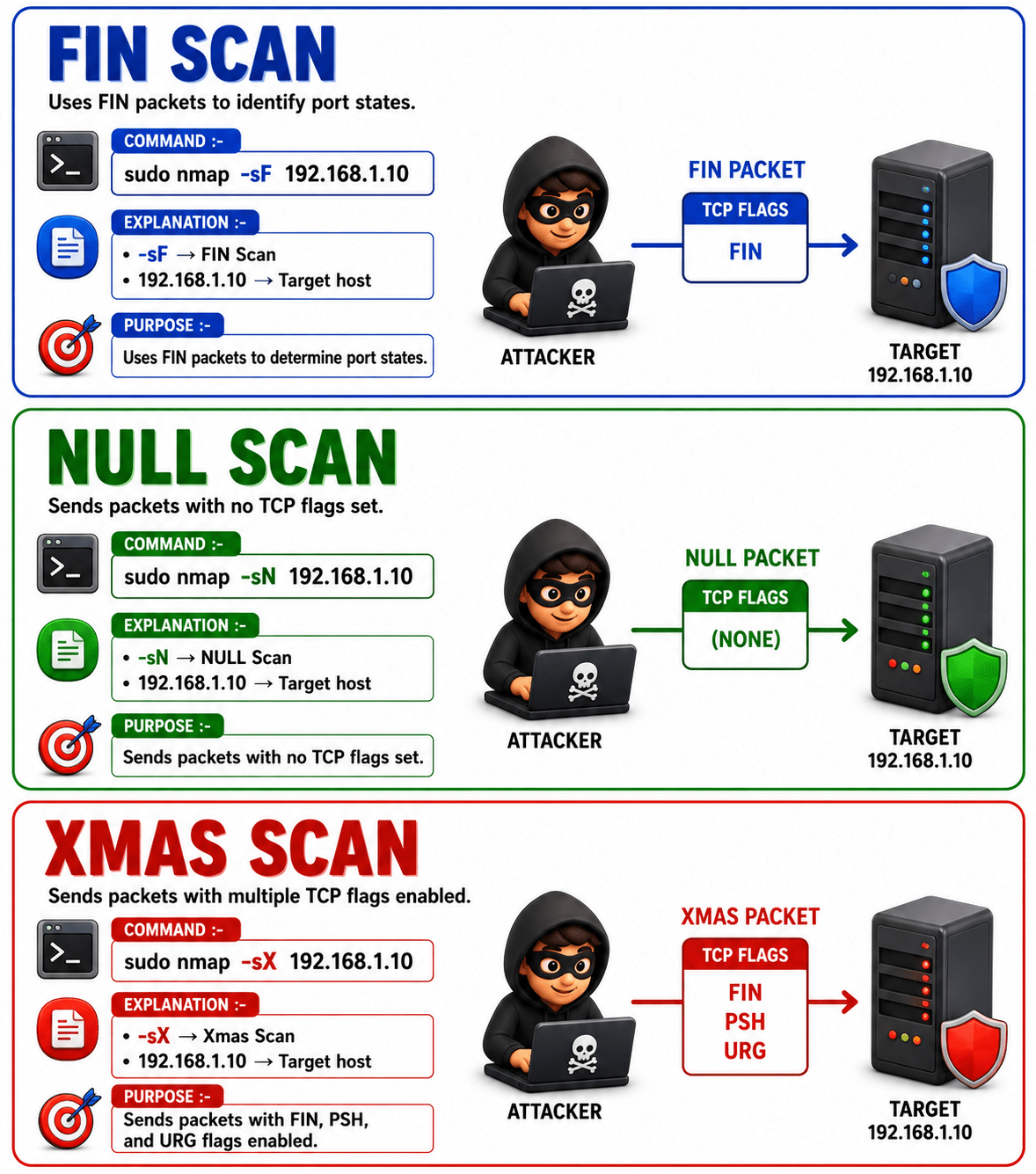
PORT SCANNING
Identifies which services or
communication ports are
available on those devices.
UNDERSTAND THE NETWORK
This helps security professionals
understand the network before
performing further security
assessments.
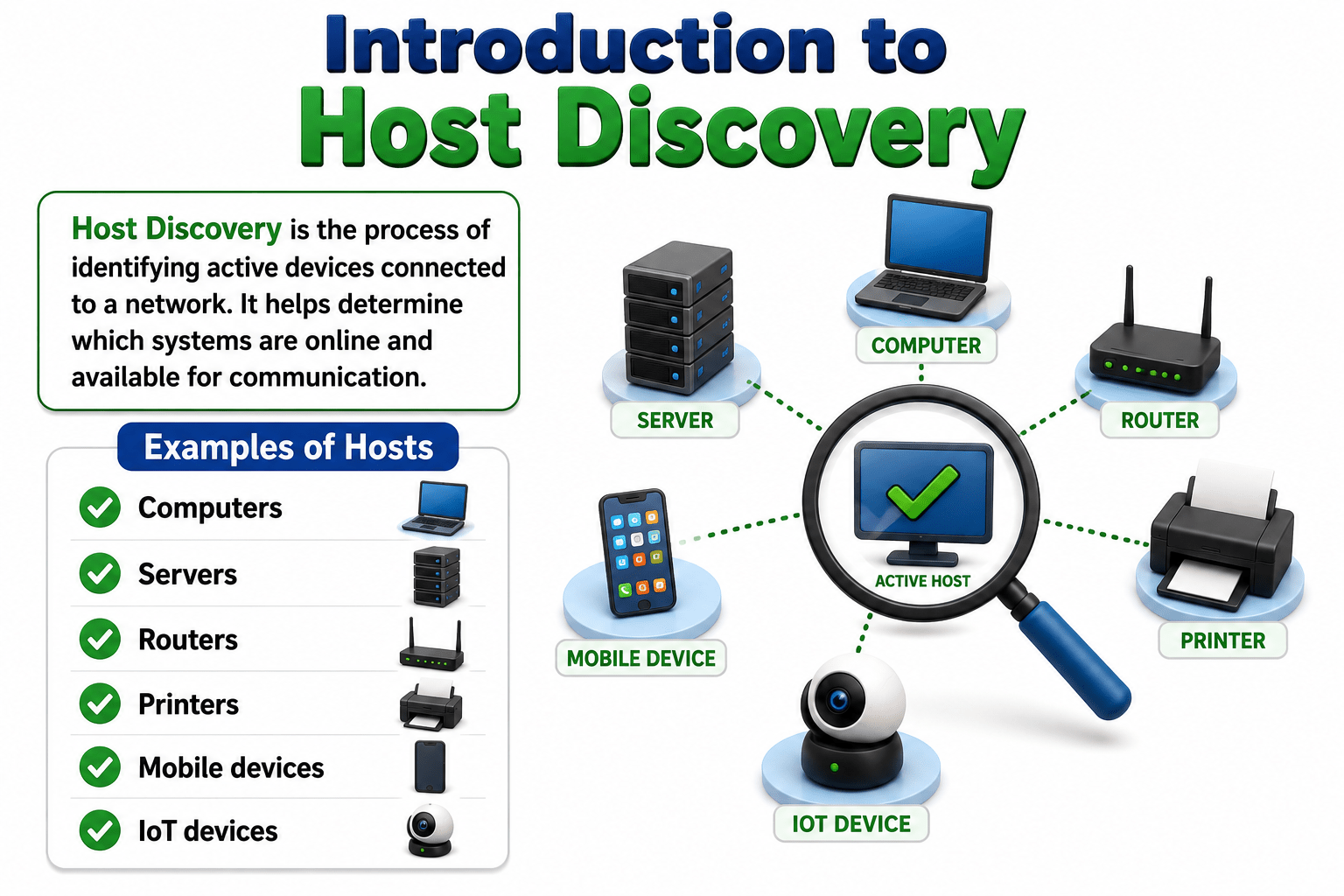
Host Discovery is the process of identifying active devices connected to a network. It helps determine which systems are online and available for communication.
Examples:-
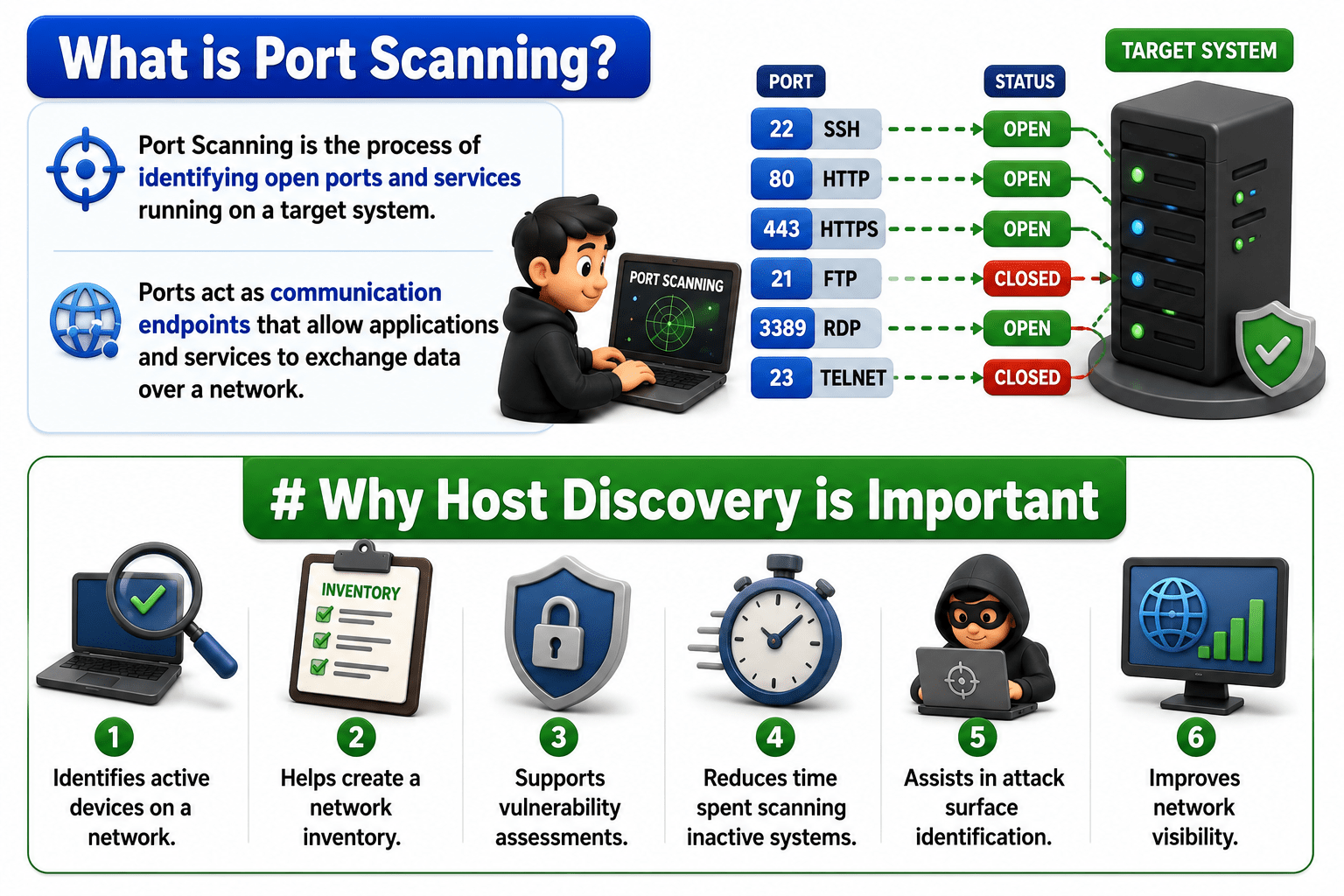
Why Host Discovery is Important
Identifies active devices on a network.
Helps create
a network inventory.
Supports vulnerability assessments.
Reduces time spent scanning inactive systems.
Assists in attack surface identification.
Improves network visibility.
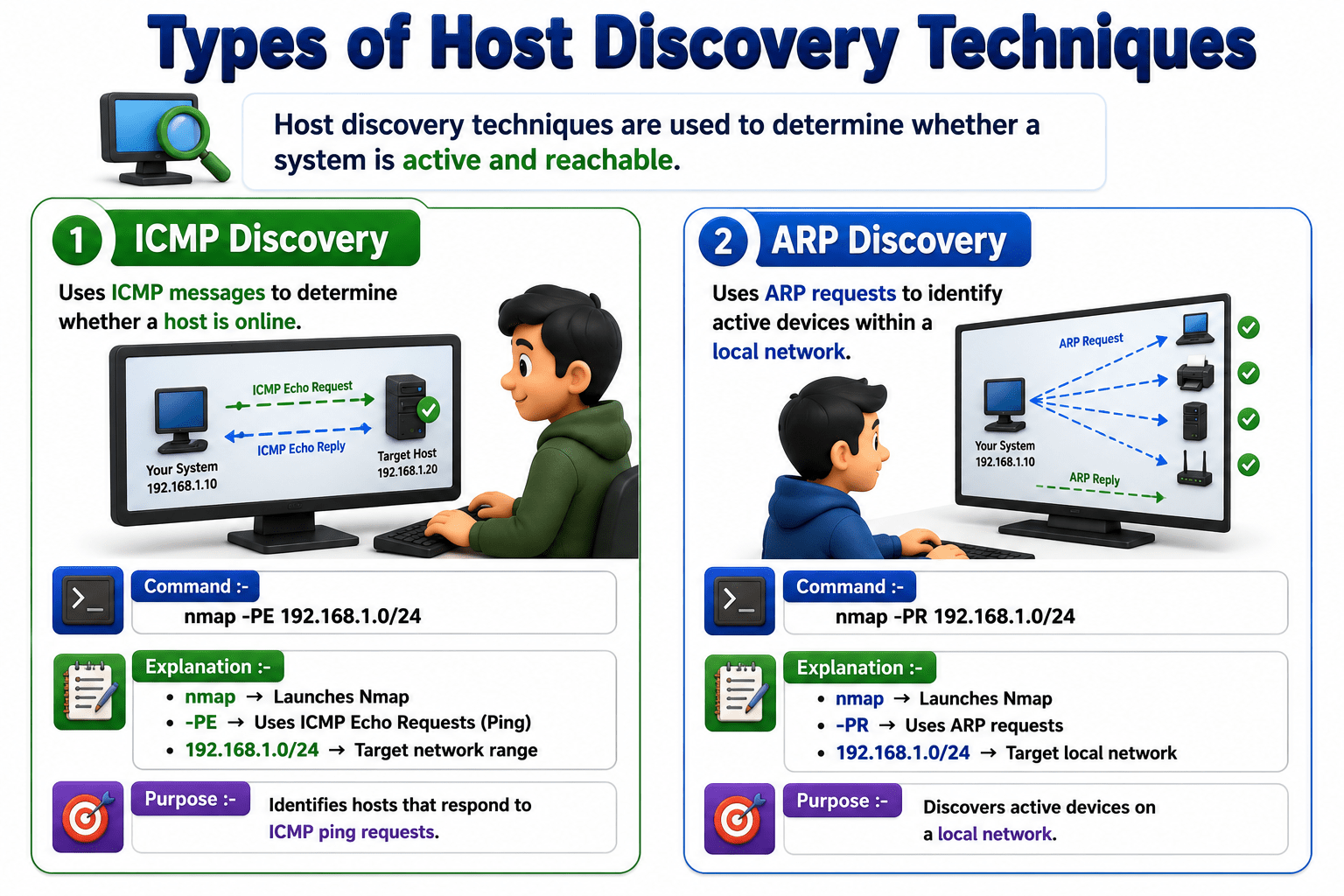
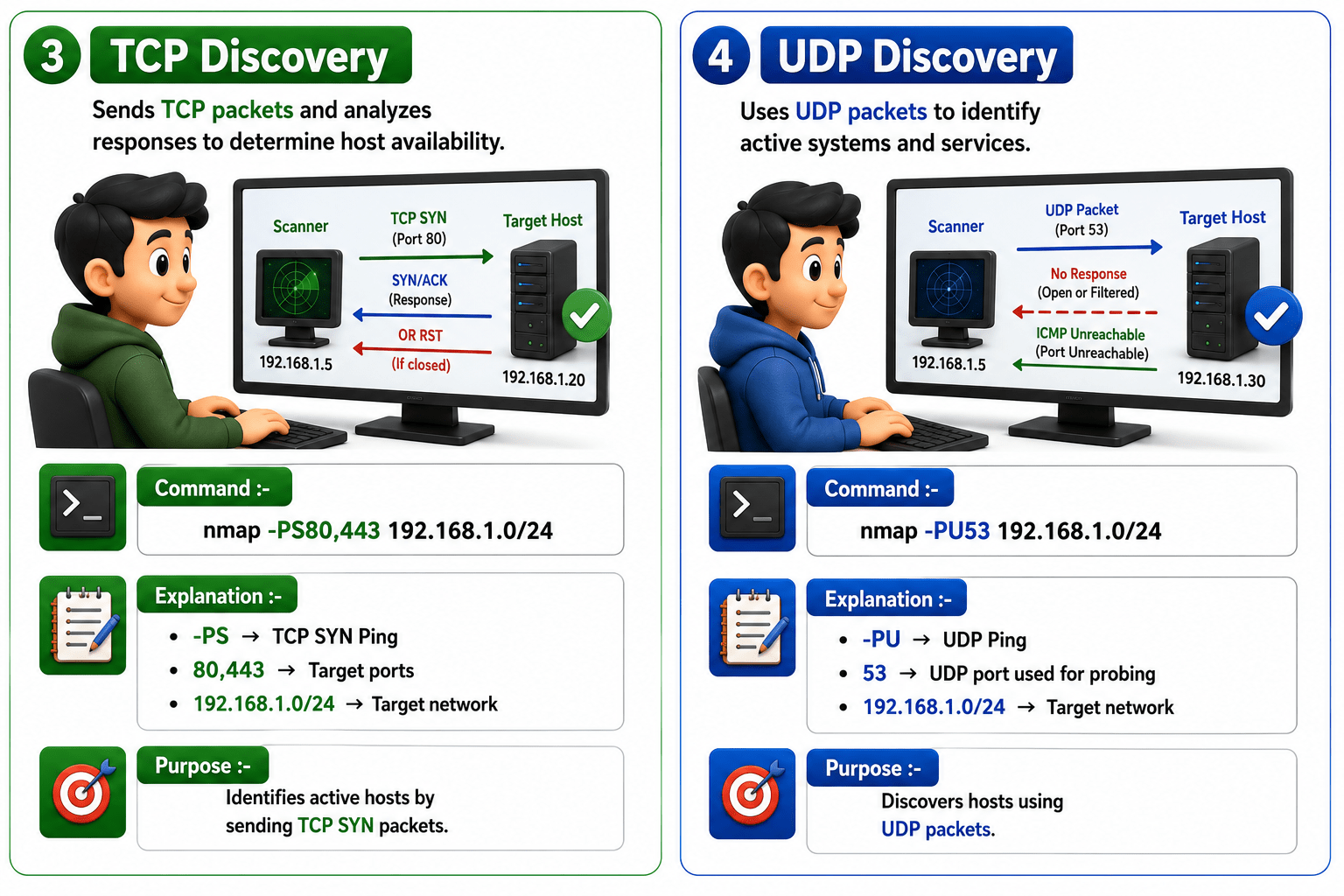
Host discovery techniques are used to determine whether a system is active and reachable.
Open|Filtered :- The scanner cannot determine whether the port is open or filtered.
Closed|Filtered :- The scanner cannot determine whether the port is closed or filtered.
Closed :- The port is accessible but no service is listening.
Open :- A service is actively listening on the port.
Unfiltered :- The port is reachable, but its state cannot be determined.
Filtered :- A firewall or security device is blocking access.
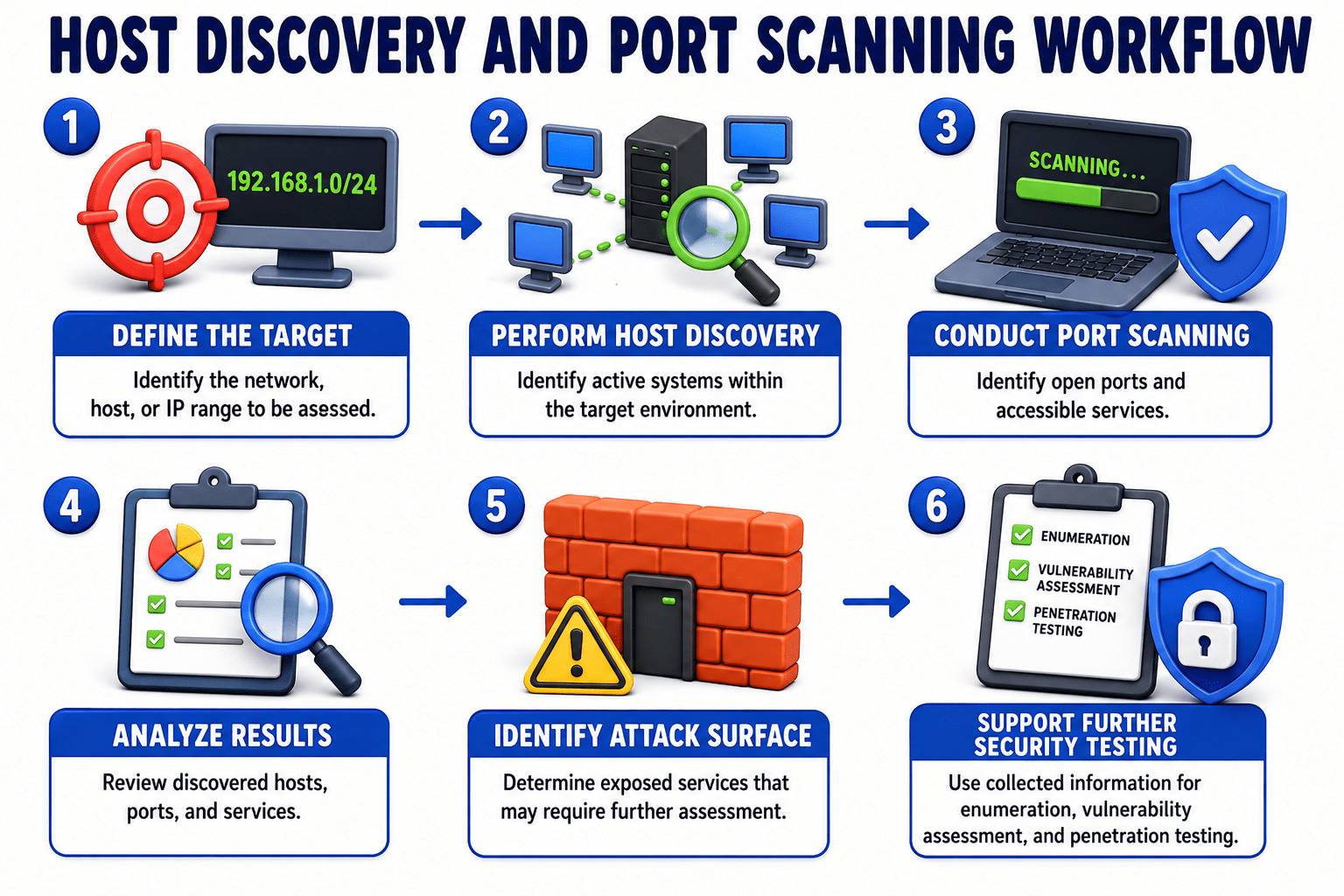
Define the Target :-
Identify the network, host, or IP range to be assessed.
Perform Host Discovery :-
Identify active systems within the target environment.
Conduct Port Scanning :-
Identify open ports and accessible services.
Host Discovery and Port Scanning Workflow
Support Further Security Testing :-
Use collected information for enumeration, vulnerability assessment, and penetration testing.
Analyze Results :-
Review discovered hosts, ports, and services.
Identify Attack Surface :-
Determine exposed services that may require further assessment.
Follow applicable cybersecurity laws and regulations.
Protect collected information from unauthorized access.
Maintain confidentiality of scan results.
Document scanning activities appropriately.
Use scanning tools only for legitimate security purposes.
Obtain proper authorization before performing scans.
Stay within the approved scope of testing.
Avoid disrupting systems or services.
Ethical and Legal Considerations
Summary
5
Port states help determine service availability and accessibility.
4
Common ports provide access to specific network services.
3
Multiple techniques can be used for host and port discovery.
2
Port Scanning identifies open ports and running services.
1
Host Discovery identifies active devices on a network.
Quiz
What is the primary purpose of Host Discovery?
A. Crack passwords
B. Identify active devices on a network
C. Install software
D. Capture packets
Quiz
What is the primary purpose of Host Discovery?
A. Crack passwords
B. Identify active devices on a network
C. Install software
D. Capture packets
By Content ITV