Passing Time
Looking at Exciting Excrement
an introduction to animal scat in the Pacific North West
Gross. Why?
Because tracking is cool
-
and animal scat & sign are part of tracking
-
it adds to our awareness of our environment
-
we observe & interpret changes in our surroundings
Because animals communicate with scat
- this is my territory
- we are competing for territory
- I don't feel well
- I shouldn't have eaten that
- this is my den
- beware, I have cubs
Because animals communicate with scat
Because it tells us about the health of the environment
- How many animals?
- How diverse?
- Scavengers? Predators? A mix?
- Dehydrated? Stressed?
Scavenger scat may contain clues about people nearby
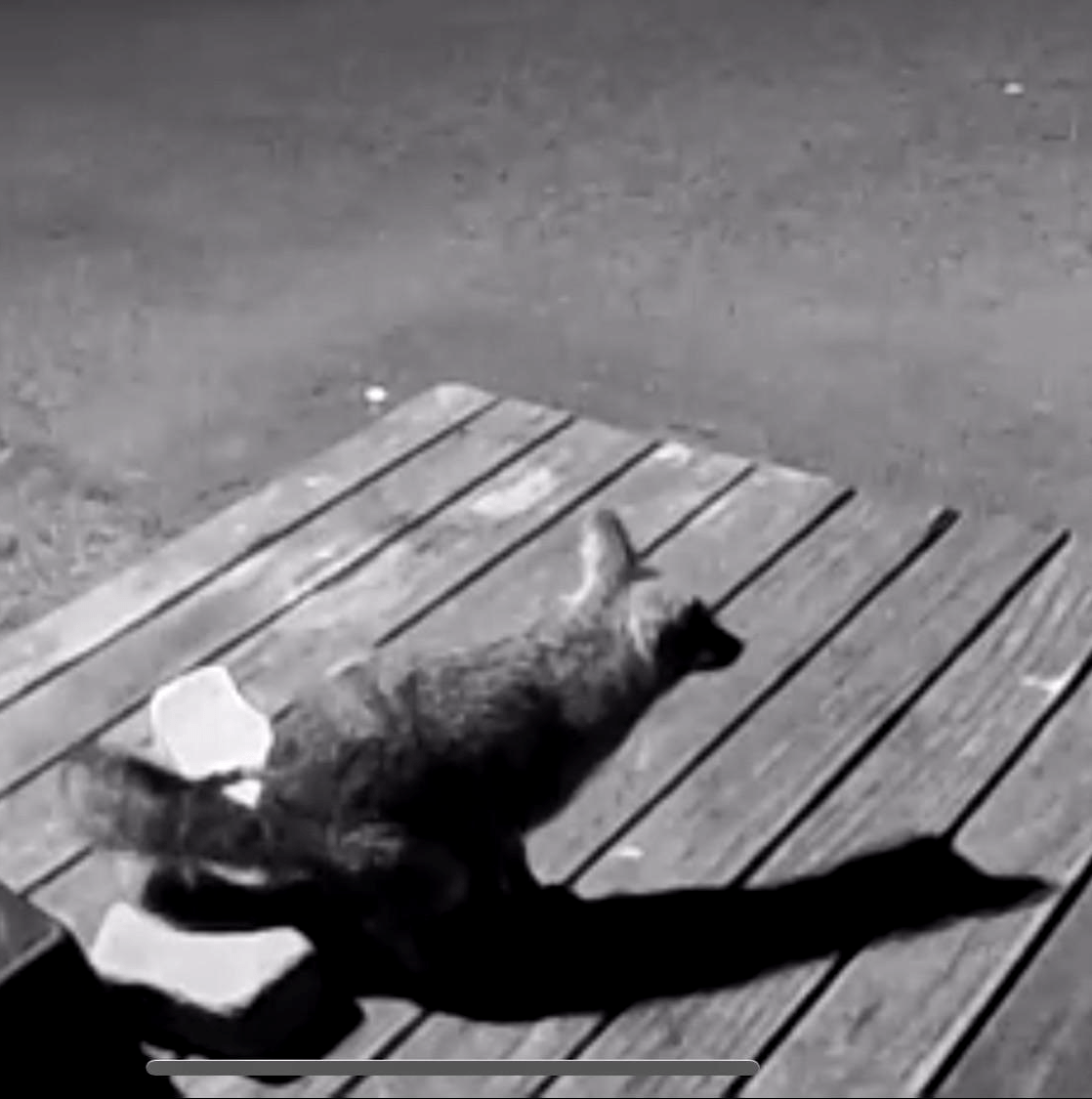
- Bears, coyotes, raccoons, and foxes will all eat human stuff to varying degrees
- Raid garbage cans, cars, food left out for dogs or cats, even bird feeders!
- May find wrappers or other identifying clues in the scat
- Are they becoming problem animals?
SAR
- Because people expect you to know your sh...poop.
- SAR trackers are supposed to know things about the wilderness
- "I only do human sign" is an okay but less fun answer
- How does the presence of some animals in the area change the outcomes for an injured or missing person?
- Recent animal scat may also decrease the likelihood of human activity in the area
- Do humans poop in the woods?
- Do animals scavenge human remains?
- ...or even predate on people?
SAR
- The presence of some animals may be relevant to a search for a missing person
- Fresh large predator scat may indicate a cause of disappearance for a missing person
- Should Fish & Wildlife or etc. be notified?
- If large predator scat contains fresh evidence of human remains, this is an IMMEDIATE safety issue
- SAR personnel should be evacuated from the area (be mindful of the animal's roaming range)
- Fish & Wildlife, Parks service, or other agency should handle it
- Dog handlers may appreciate a heads-up on what other animals are nearby
SAR
- Aging animal scat at or near a scene may help establish a timeline of events
- (certain animals are active at different times of day)
- if you can accurately age the scat, which can be tricky
SAR
- What canids are in the area?
SAR
- What canids are in the area?
- Coyotes
SAR
- What canids are in the area?
- Coyotes
- Wolves!
- Washington, Oregon, northern California
- 178 known wolves in Oregon in 2023 (all east of I-5)
- Possible recent sightings near Lake Tahoe
- OR 93 got as far south as Bakersfield
- https://yubanet.com/california/or93-found-dead-in-kern-county/
- Washington, Oregon, northern California
- Foxes
- Domestic dogs
- Stray dogs
Can you tell the difference?
Poop Quiz
Time for a ...

Poop Quiz
- Look at each picture for a few seconds
-
Write down your answer
- (Pro tip: go with your first impression)
- We will discuss the answers
- And then move on to the next picture
Photos were borrowed from authoritative sources, identified by multiple knowledgeable people, or identified with confidence
(but feel free to argue anyway!)
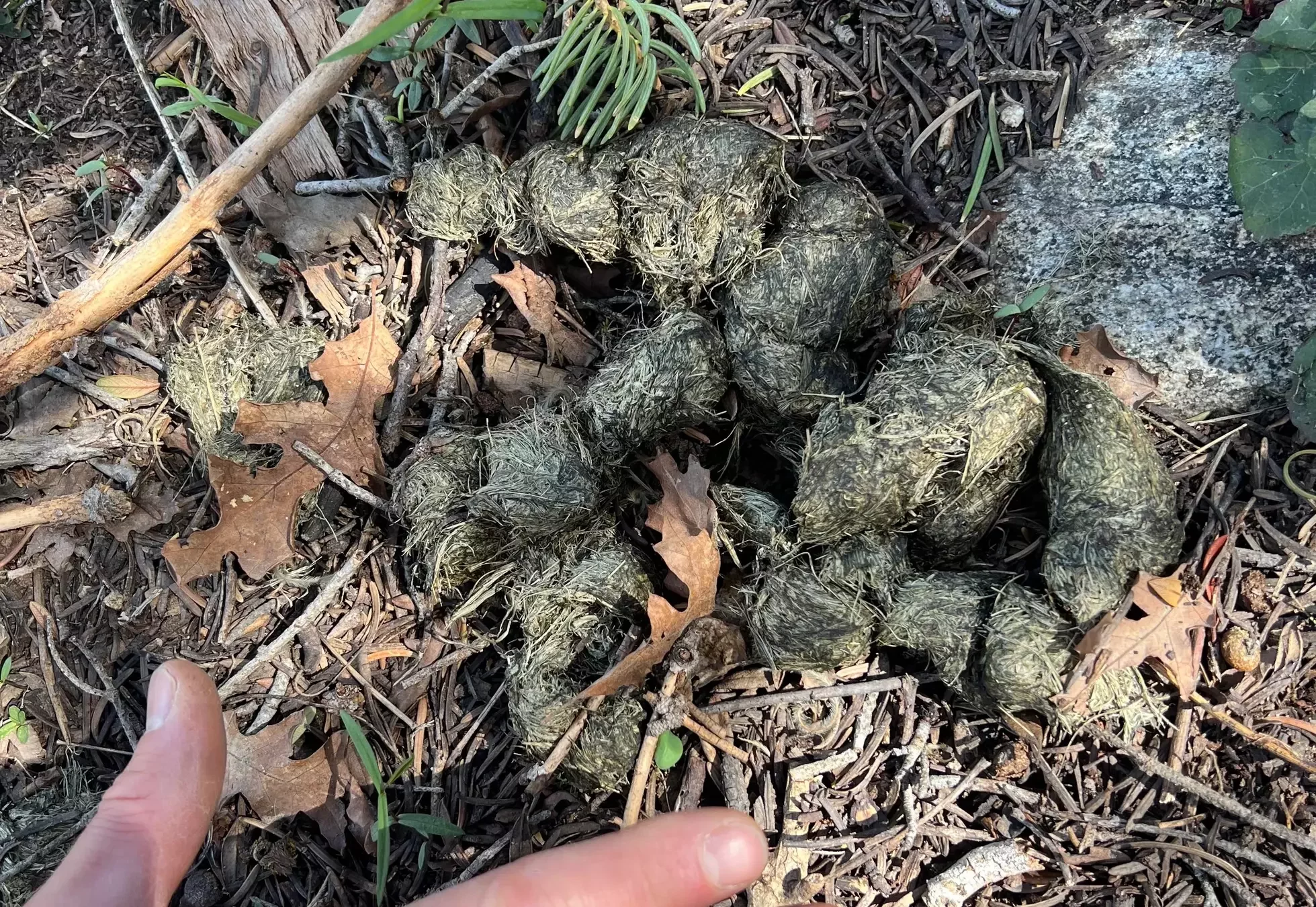
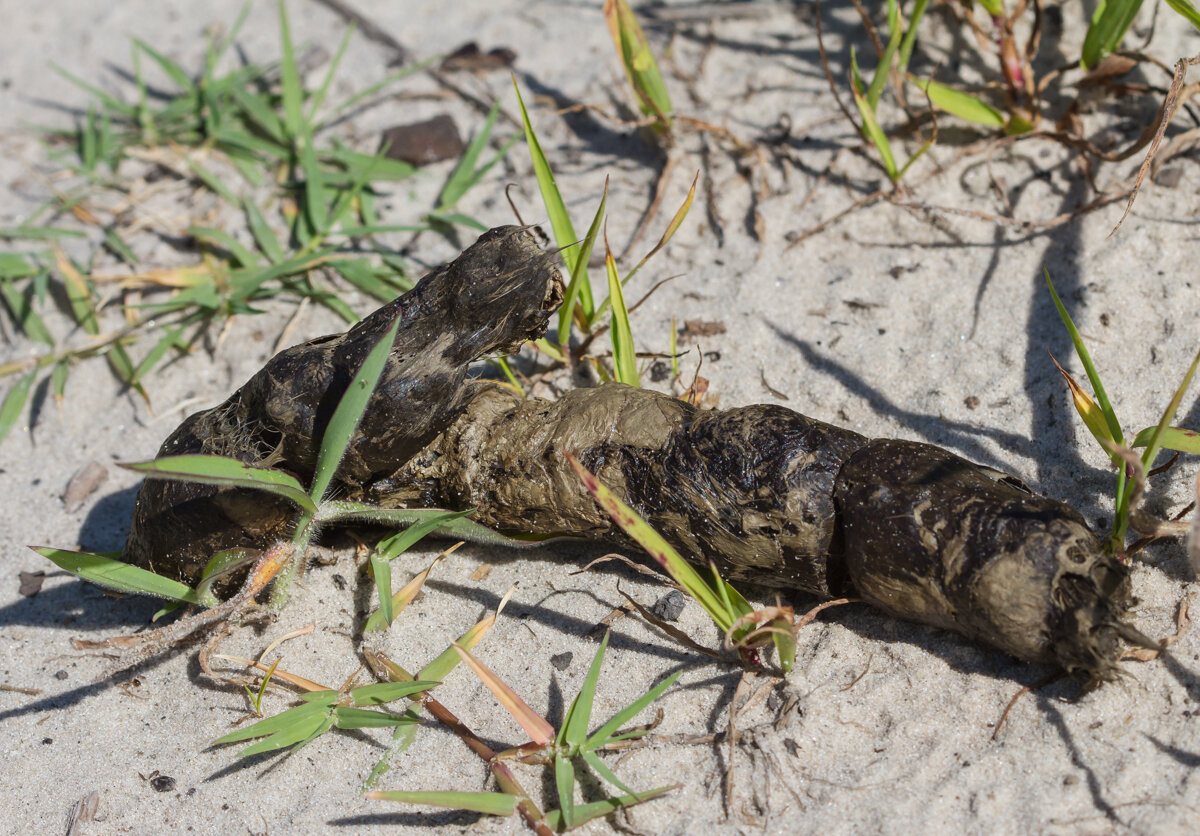
Mountain Lion
- Segmented: feline
- Tapered ends ("tails"): feline
- Hair, bone: predator
- Size: colon is larger than human thumb
- Location: yards, trails, open areas, anywhere
- This is also marking behavior
- Indeterminate age
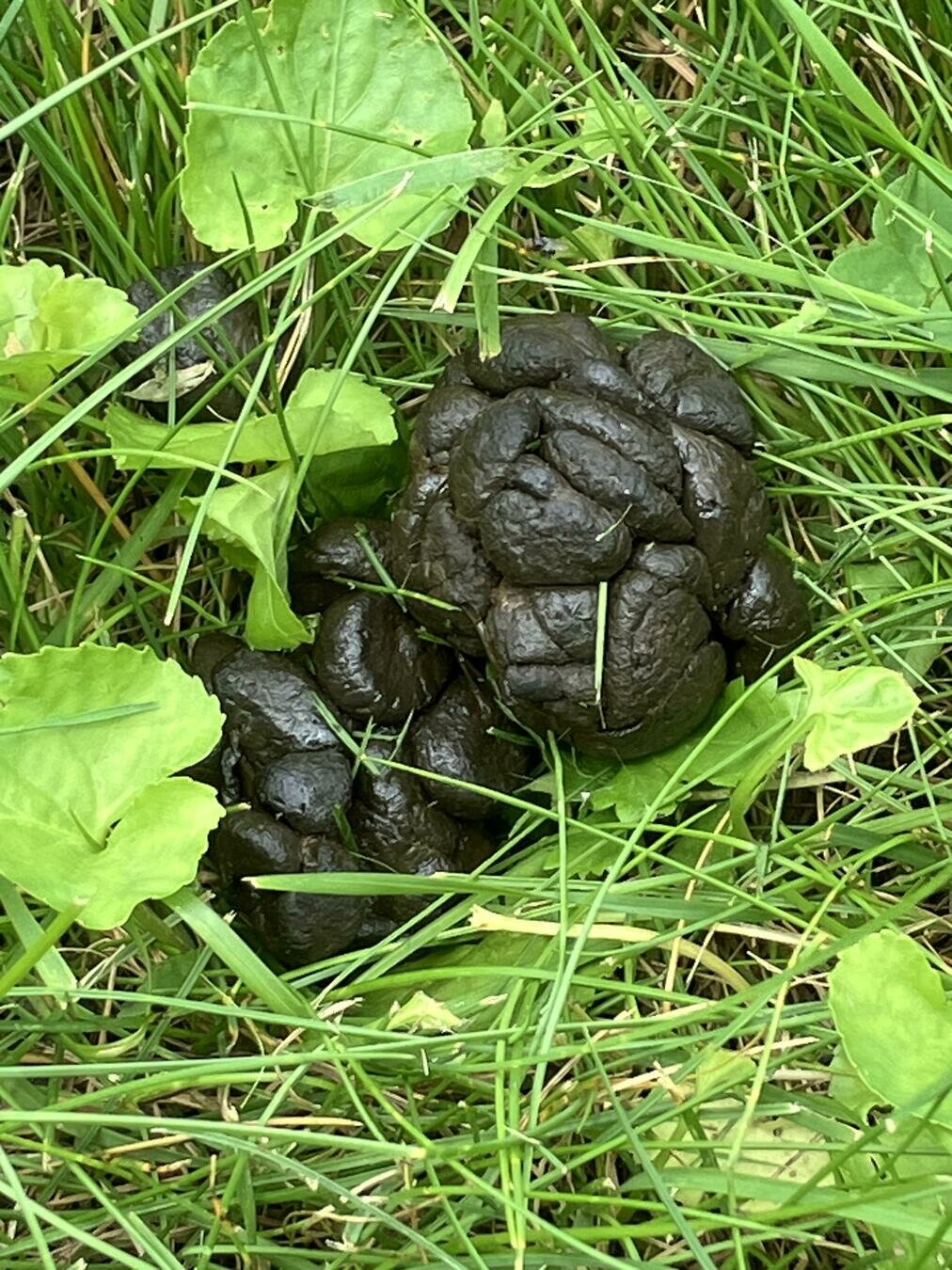
Deer
- "Summer scat"
- Phil: "Spring cake" 🤨
- High moisture content
- Caused by rich, green diet in PNW Spring and early Summer
- Color and consistency: herbivore
- Foregut fermenter
- Colon size: ~thumb
- Elk can look similar
About 3"
Bobcat
- Segmented: usually feline
- Contents: hair, small bones
- Ends are usually blunt, sometimes tapered
- Recent organ meat causes a darker, smoother, looser appearance
- Often located in the middle of a trail, trail junction, road, other obvious places
- This is marking behavior
- Usually not covered
- Colon is about finger-sized
Borrowed from https://roadsendnaturalist.com/2014/07/03/a-rare-day/
About 4"
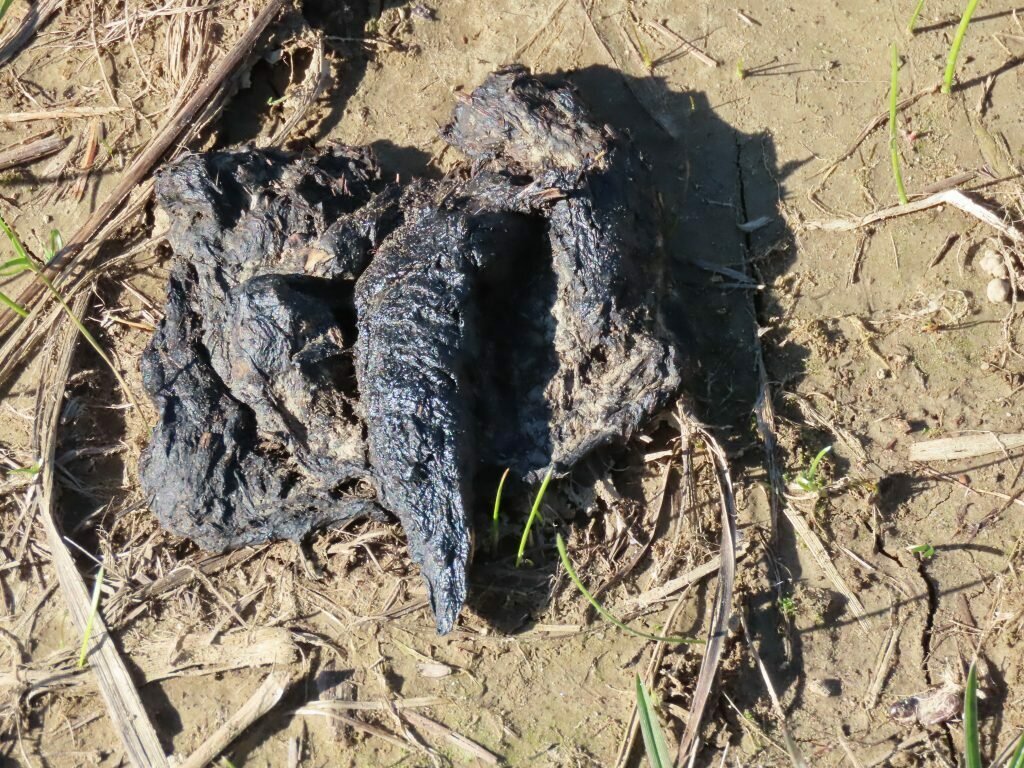
Striped skunk
- Dark in color
- Larger than expected: clump size ~4", colon ~0.75" (dog size)
- Random placement, not marking behavior
- Dark color: diet of mostly insects (some berries, fruit, and small animals, sometimes)
Borrowed from https://mcrcd.org/blog/winter-tracks-and-scat-revisited
About 6"
Black bear
- Large clump size, 12+"
- 1" - 2" diameter colon
- Omnivorous
- Can be loose, well-formed, or both depending on diet
- May contain human food and food-related products
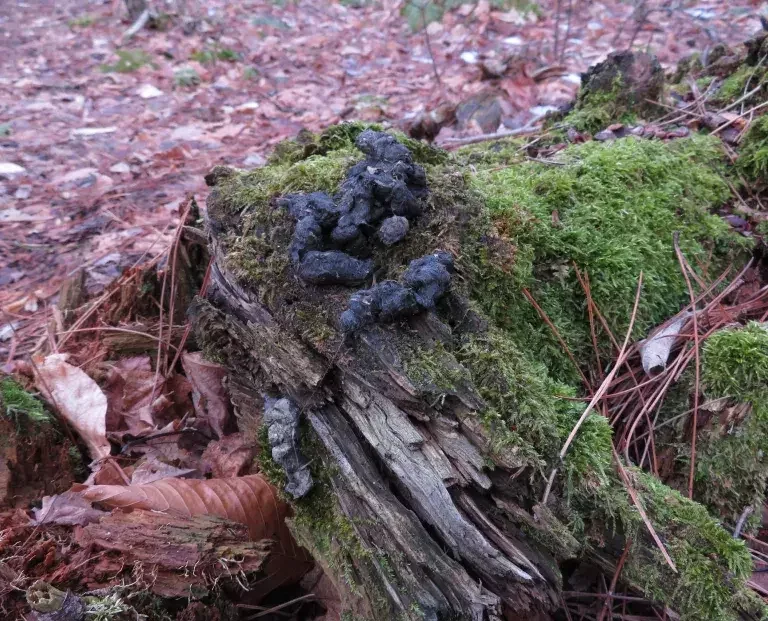
About 3"
Fox (Gray or Red)
- Conspicuous placement: foxes especially tend to place scat on top of rocks, logs, middle of roads and trails (communication)
- Typically dark in color, unsegmented, multiple pieces
- Colon size: ~pinky finger
- Typically one scat per location (not a latrine)
- Fruits and berries in Summer, hair and bones in Winter
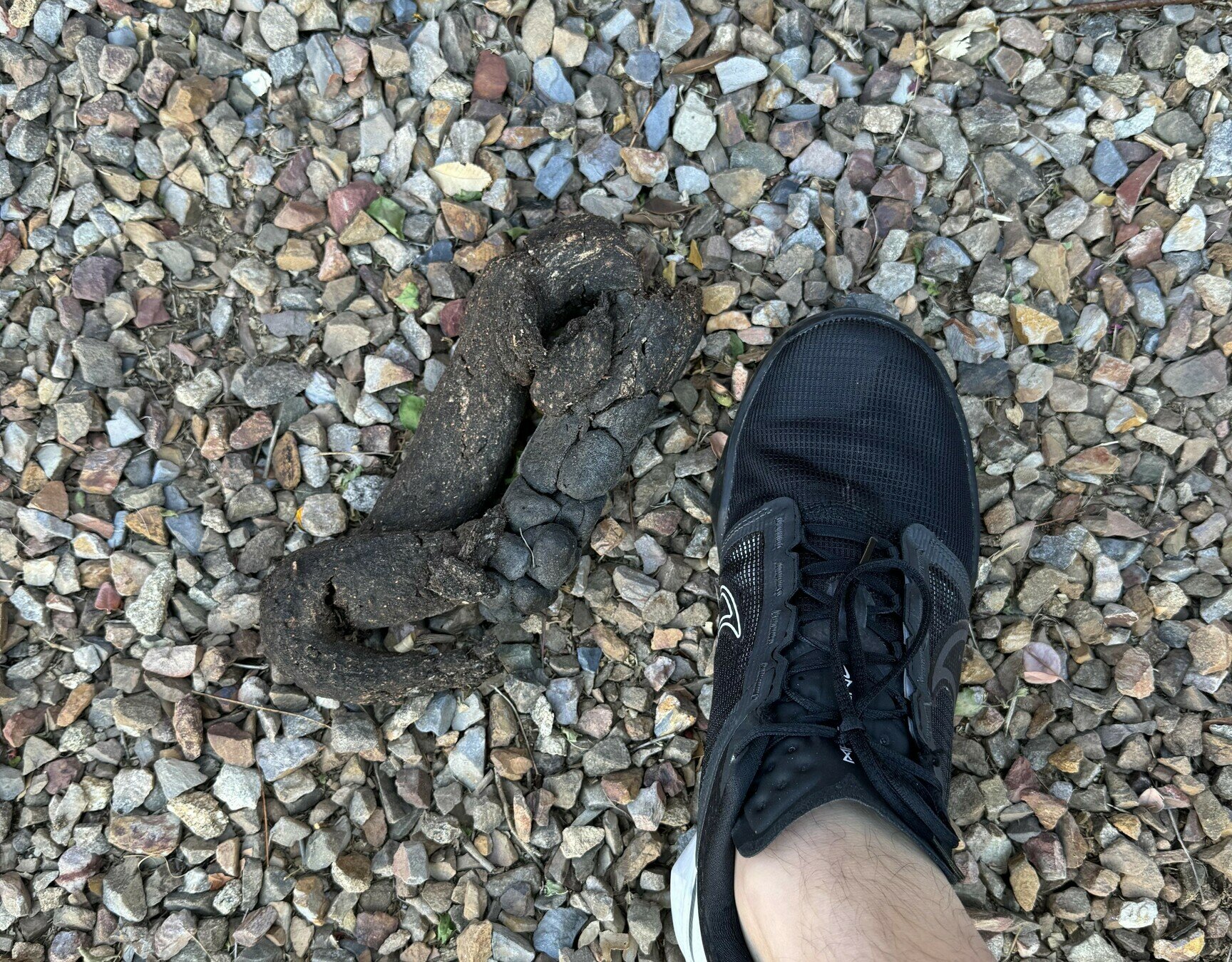
Human
- Yes, really
- Typically unsegmented
- Varies a lot in size, texture, color depending on diet and health
- Indicators here of constipation, possible opioid abuse

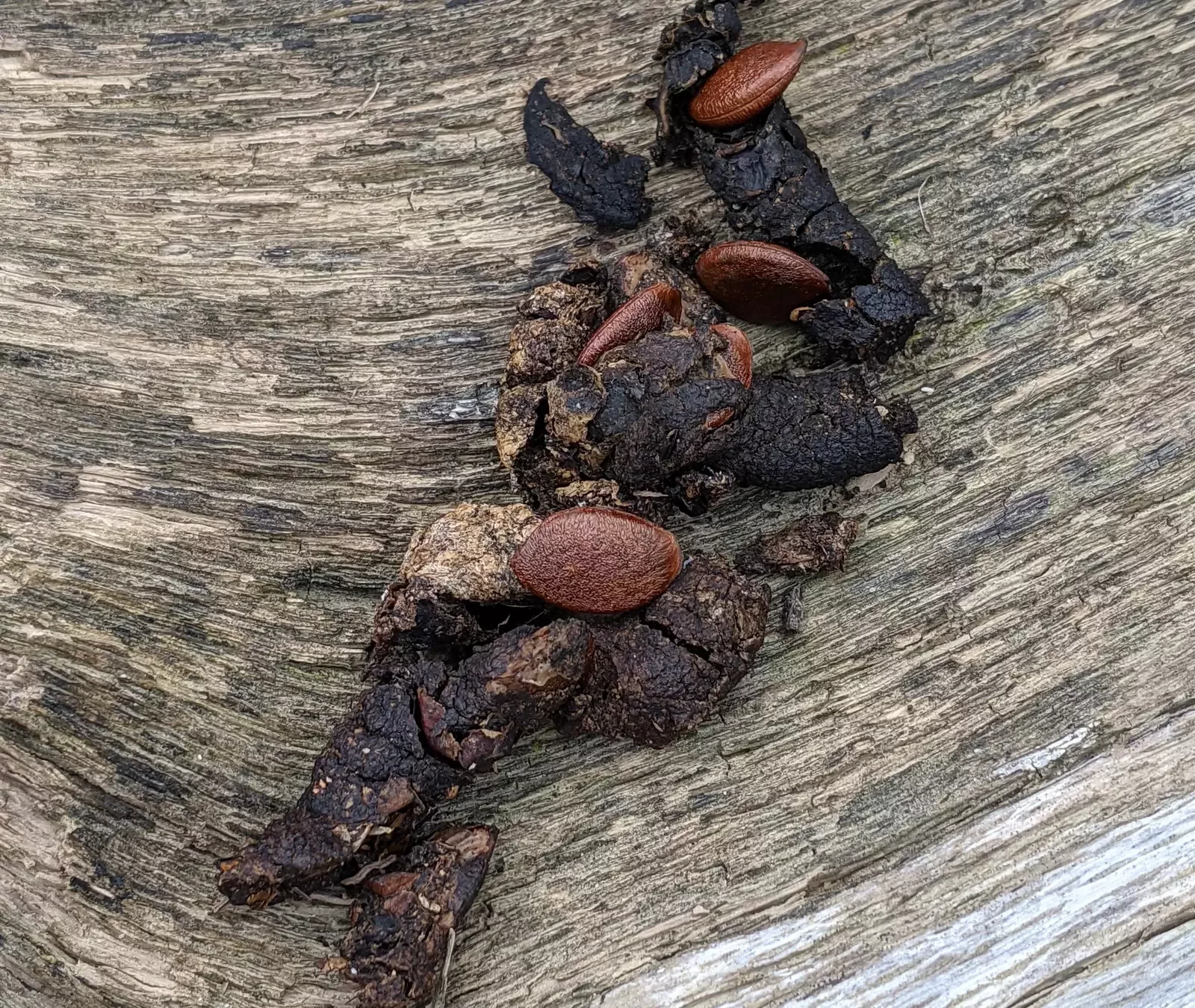
About 4"
Raccoon
- Often a "latrine": multiple deposits in same location from one or more animals
- Varied diet: fruits, seeds, garbage, kibble
- ~pinky-sized colon
- Locations: under/near logs, on your deck, under your deck, on your roof...
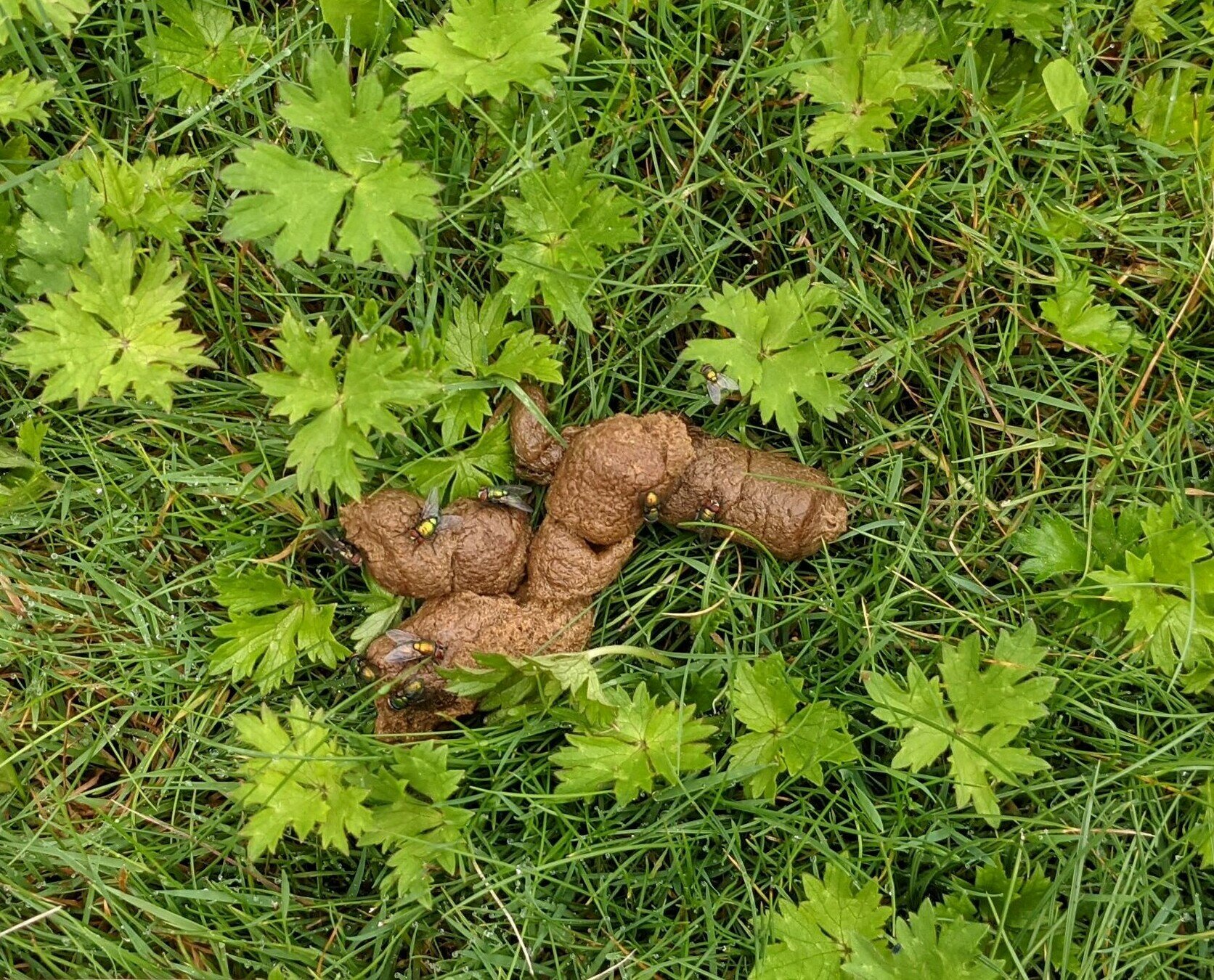
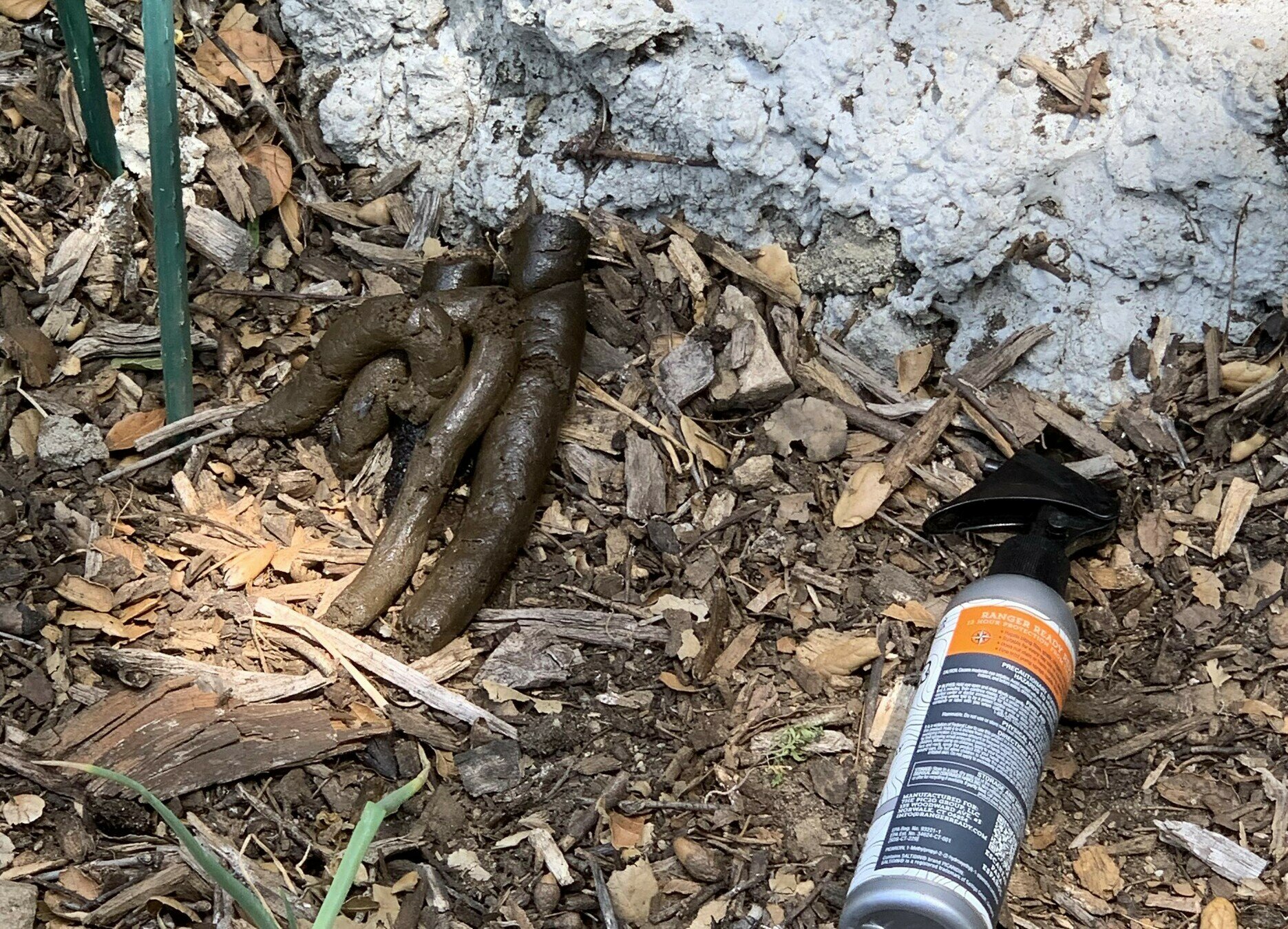
Domestic Dog
- Smooth, even texture and color: fed a diet of kibble
- Appearance varies a bit by breed
- ...but, usually segmented, multiple pieces, colon ~finger-sized
- Strong odor when fresh
- Note the bottle flies
- Often found in "impossible" locations
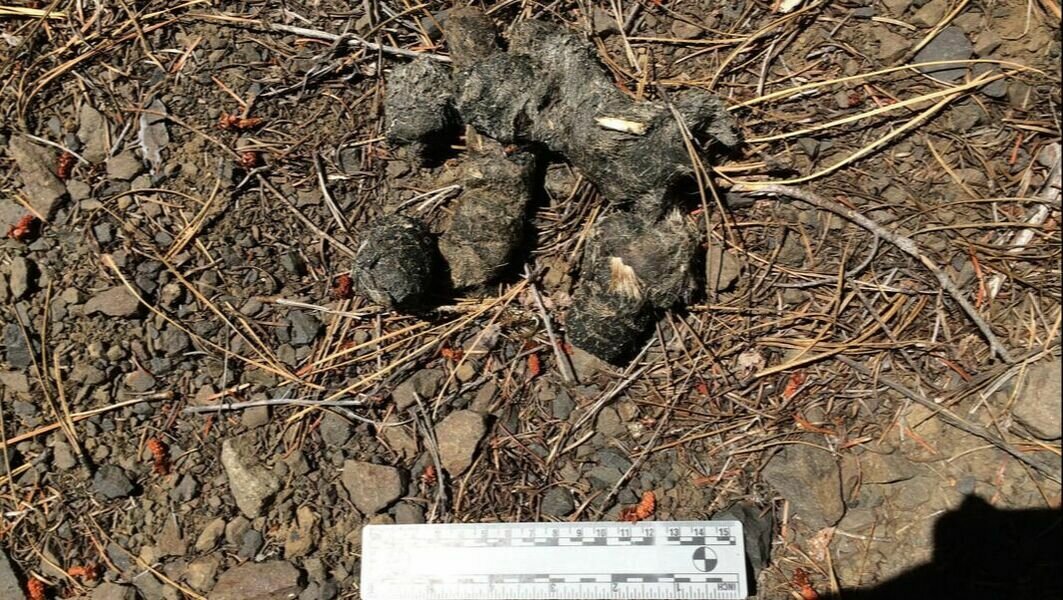
About 6"
Wolf
- Size overlaps with large dog but can be larger
- Wolves are big, yo
- Often contains bone and fur
- Dark, smooth, wet after a fresh kill (meat and blood meal)
- Otherwise similar to other canid scat
- Trail junctions (communication)
Borrowed from https://www.cascadiawild.org/blog/category/scat-survey/2
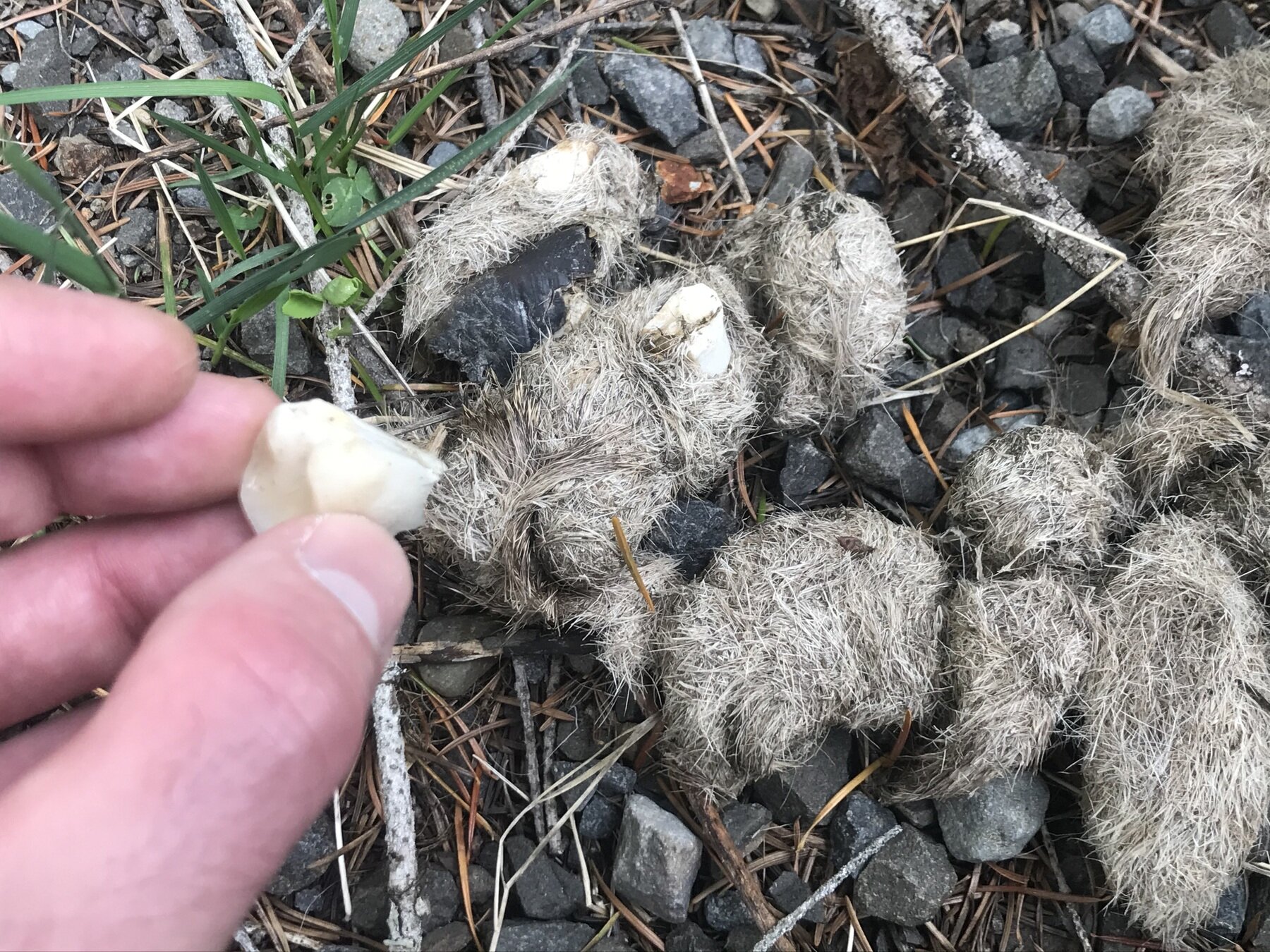
Mountain Lion
- Segmented
- Fur, teeth, and even a hoof from a white-tailed deer
- Not buried
- This scat was old when found
- Would have been the last bits of a deer carcass
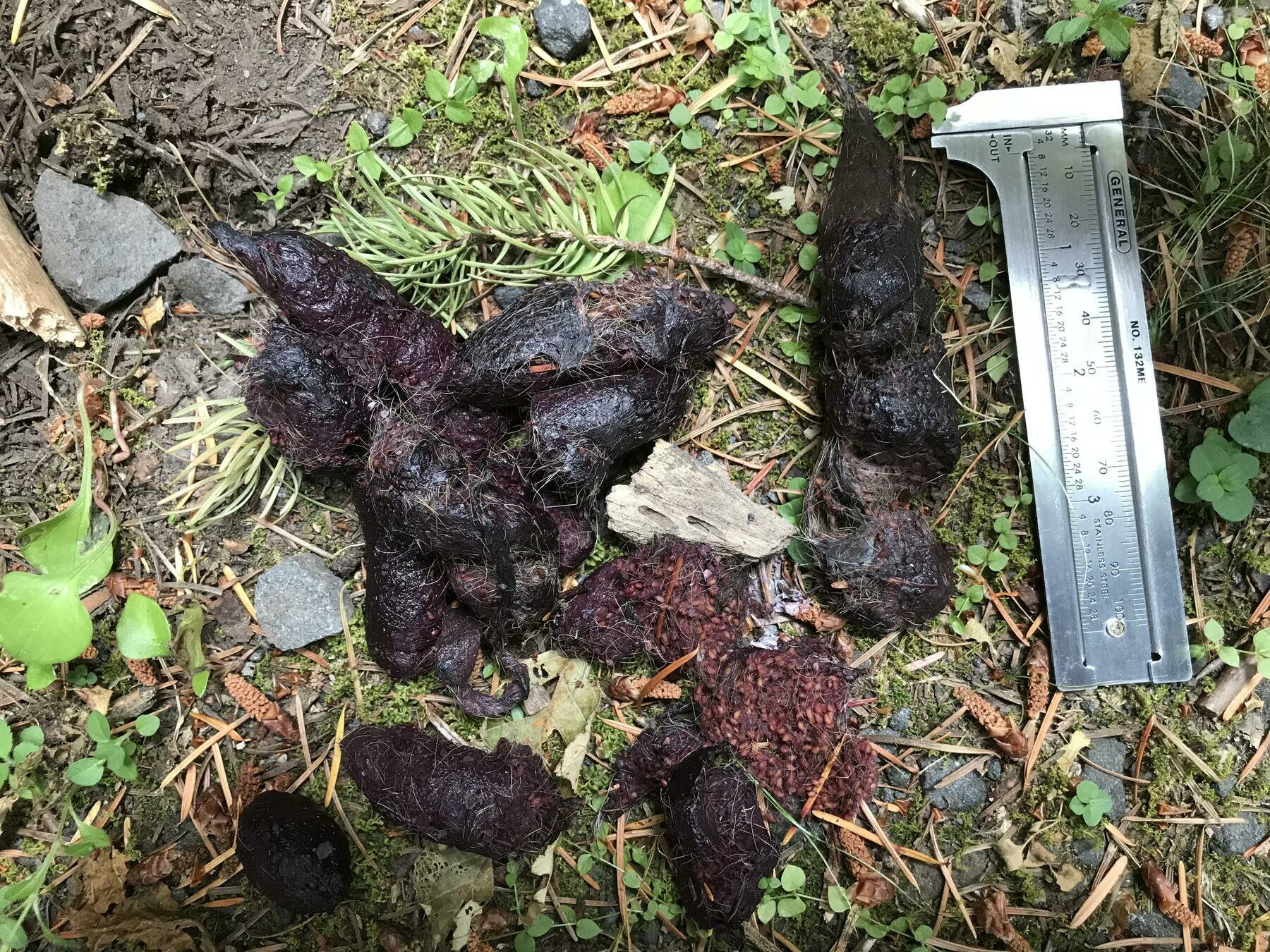
About 4"
Coyote
- Canid
- Colon: ~1" (thumb-sized)
- Coyotes are scavengers: seeds, berries, bits of fur, small bones
- Rodents in Winter
- Human food leftovers and garbage in wildland-urban interfaces
- Also, opportunistic predators
- Cats, small dogs
- Sometimes establish a latrine
- Roads, sides of trails
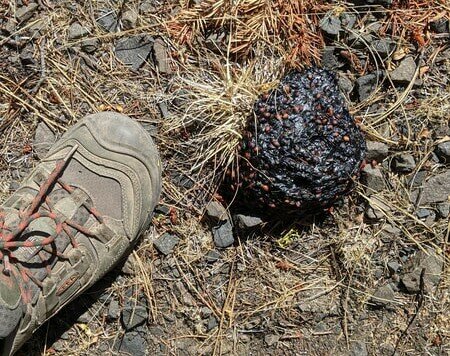
About 4"
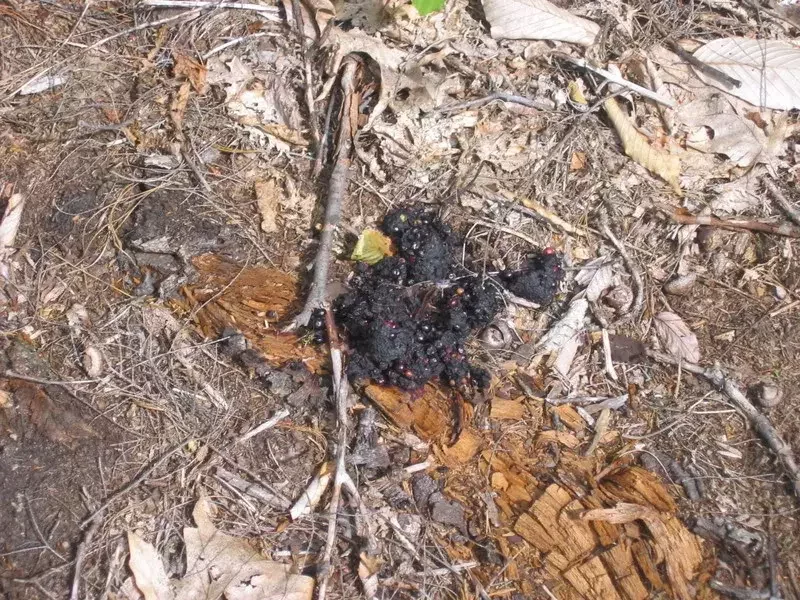
Black bear
- Size and contents
- Omnivore/scavenging diet
- Lots of berries, probably late Summer
Borrowed from https://www.cascadiawild.org/blog/category/scat-survey/2
About 4"
Human... again.
- Not segmented
- Calorie-rich, fatty diet
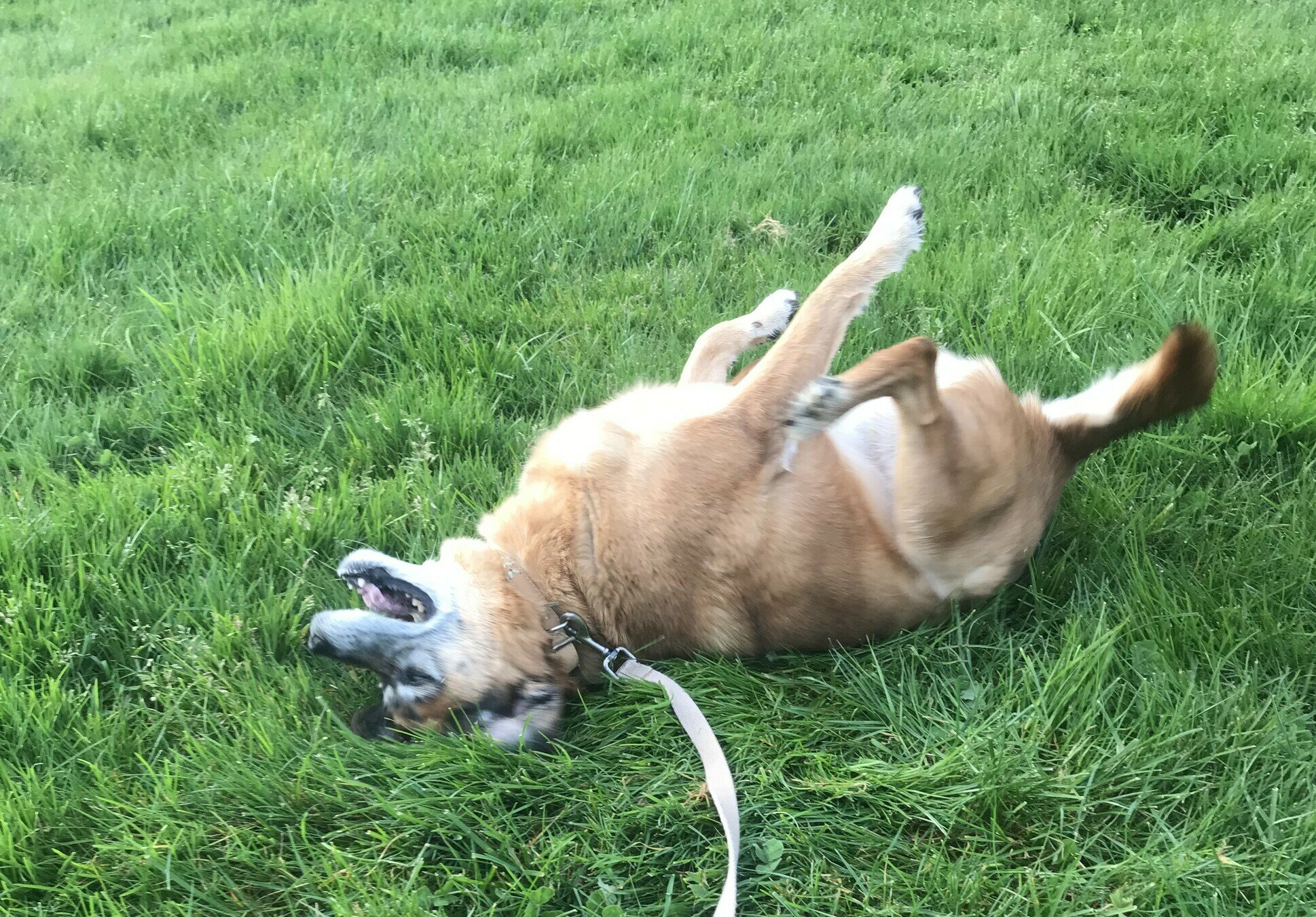
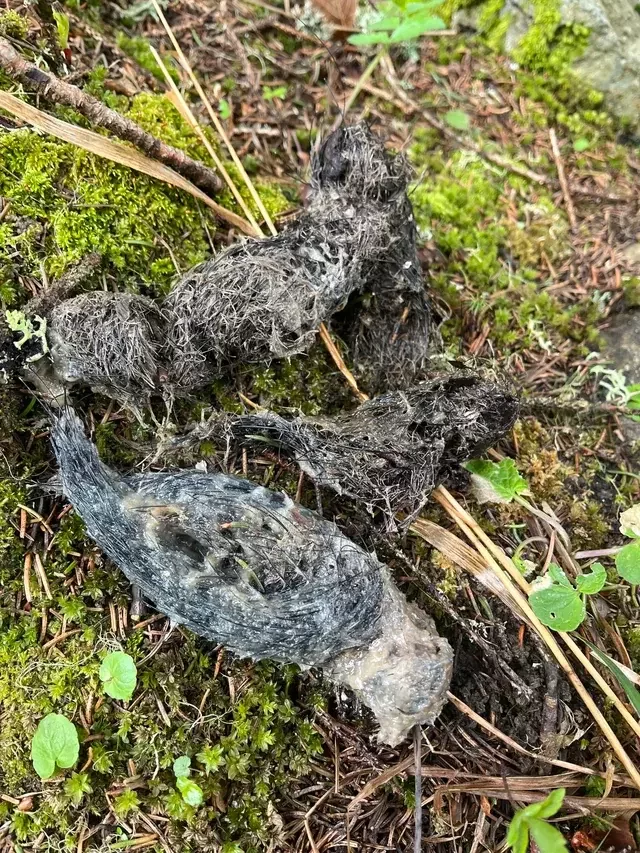
About 2"
Bobcat hairball
- (This is actually lynx, but bobcat would be identical)
- Mostly hair
- May contain grass or leafy vegetation
- Note the mucus
- Not marking behavior
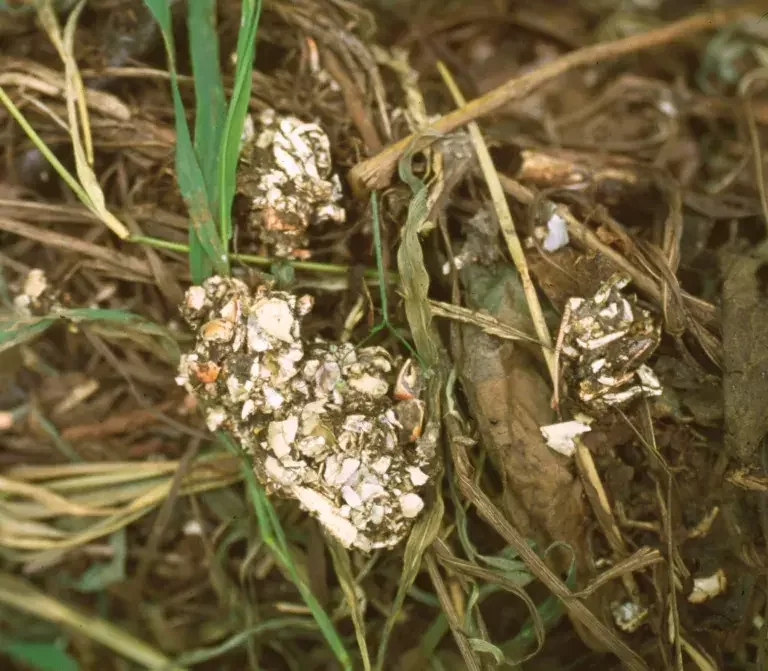
About 1"
River otter
- Shelled animals, crayfish
- Typically found in loose piles near streams
- River otters may be found far away from water!
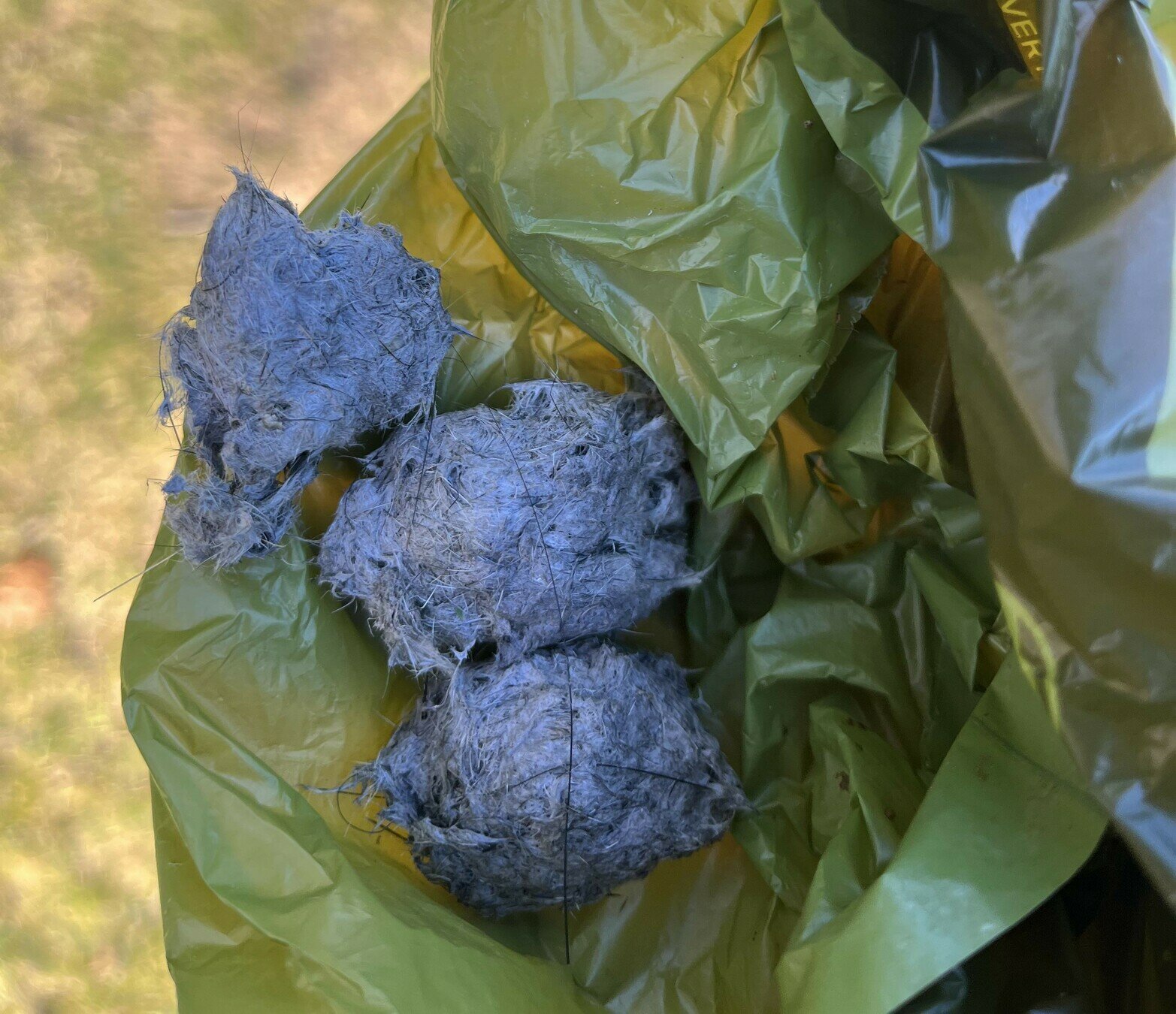
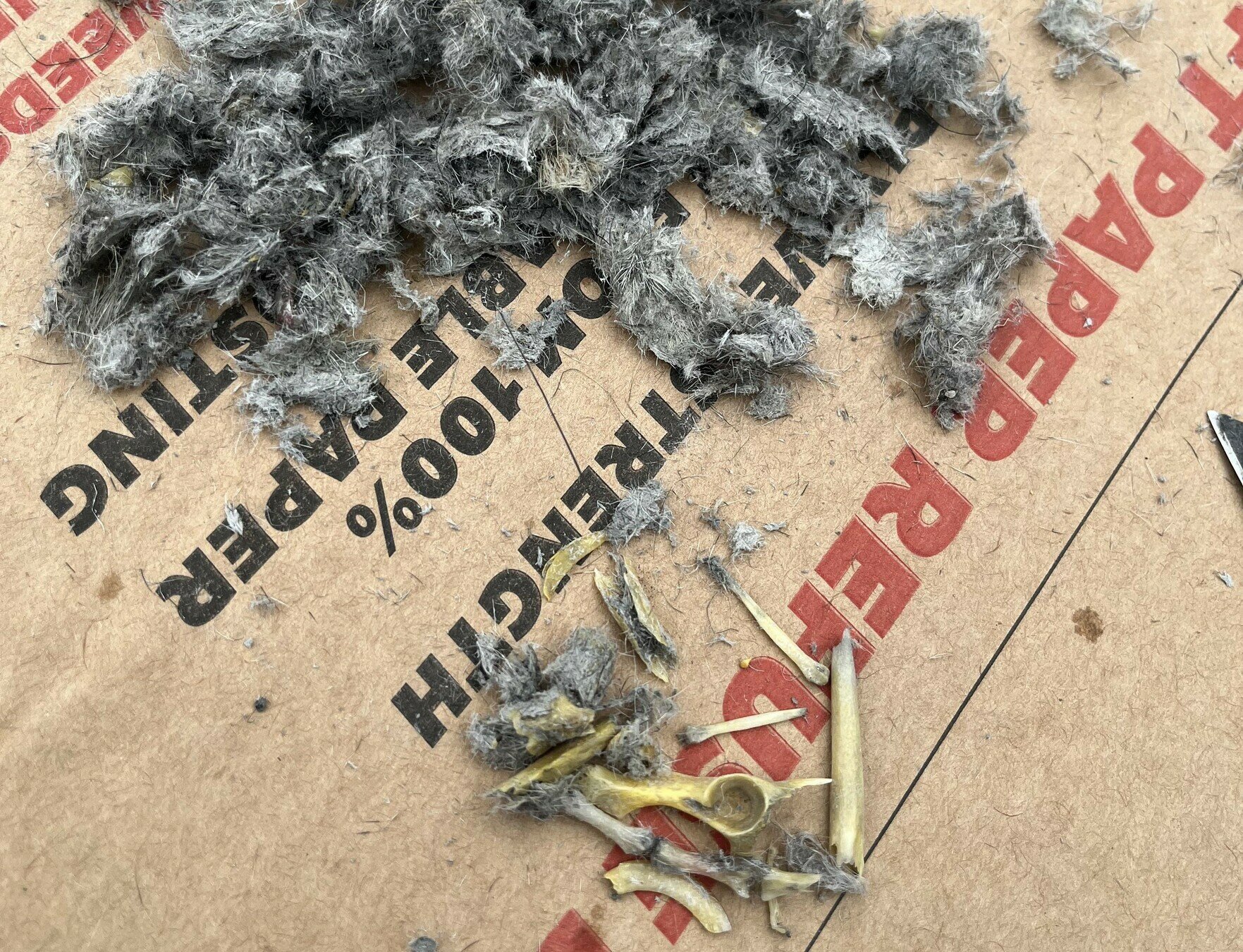
Owl pellets
- Regurgitated rodent
About 1"
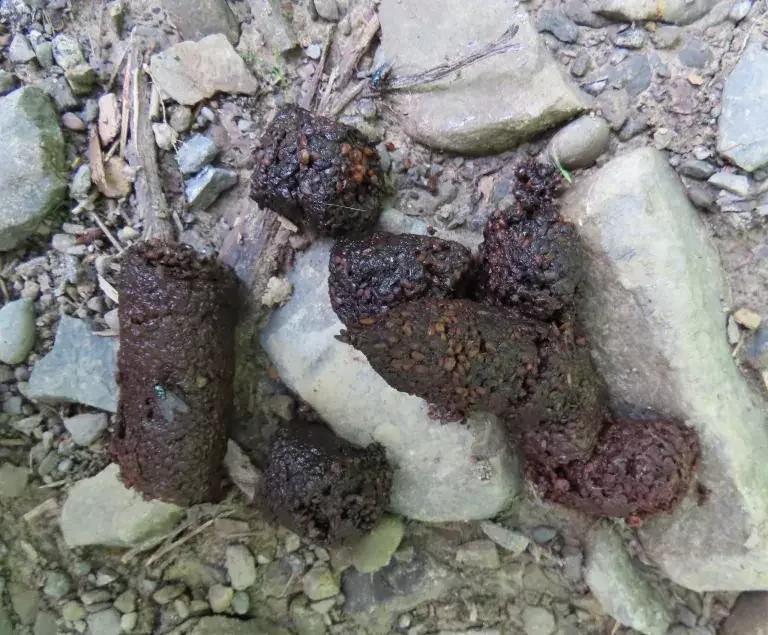
Coyote
- Like a dog's, but full of berry seeds
- This is Summer scat, when their diet turns mostly to lower-effort fruits and berries
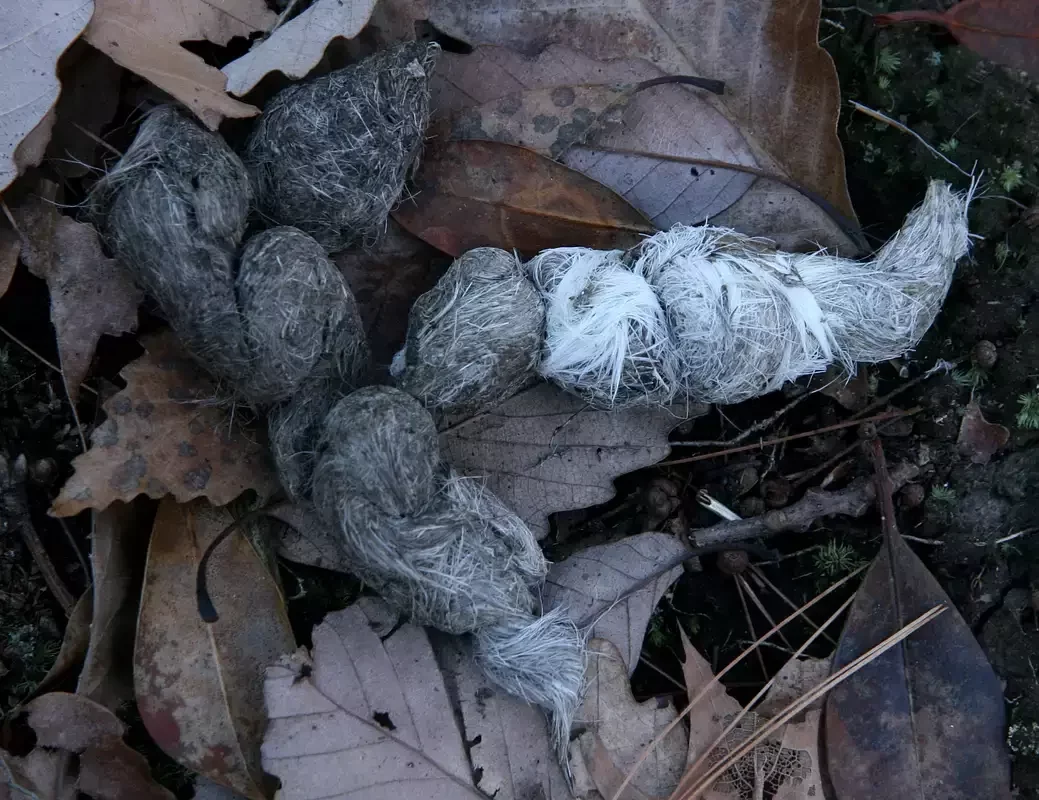
Compare: shape
Typical canid
Typical felid
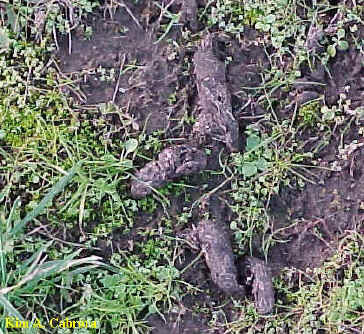
Compare: diet
Domestic (Kibble)
Wild
Compare: diet
Vegetation / Omnivore
Carnivore
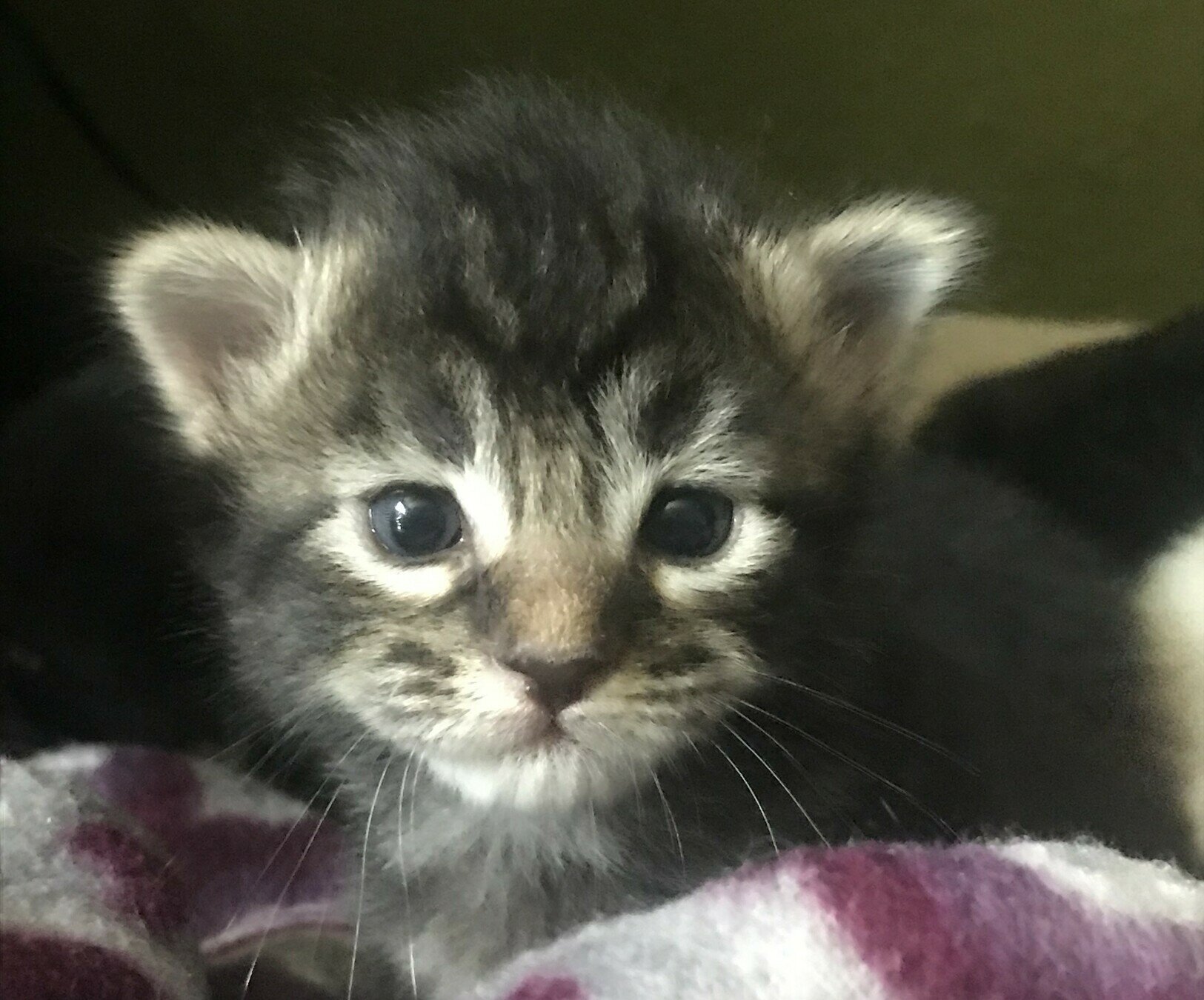
Thank you
and also, sorry.
References and other reading
- Tracking & the Art of Seeing: How to Read Animal Tracks & Sign, by Paul Rezendes
-
Peterson Field Guide to Animal Tracks, by Olaus J. Murie & Mark Elbroch
- available at the High Desert Museum in Bend, Oregon (recommended visit!)
- Scats and Tracks of the Pacific Coast, by James Halfpenny, PhD.
- A Guide to Animal Tracking and Behavior by Donald & Lillian Stokes
- https://reddit.com/r/AnimalTracking
- https://bear-tracker.com/animalscat.html
- https://lindajspielman.com/blog/
Check out "Tracker Tuesdays"
Passing Time
By robsheldon