



















Content ITV PRO
This is Itvedant Content department
Learning Outcome
5
Apply M&A knowledge to evaluate deals and create pitch decks.
4
Analyze benefits, challenges, and synergies.
3
Identify strategic objectives for each type.
2
Differentiate mergers and acquisition types.
1
Define the different types of M&A.
Analogy
Imagine a sports club aiming to become the strongest in the league. Depending on its goal, it can take different approaches:
Analogy
Buy a rival team to dominate the competition (Horizontal Merger).
Acquire a training academy to develop players in-house (Vertical Merger).
Purchase a completely different sports franchise, like a cricket club buying a football club, to diversify its investments (Conglomerate Merger).
Merge with a sports equipment company to strengthen related offerings (Congeneric Merger)
Just as each strategy serves a different purpose, each type of merger or acquisition is chosen to achieve specific business objectives, such as growth, efficiency, diversification, or competitive advantage.
Transition to Concept
Just as businesses choose different growth strategies based on their objectives, they also choose different types of mergers and acquisitions depending on the relationship between the companies involved and the value they aim to create. Understanding these transaction types helps explain why companies merge or acquire others and how each structure supports specific strategic goals.
Introduction
Not all mergers and acquisitions are the same. Companies choose different M&A types based on their objectives, industry position, growth strategy, and business relationships. Each type can support goals such as market expansion, efficiency, diversification, or access to new technologies and customers.
Horizontal Merger
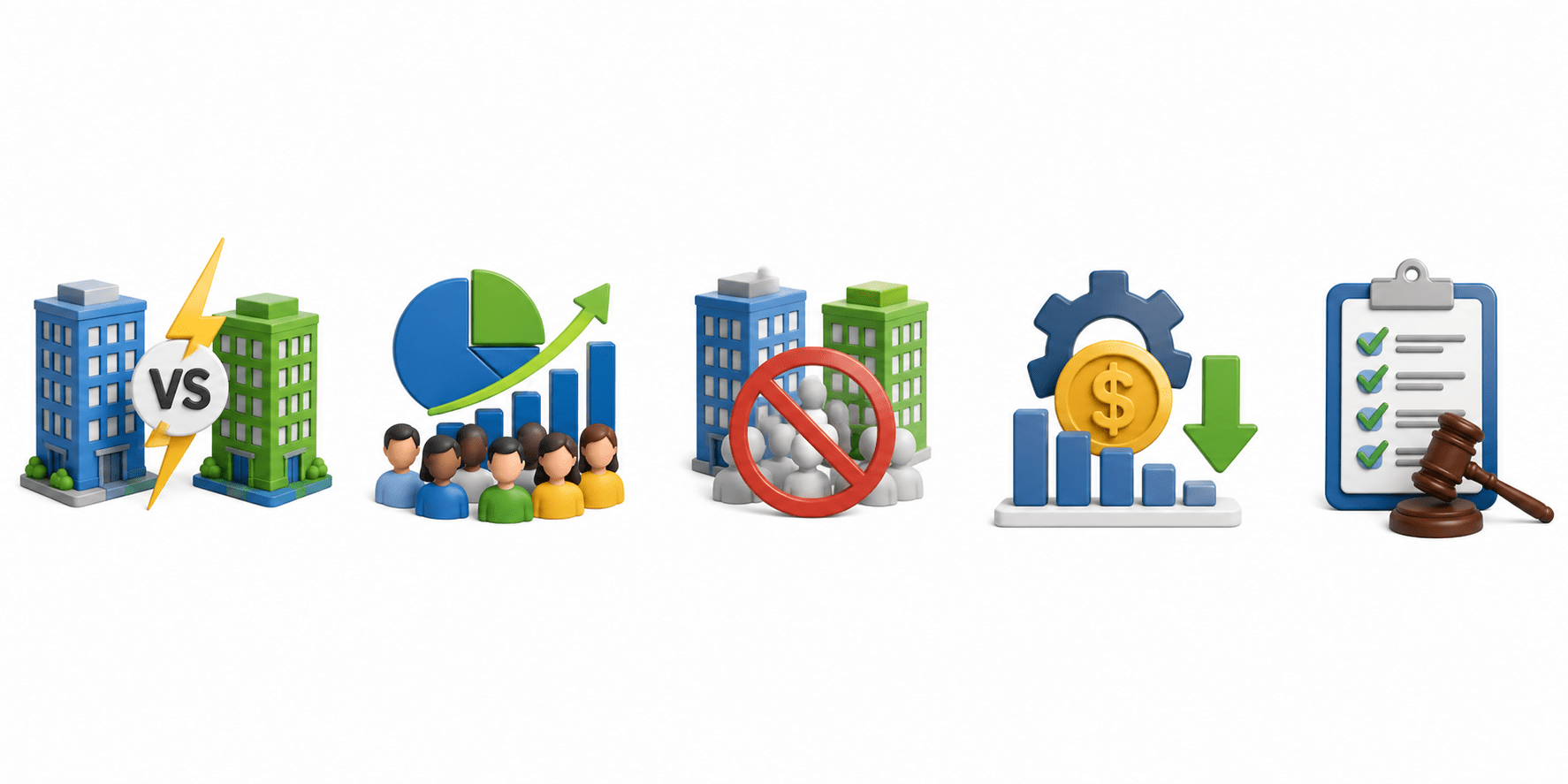
A Horizontal Merger occurs when two companies operating in the same industry and at the same stage of the value chain combine.
Key Points:
Example: Two telecom companies merging to become the largest service provider.
Involves direct competitors.
Increases market share and customer base.
Reduces competition in the industry.
Achieves economies of scale and cost efficiencies.
May face antitrust or regulatory scrutiny.
Vertical Merger
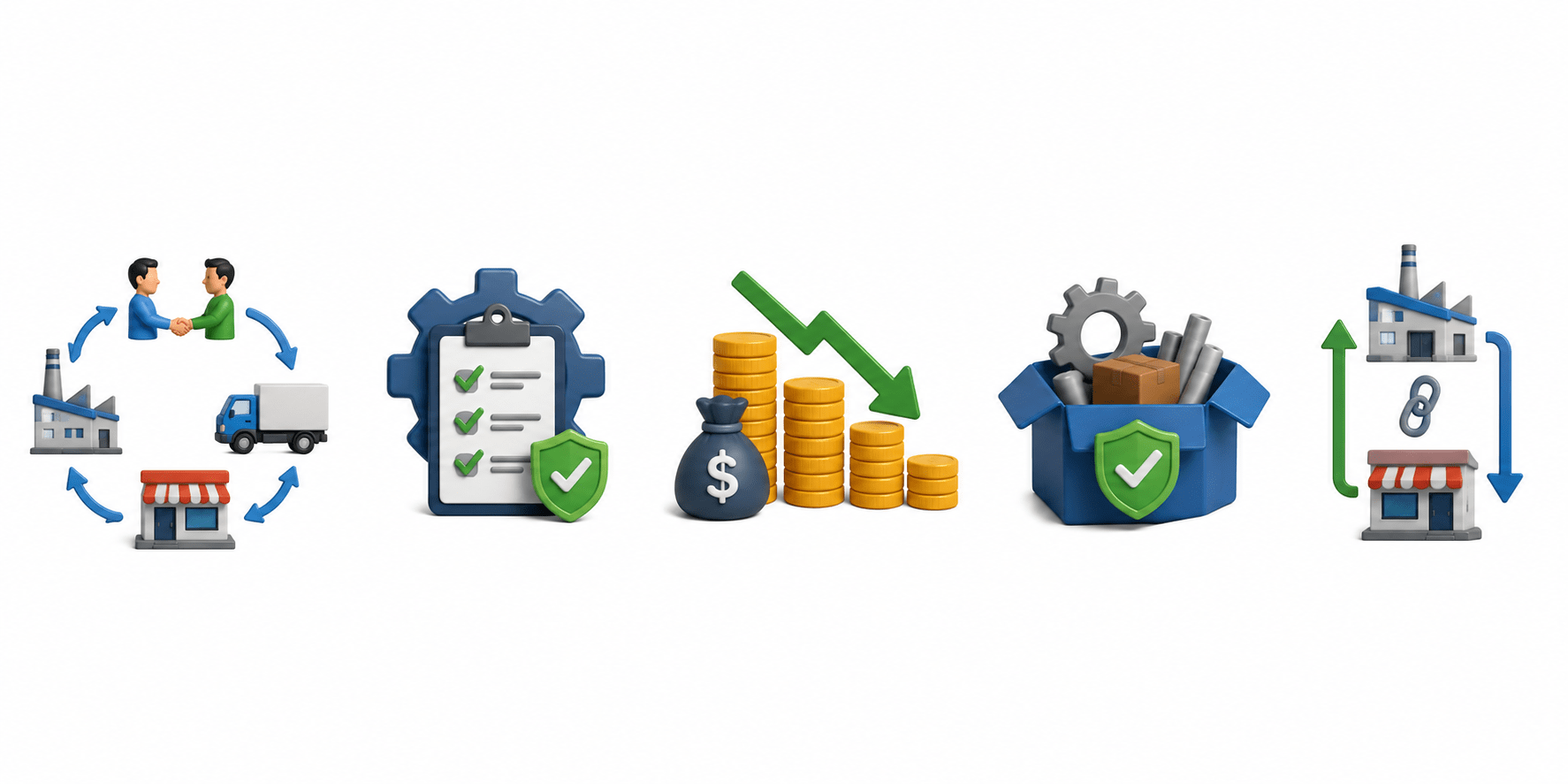
A Vertical Merger takes place between companies operating at different stages of the supply chain.
Key Points:
Can involve suppliers, manufacturers, distributors, or retailers.
Improves supply chain control.
Reduces production and operating costs.
Ensures a stable supply of raw materials or distribution channels.
Includes Backward Integration (supplier) and Forward Integration (distributor).
Example: A car manufacturer acquiring a tire supplier.
Conglomerate Merger
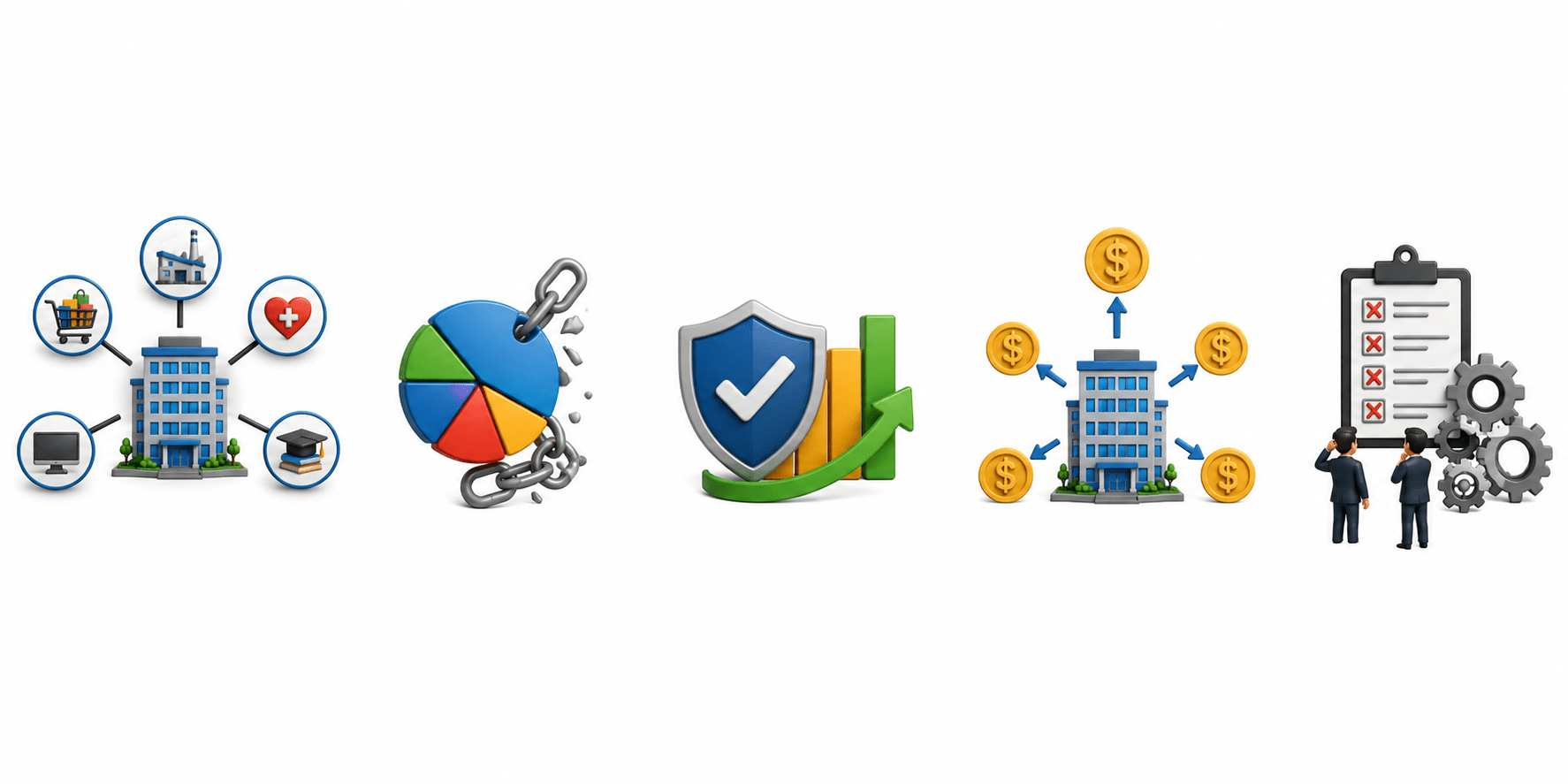
A Conglomerate Merger occurs between companies operating in completely unrelated industries.
Key Points:
Diversifies business operations.
Reduces dependence on a single industry.
Spreads business risk.
Creates multiple revenue sources.
Can be challenging to manage due to unrelated operations.
Example: A food company acquiring an insurance company.
Congeneric (Related) Merger
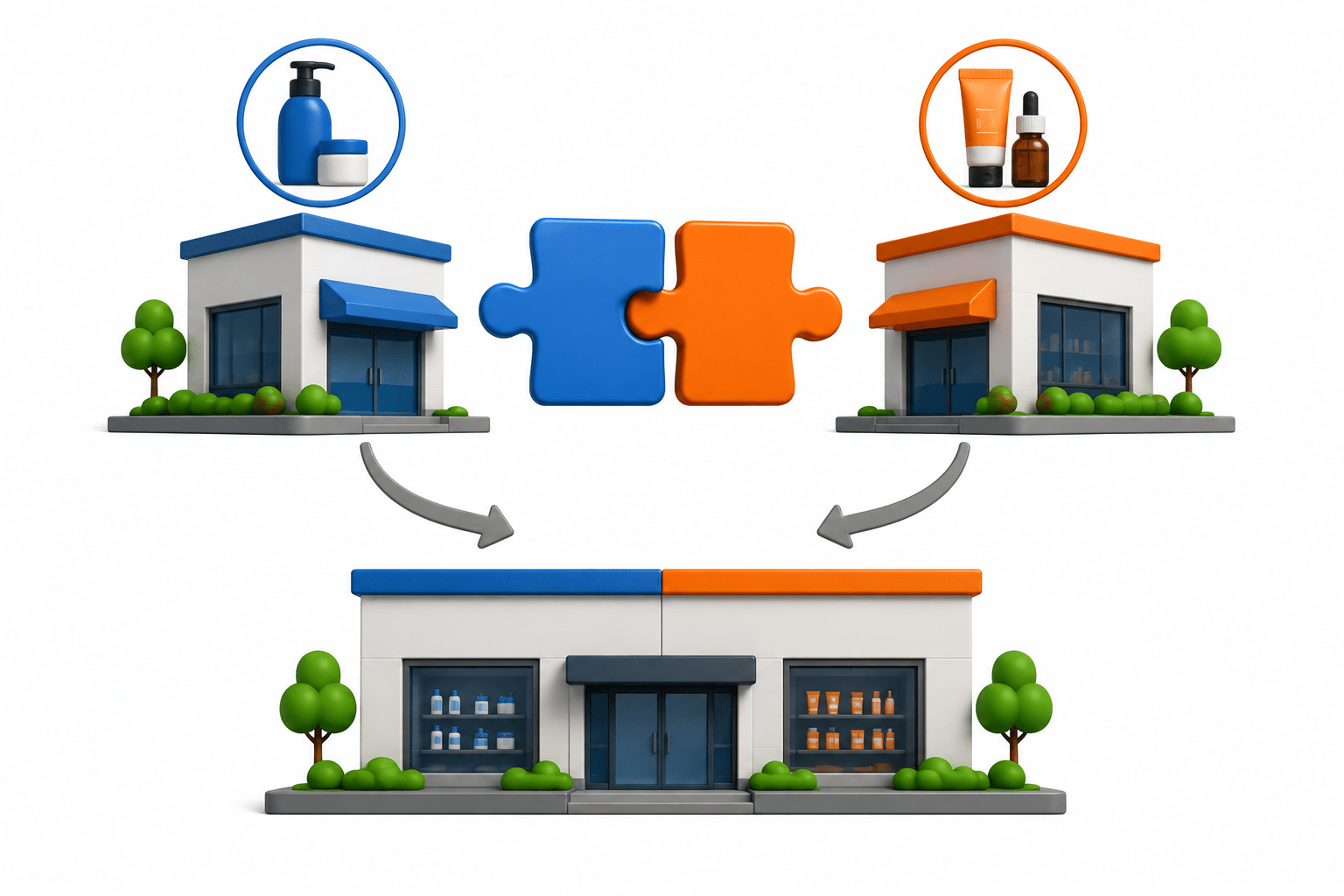
A Congeneric Merger involves companies that operate in the same industry or serve similar customers but offer different yet related products or services.
Key Points:
Expands product portfolio.
Increases cross-selling opportunities.
Strengthens customer relationships.
Leverages existing marketing and distribution channels.
Creates revenue synergies.
Example: A smartphone manufacturer acquiring a smartwatch company.
Reverse Merger
A Reverse Merger occurs when a private company merges with a publicly listed company, allowing it to become publicly traded without an IPO.
Key Points:
Example: A private technology startup merging with a listed shell company.
Faster than a traditional IPO.
Lower cost and fewer regulatory hurdles.
Provides quicker access to capital markets.
Common among growing private companies.
Friendly Acquisition
A Friendly Acquisition is an acquisition where the target company's management and shareholders approve the transaction.
Key Points:
Based on mutual agreement.
Negotiated purchase price and terms.
Smooth integration process.
Lower legal conflicts.
Focuses on long-term strategic benefits.
Hostile Acquisition (Hostile Takeover)
A Hostile Acquisition occurs when the acquiring company attempts to gain control without the approval of the target company's management.
Key Points:
Acquirer approaches shareholders directly.
Management resists the takeover.
Often involves tender offers or proxy battles.
May increase acquisition costs.
Example: An investor acquires a controlling stake despite management opposition.
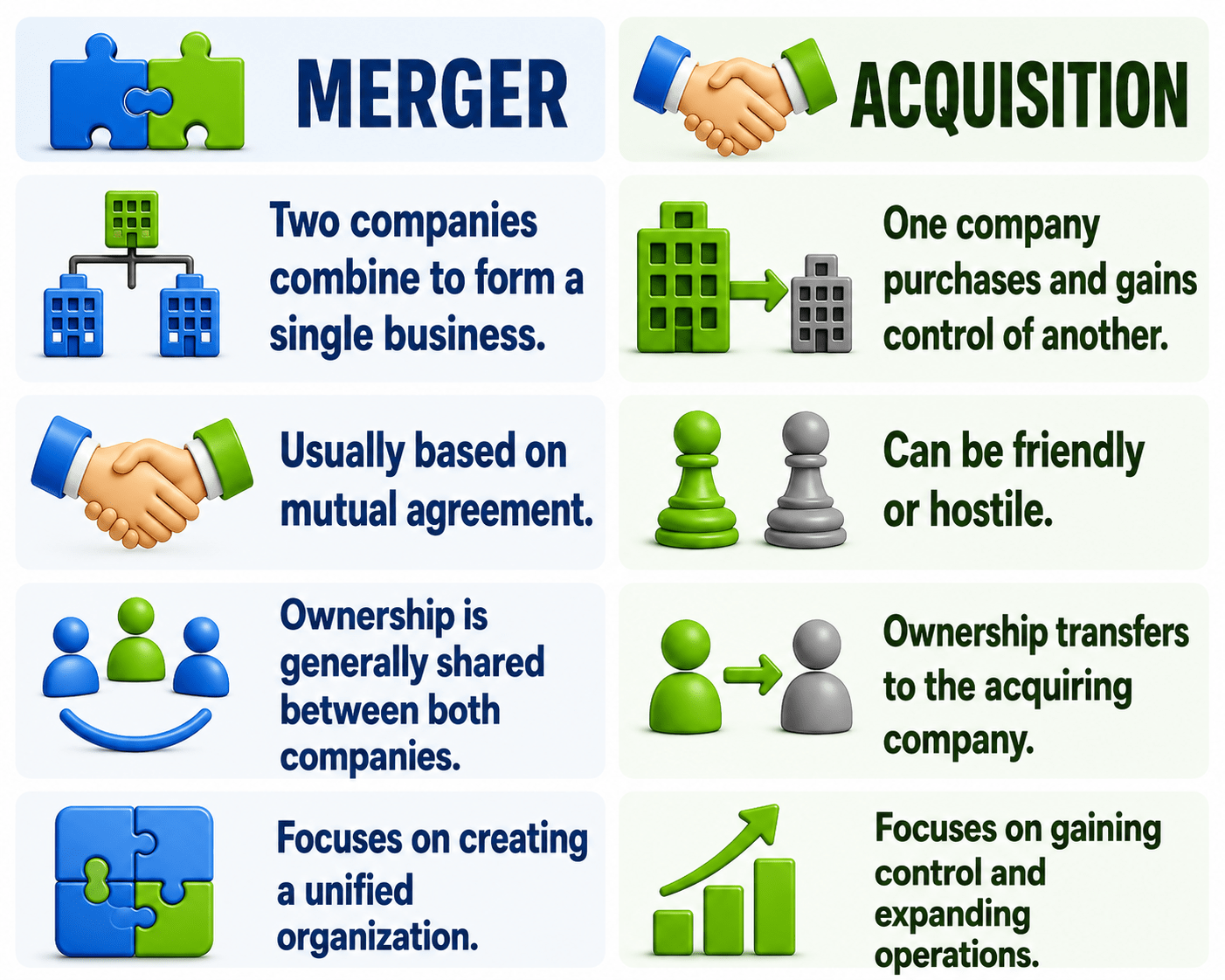
Merger vs. Acquisition
Summary
5
This knowledge supports deal decisions and pitch decks.
4
Understanding M&A types helps assess benefits and risks.
3
Each type supports growth, efficiency, diversification, expansion.
2
Horizontal,Vertical,Conglomerate,Congeneric,Reverse Acquisitions
1
M&A types classify different business combinations
Quiz
A manufacturer acquiring its raw material supplier is an example of which type of merger?
A. Congeneric Merger
B. Vertical Merger
C. Horizontal Merger
D. Conglomerate Merger
Quiz-Answer
A manufacturer acquiring its raw material supplier is an example of which type of merger?
A. Congeneric Merger
B. Vertical Merger
C. Horizontal Merger
D. Conglomerate Merger
By Content ITV