








Content ITV PRO
This is Itvedant Content department
Learning Outcome
4
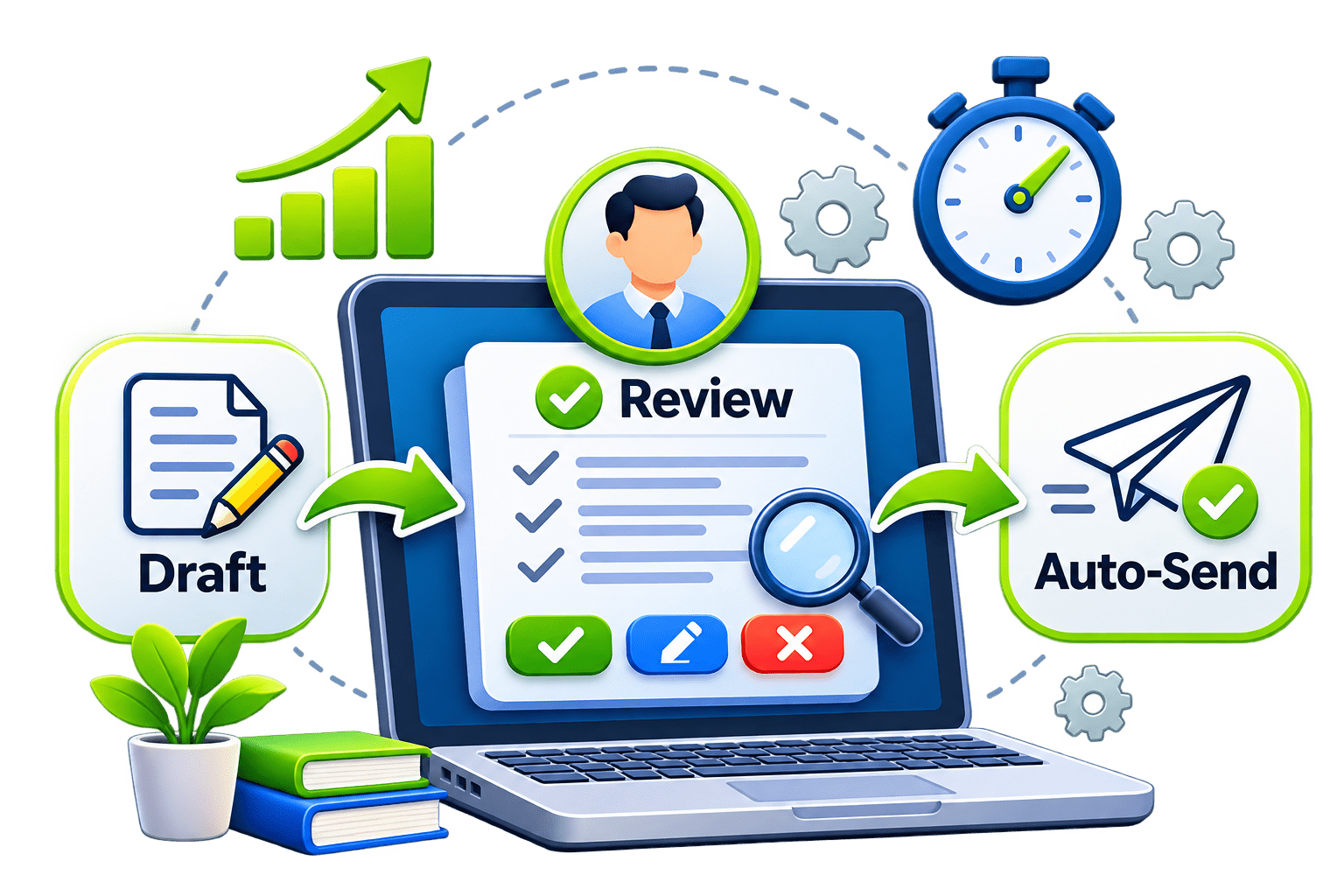
Apply auto-send vs draft to real outputs.
3
Recognize what makes a review step work.
2
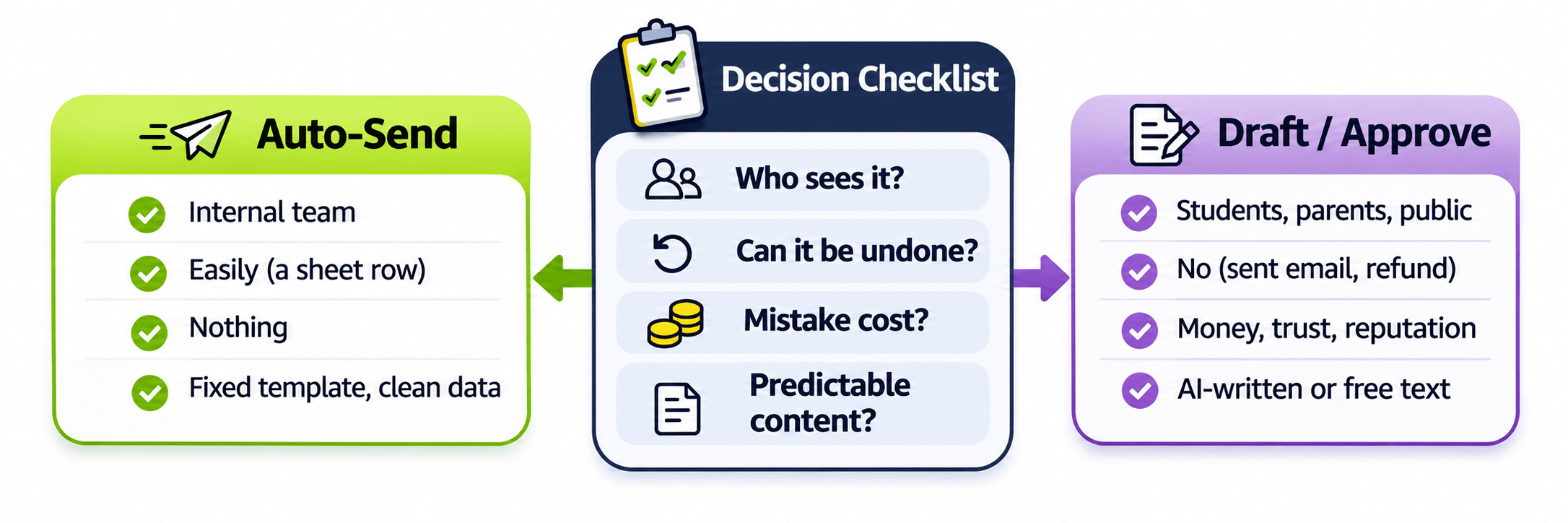
Identify four questions for placing review.
1
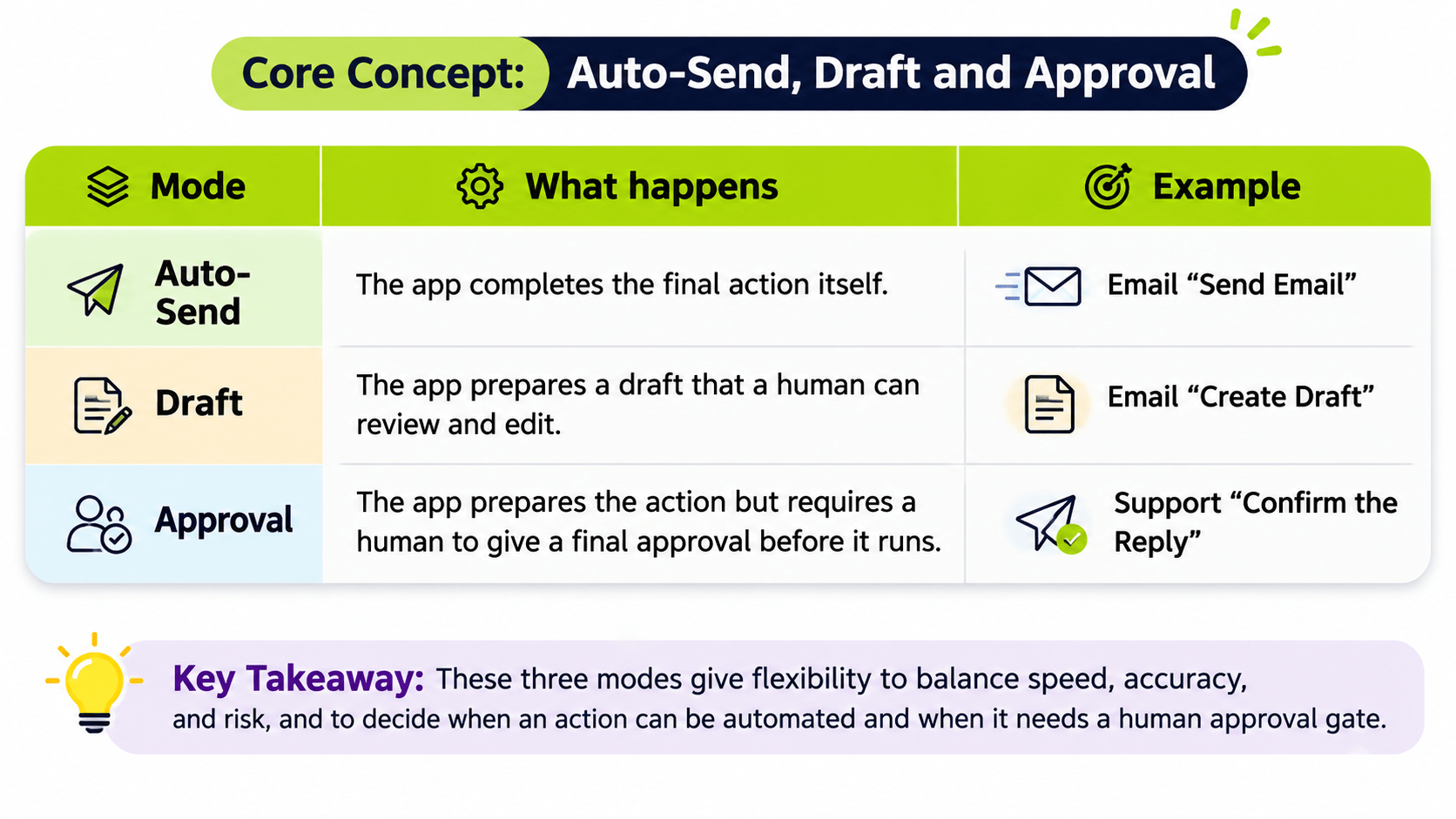
Understand auto-send, draft, and approval modes.
5
Connect draft mode to building trust gradually.
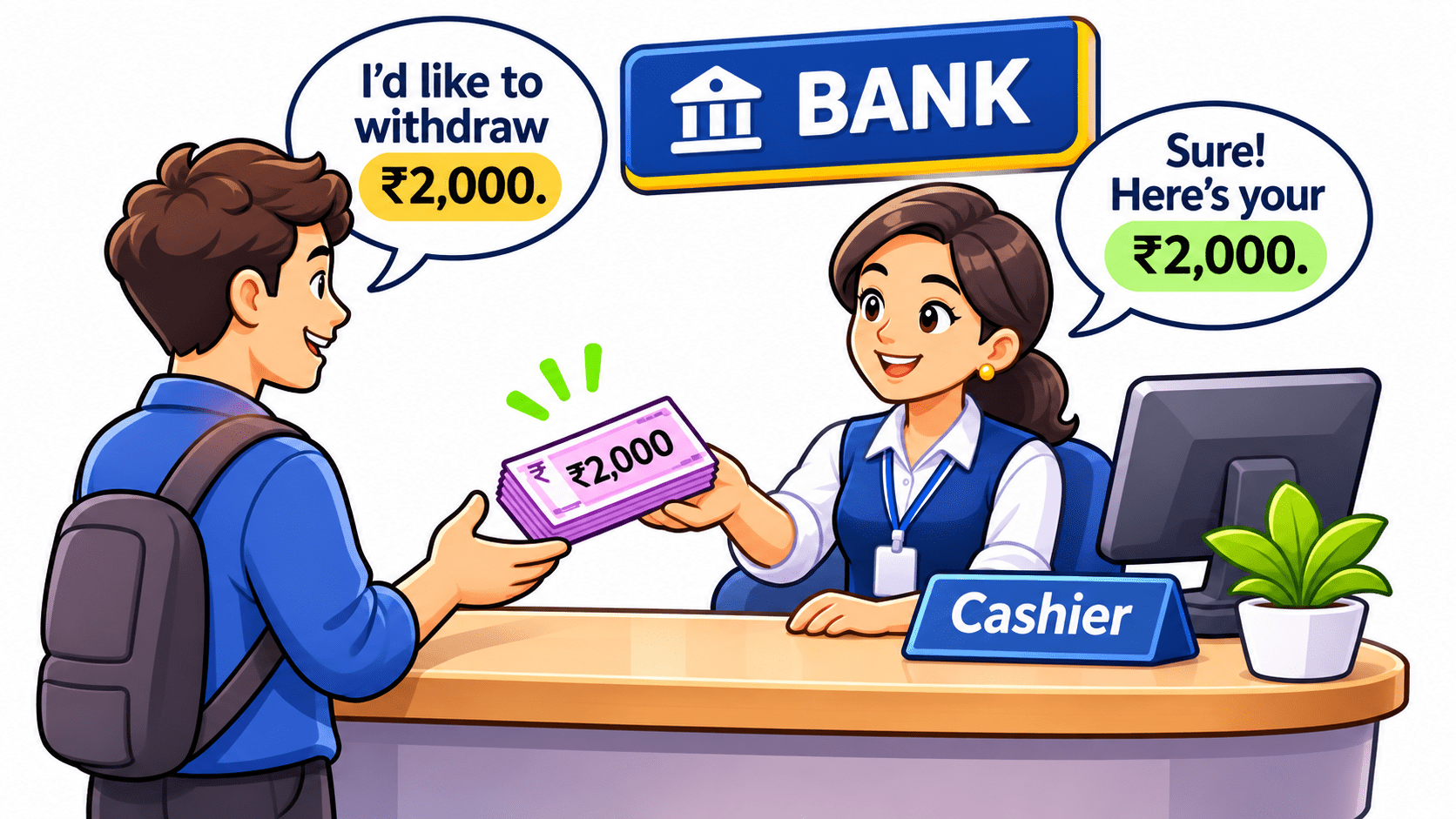
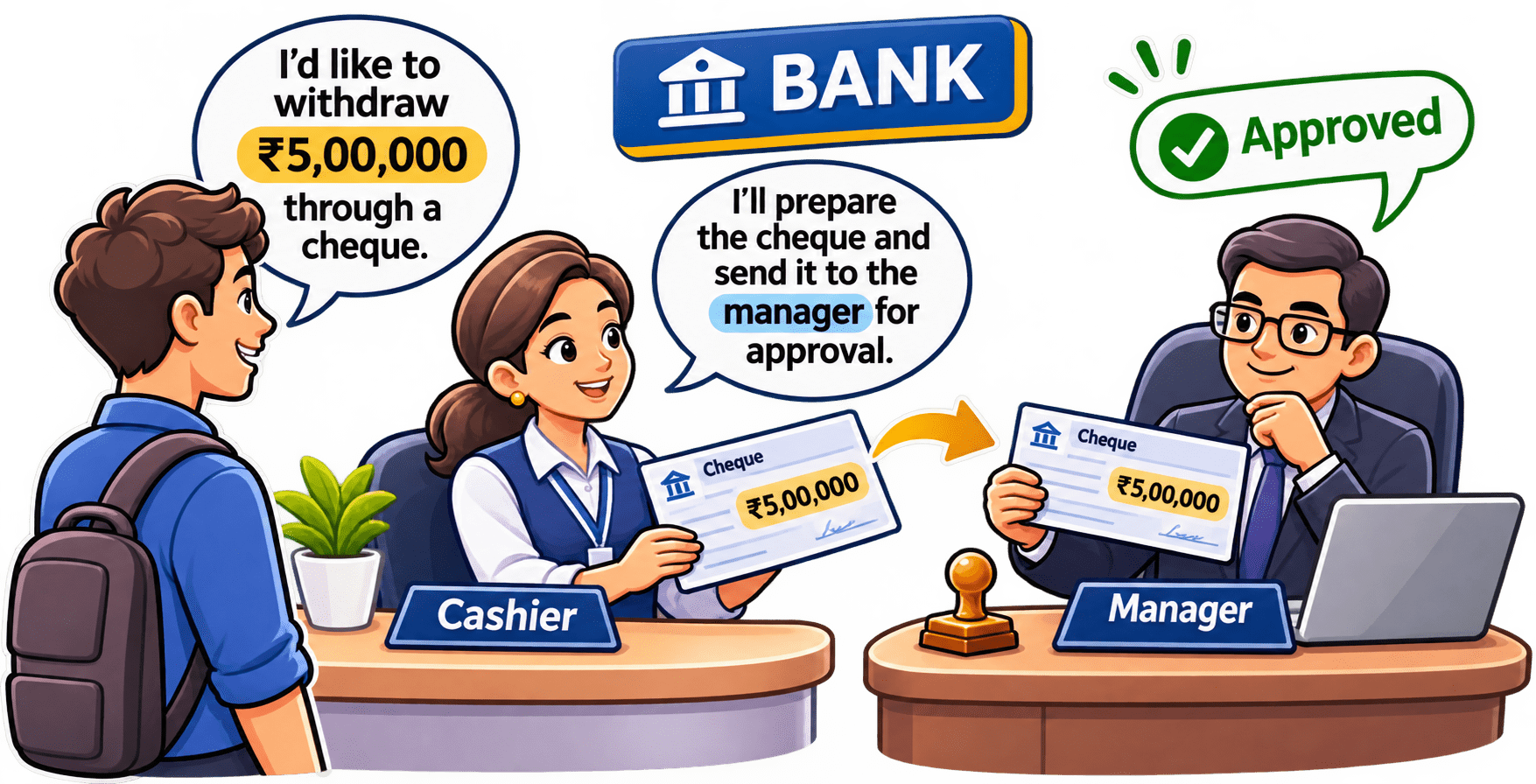
You approach the cashier and ask to withdraw ₹2,000. The cashier verifies your details, takes the cash from the drawer, and hands it over immediately.
This time, the cashier prepares the cheque but doesn't release the money immediately. Instead, the cashier sends it to the manager for approval.
The manager reviews the transaction, approves it, and only then can the money be released.
Imagine an AI system is asked to write a reply to an angry student complaining about a delayed refund.
Because not every transaction carries the same level of risk. The bank allows routine transactions to happen automatically but requires additional approval for high-value transactions.
Should the AI send the reply immediately, just like the cashier handling ₹2,000, or should it wait for a manager's approval?
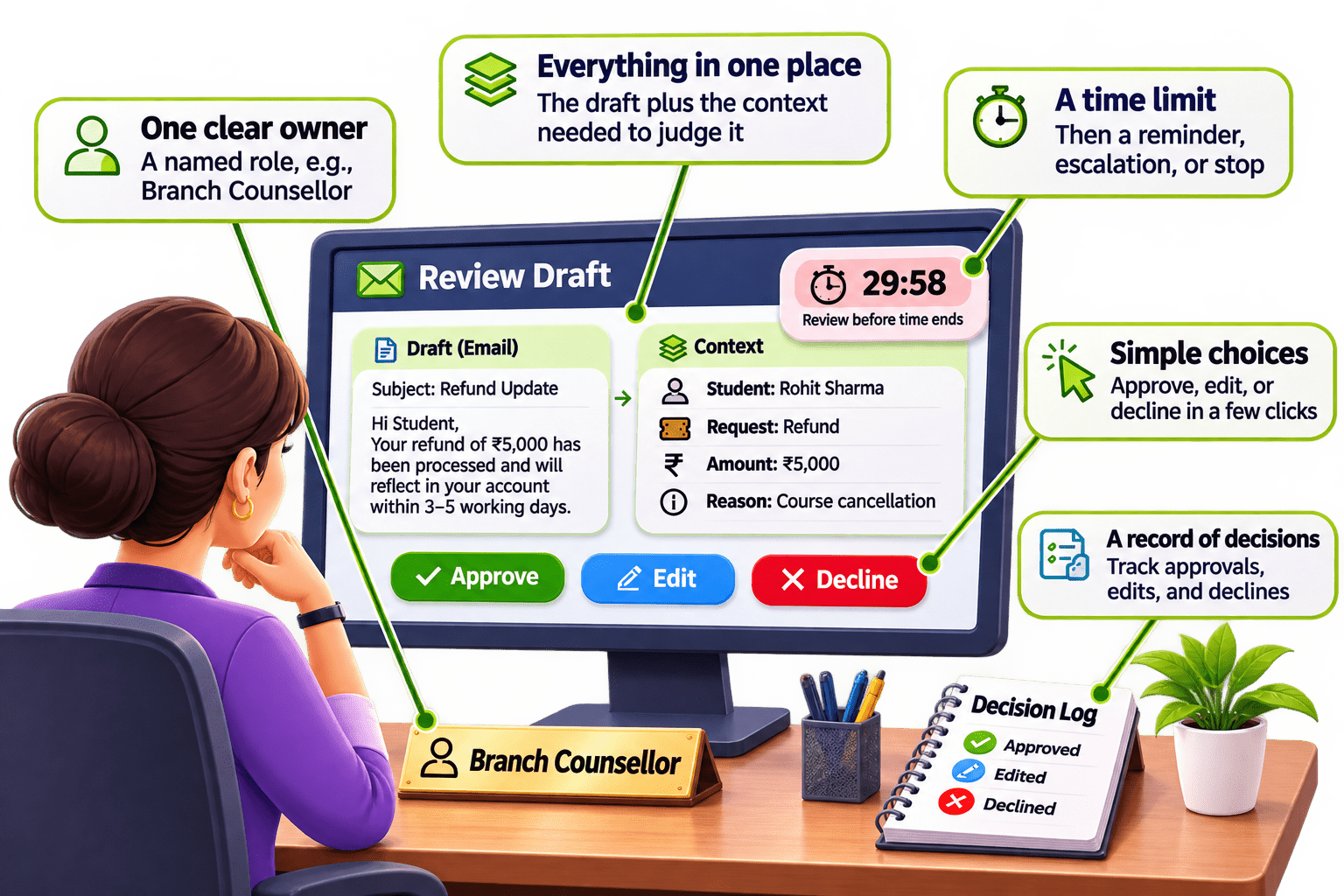
This is a situation where human approval is important because the response is sensitive, goes outside the organisation, and cannot easily be taken back once sent.
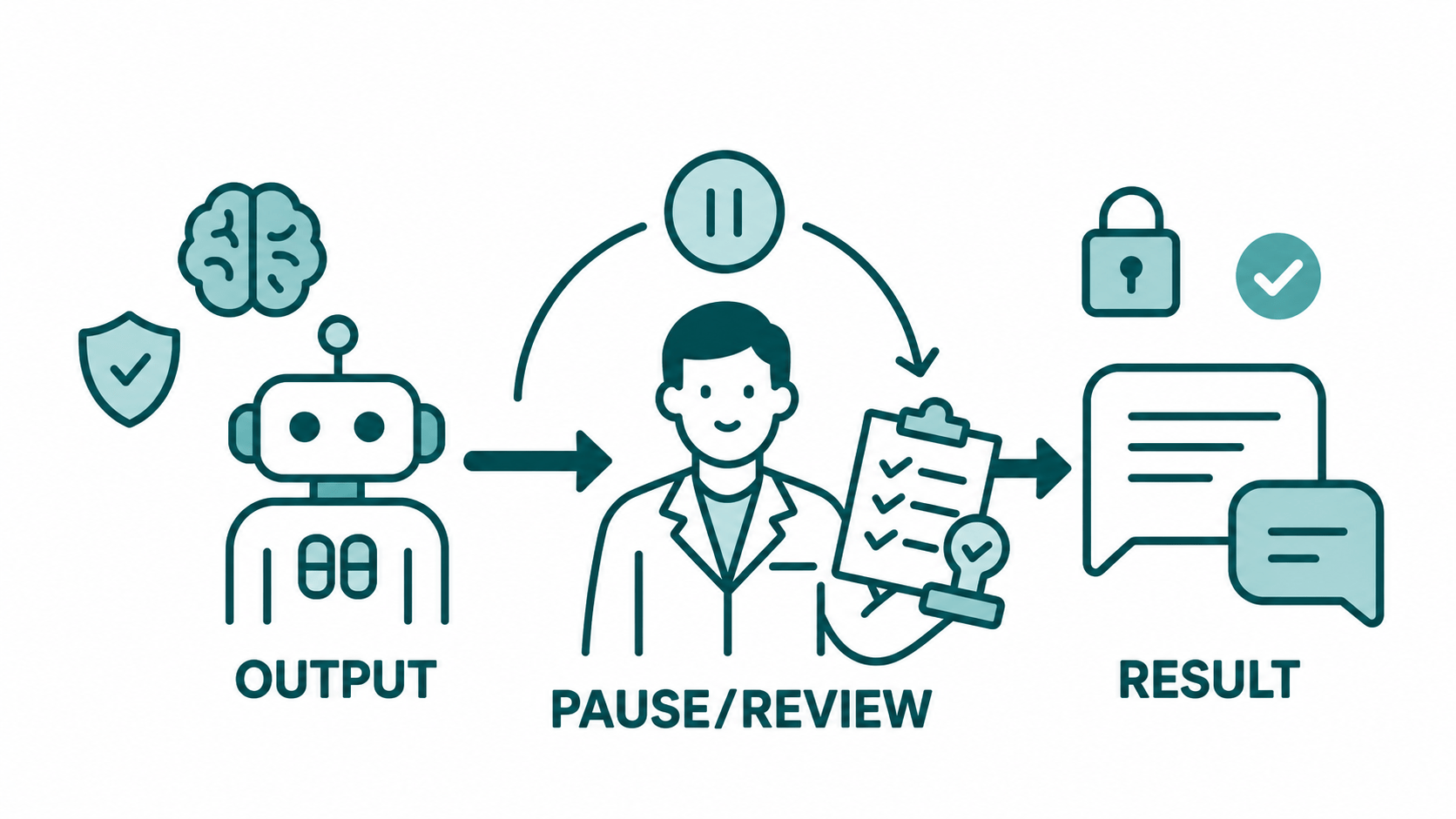
This brings us to a mechanism called Human-in-the-Loop (HITL) and Approval Workflows.
This is a situation where human approval is important because the response is sensitive, goes outside the organisation, and cannot easily be taken back once sent.
This brings us to a mechanism called Human-in-the-Loop (HITL) and Approval Workflows.
Start in draft mode
Fix the causes: dirty data, a weak template, a vague AI prompt
3
1
Track how often reviewers edit the output
2
4
Move to auto-send once drafts are consistently approved unedited
5
Move back if problems return
“We’ve received your enquiry” email to new leads
AI reply to an angry refund complaint
Slack new-lead alert to the counselling team
Auto-Send
Draft
Auto-Send
“We’ve received your enquiry” email to new leads
AI reply to an angry refund complaint
Slack new-lead alert to the counselling team
Auto-Send
Draft
Auto-Send
Summary
4
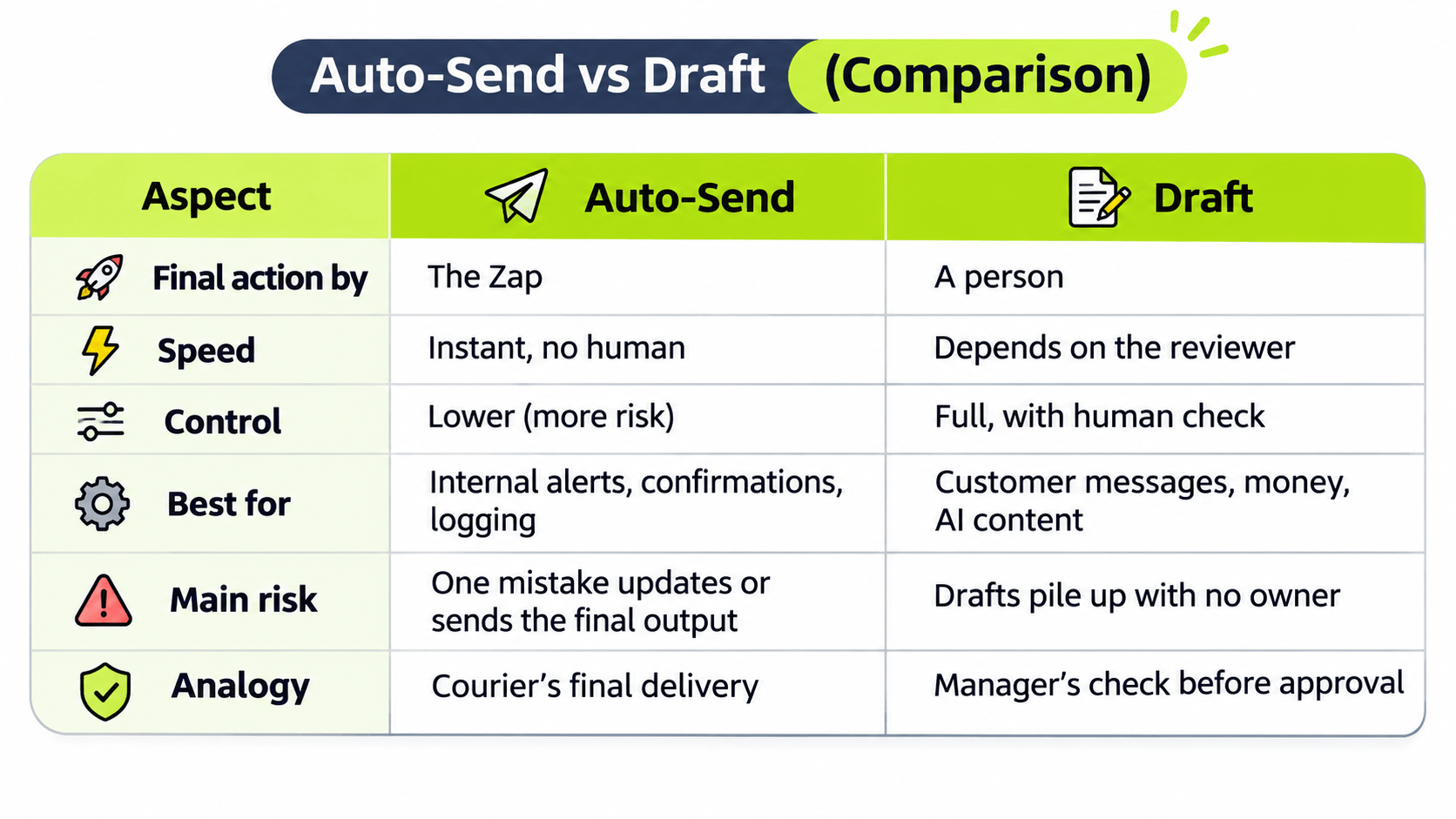
Send routine, internal outputs; draft external, high-stakes ones.
3
Good review needs an owner, context, a time limit, & simple choices.
2
1
5
Start in draft and move to auto-send as trust grows.
Ask who sees it, if it's reversible, what it costs, etc
Auto-send finishes the action; draft waits for a person.
Quiz
Which output is safest to auto-send?
A. AI reply to a complaint
B. Scholarship rejection
C. Slack new-lead alert
D. Refund above ₹10,000
Which output is safest to auto-send?
A. AI reply to a complaint
B. Scholarship rejection
C. Slack new-lead alert
D. Refund above ₹10,000
Quiz-Answer
By Content ITV