




Content ITV PRO
This is Itvedant Content department
Learning Outcome
5
Connect automation to the right business processes.
4
Apply workflow types to real scenarios.
3
Recognize linear vs conditional workflows.
2
Identify the four types of workflows.
1
Understand the five parts of a workflow.
The Dabbawalas
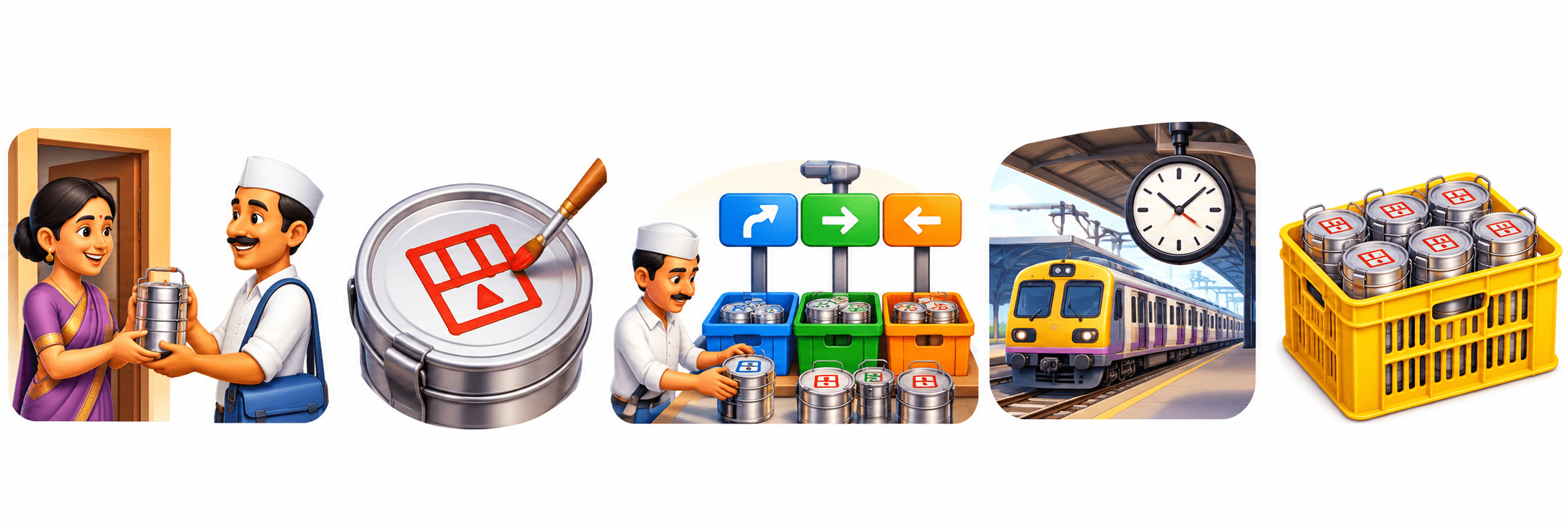
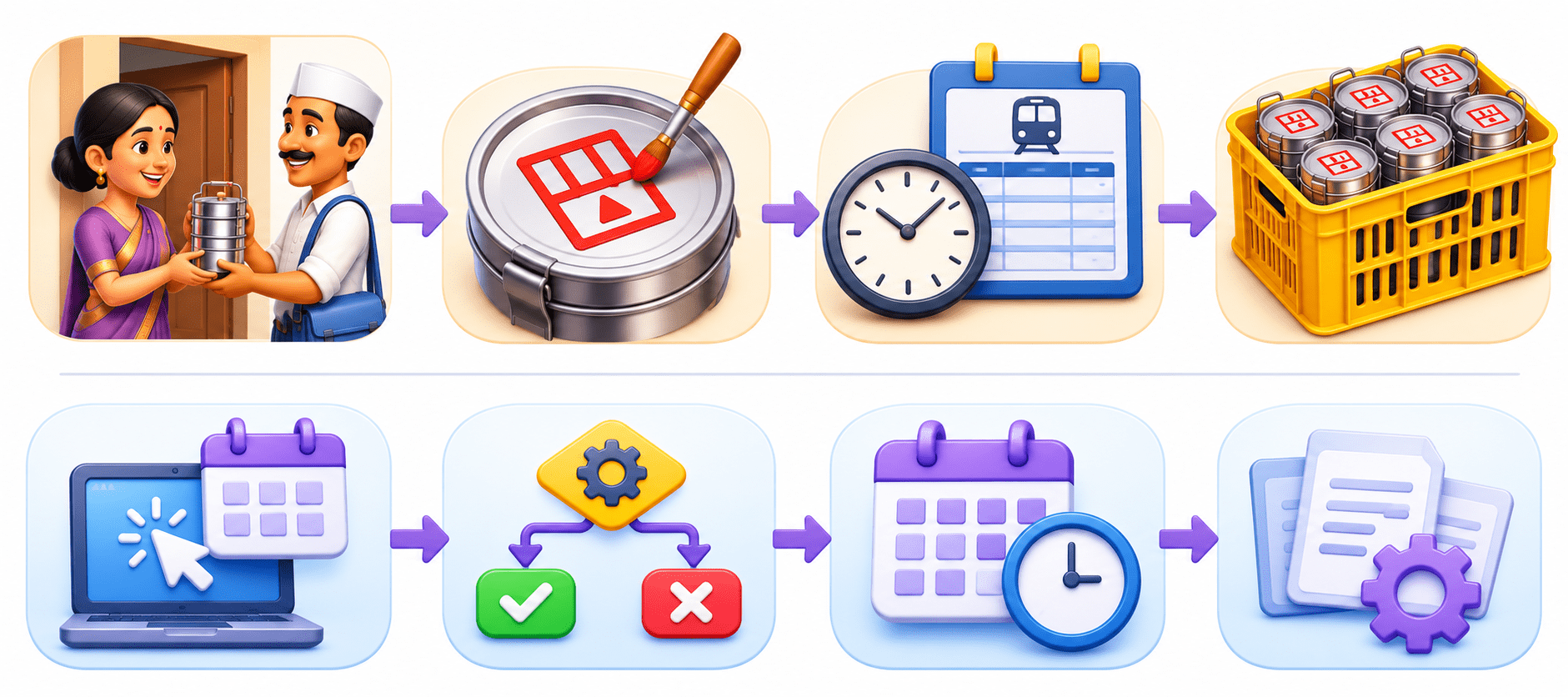
Each journey starts with a doorstep handover, and a painted code on the lid decides which route the tiffin takes.
Mumbai’s dabbawalas deliver thousands of tiffins daily.
Trains run on a fixed timetable, and one crate carries dozens of tiffins together.
How does a dabbawala know which route a tiffin should take?
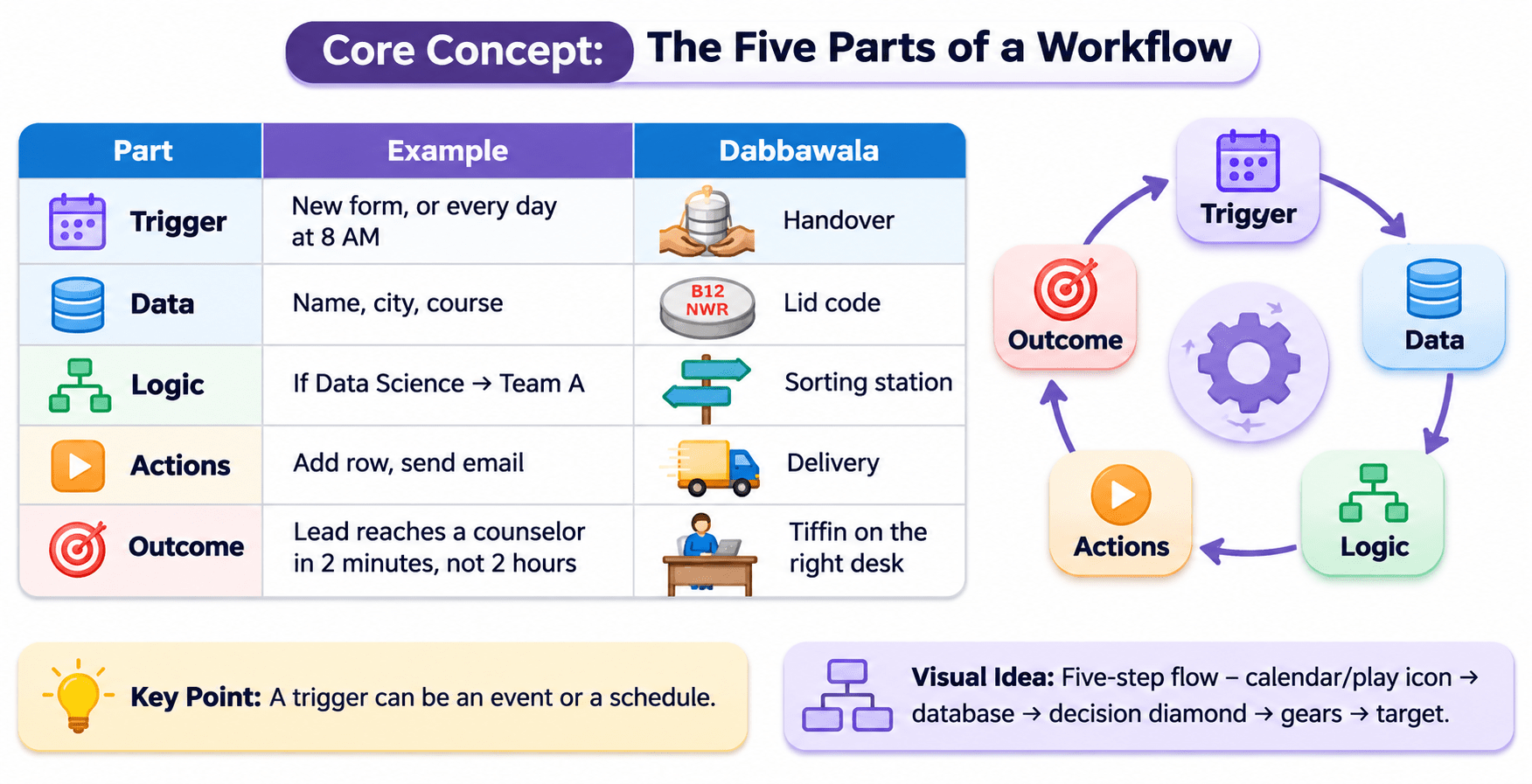
Similarly, every workflow starts with a trigger, carries data, uses logic to decide the route, runs actions, and delivers an outcome.
A clear start, a rule for every decision, and a fixed routine keep thousands of deliveries on track.
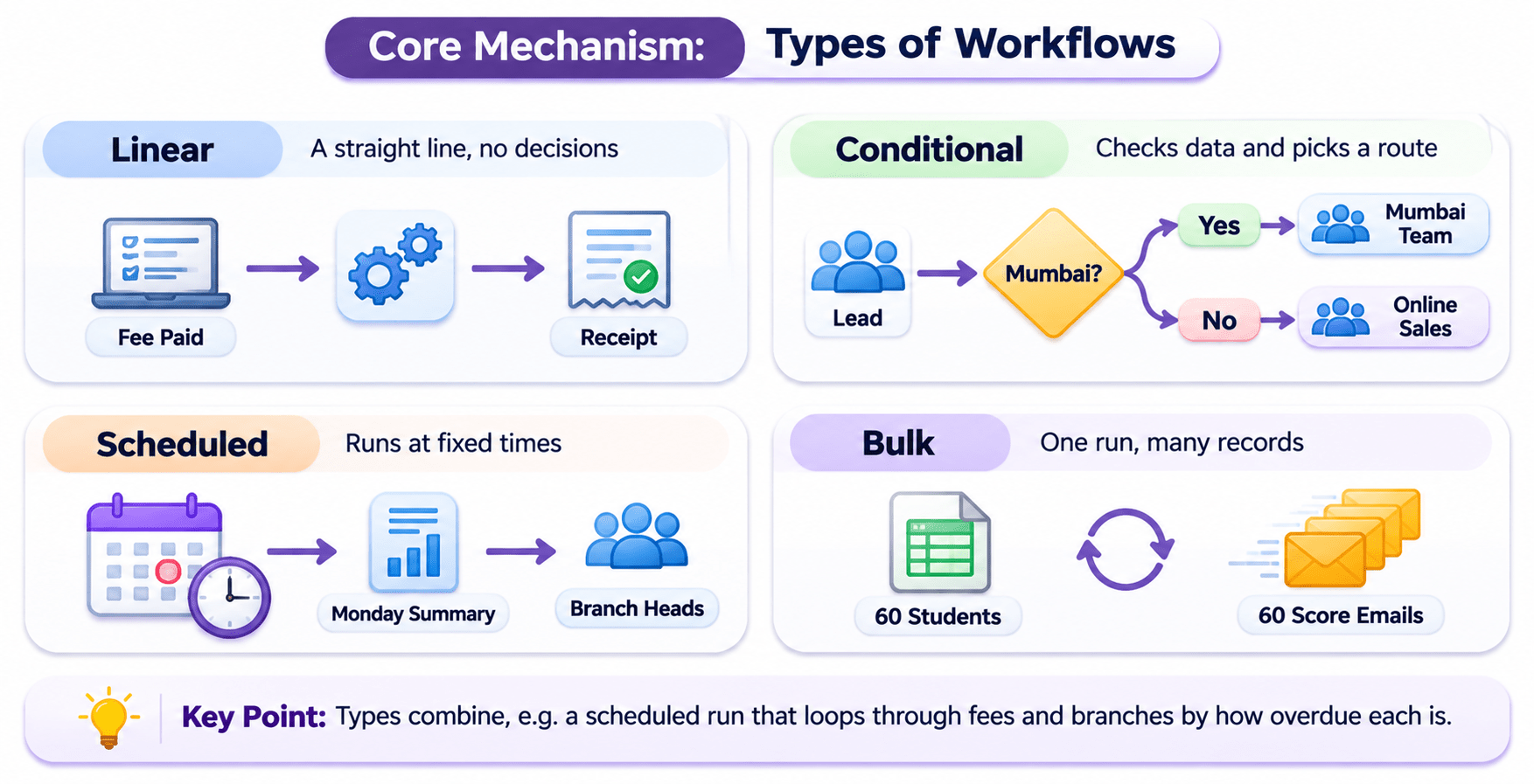
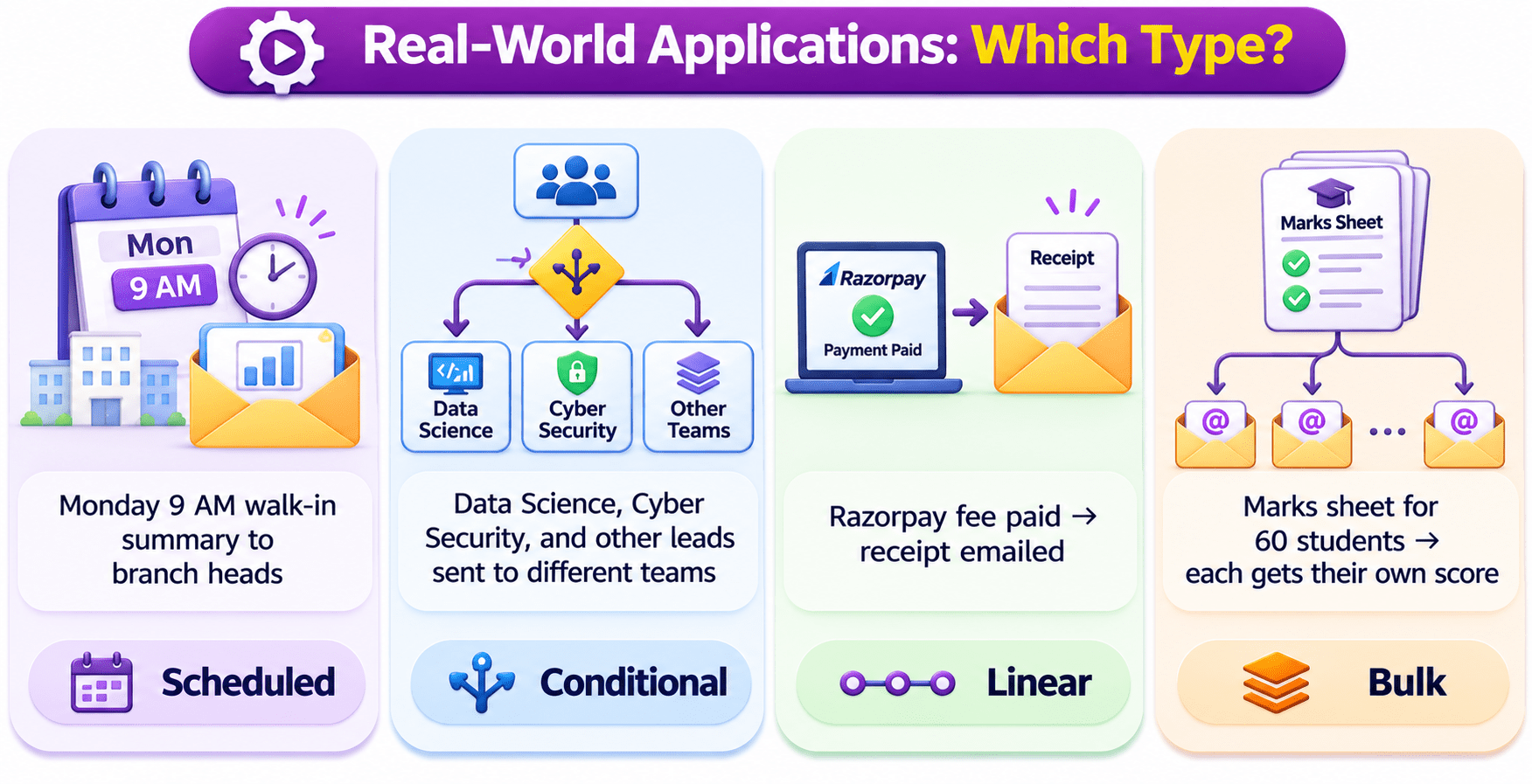
Some workflows run in a straight line (linear), some choose a route (conditional), some run at fixed times (scheduled), and some handle many records in one run (bulk).
This is called Workflow Automation: Concepts and Use Cases.
The Five Parts of a Workflow
Types of Workflows
Types of Workflows
What is Make?
One complete workflow in Make is a scenario.
It’s built on a visual canvas, with each step shown as a connected circle.
A Router splits a scenario into branches.
Unlike Zapier, you can see the full shape, which helps with branching and loops.
Free plan: 1,000 credits/month, 2 active scenarios, 15-minute minimum interval. Check current pricing.
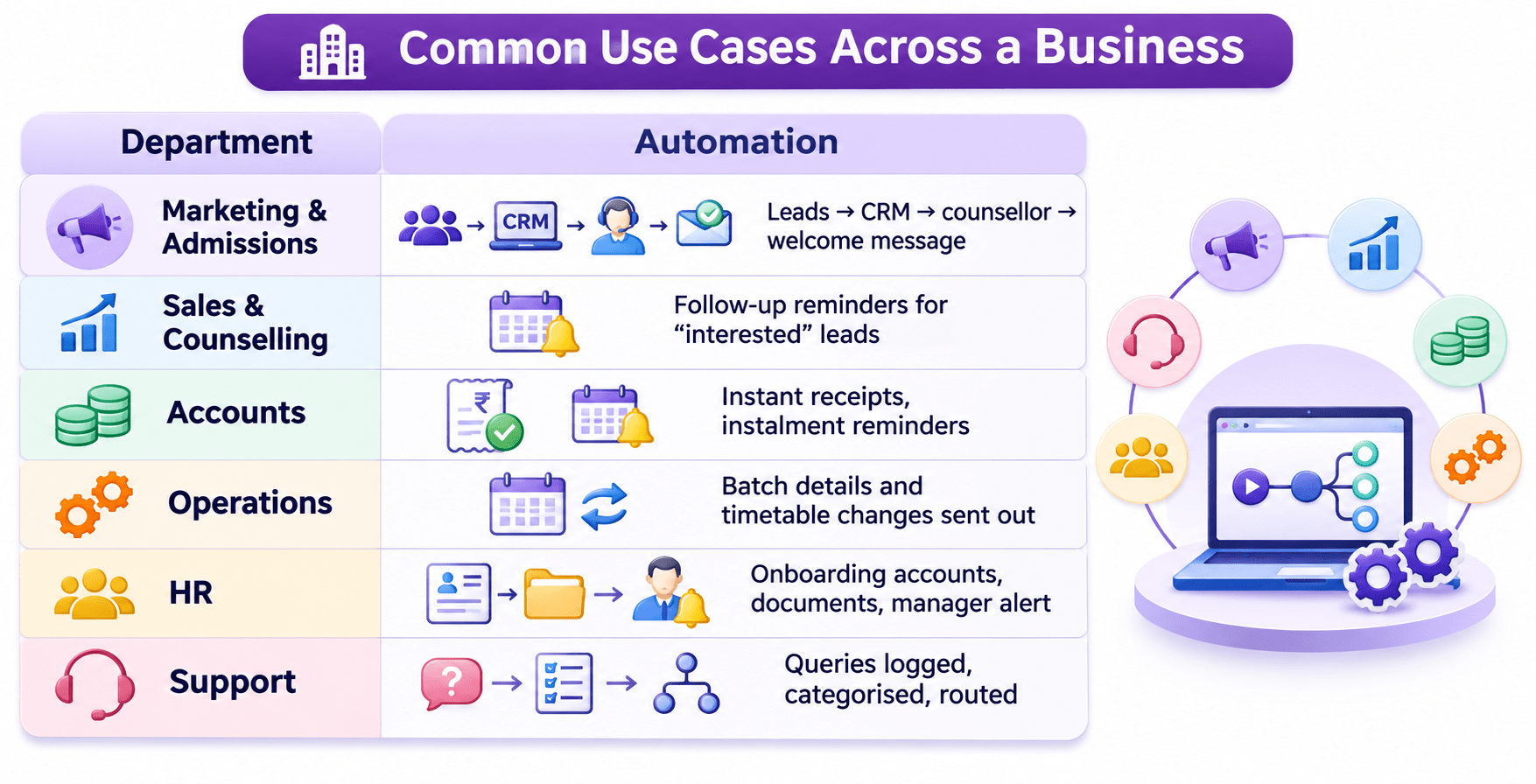
Common Use Cases Across a Business
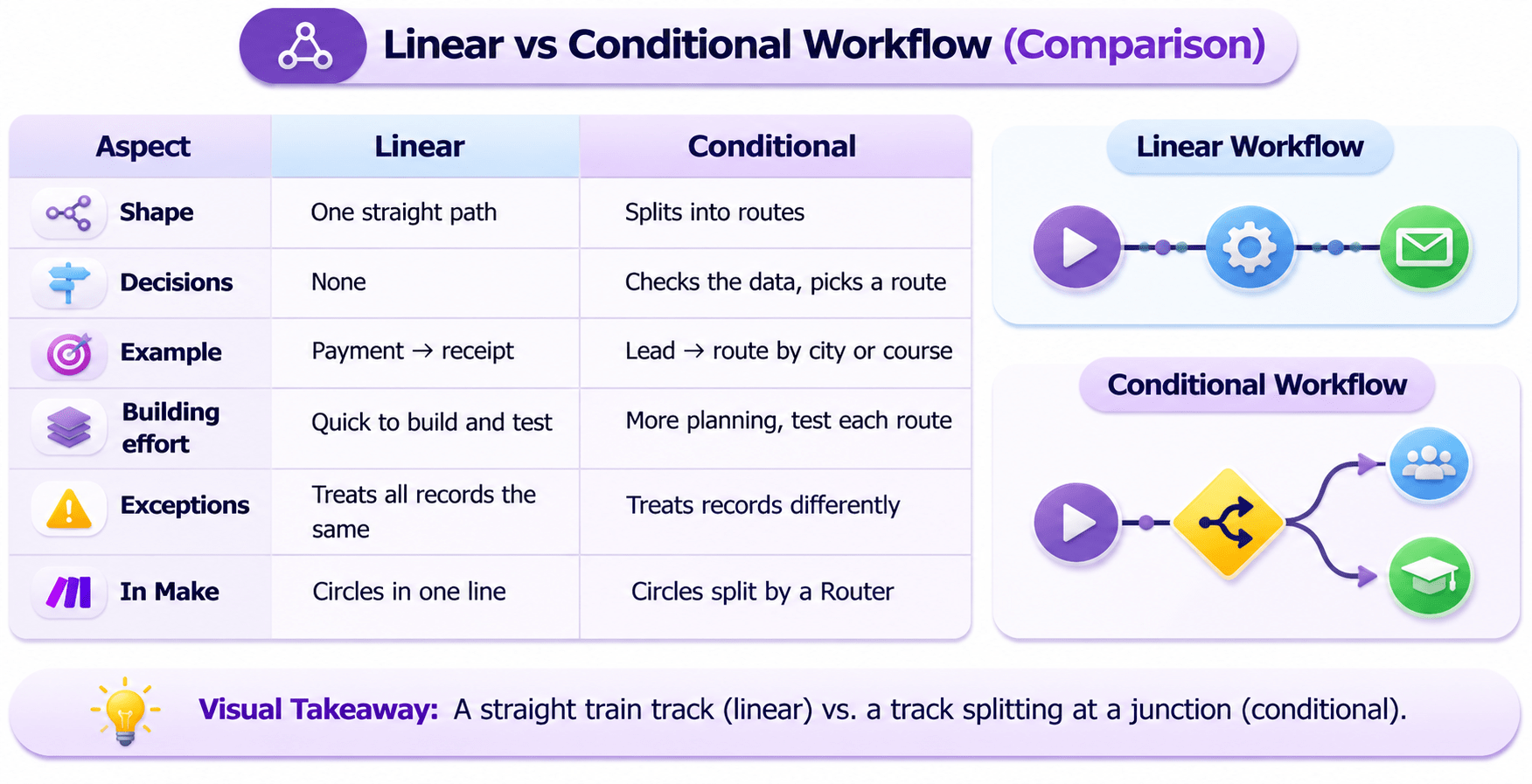
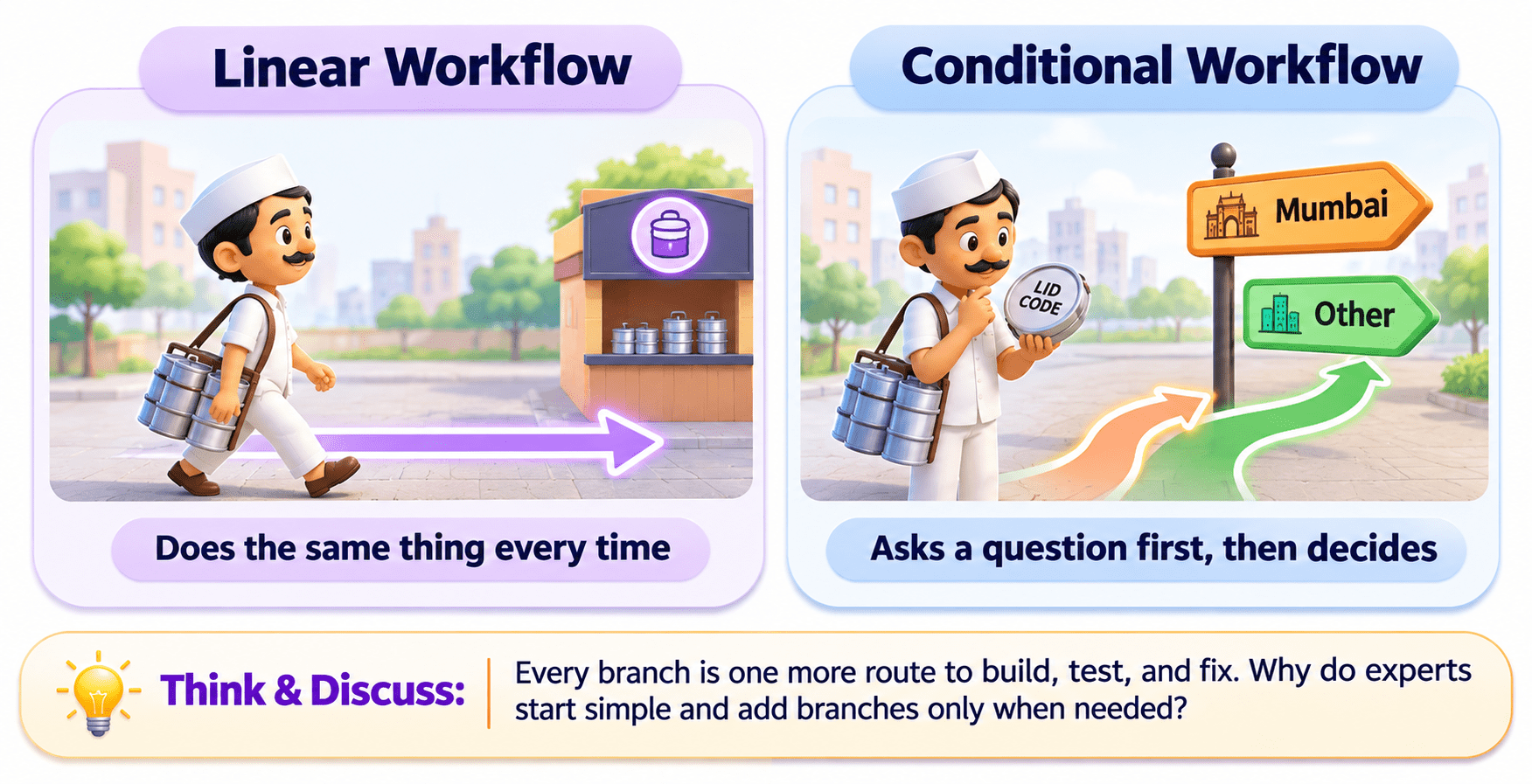
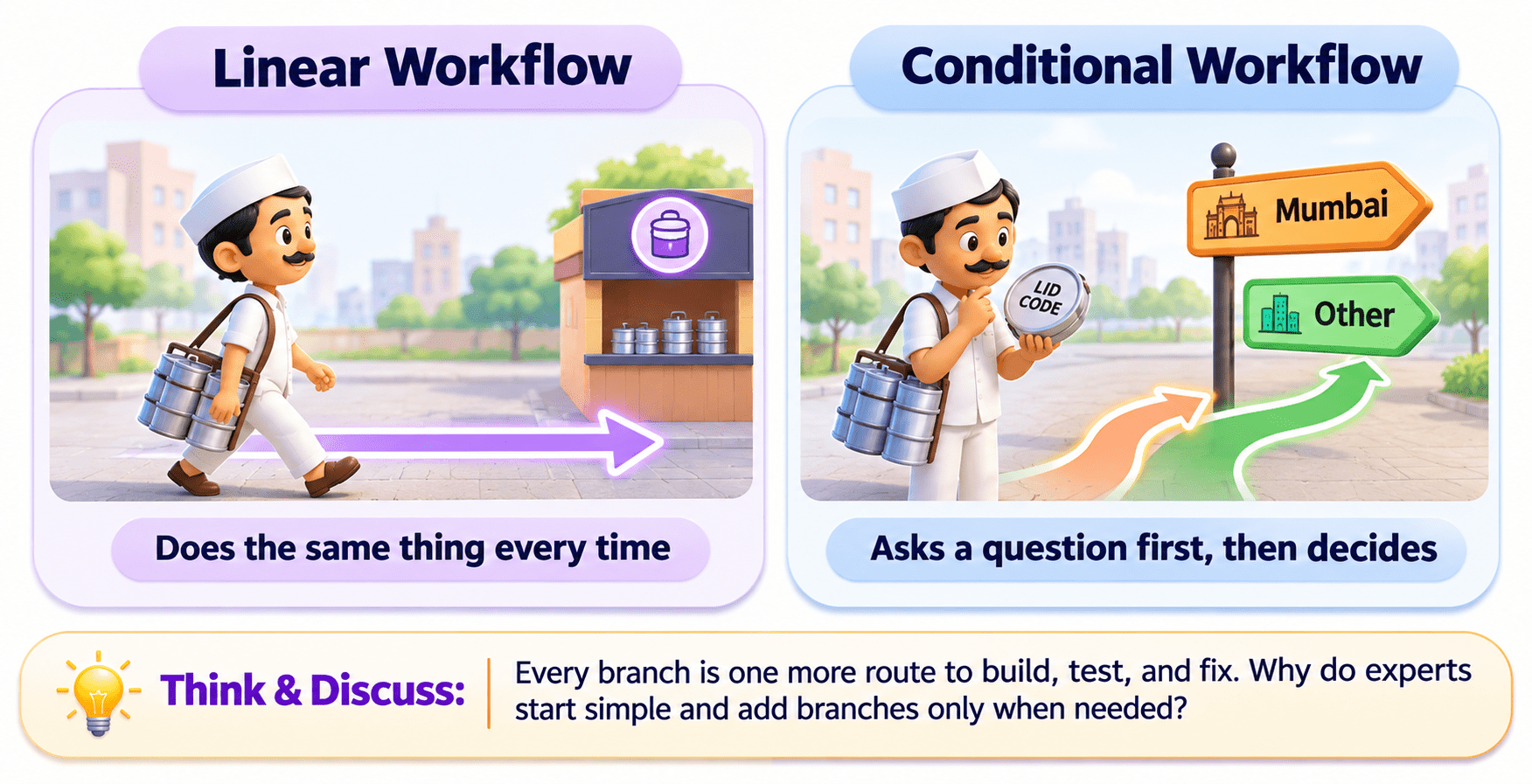
Linear vs Conditional Workflow
A Simple Way to Remember
A linear workflow does the same thing every time. A conditional workflow asks a question first, then decides.
Real-World Applications: Which Type?
Real-World Applications: Which Type?
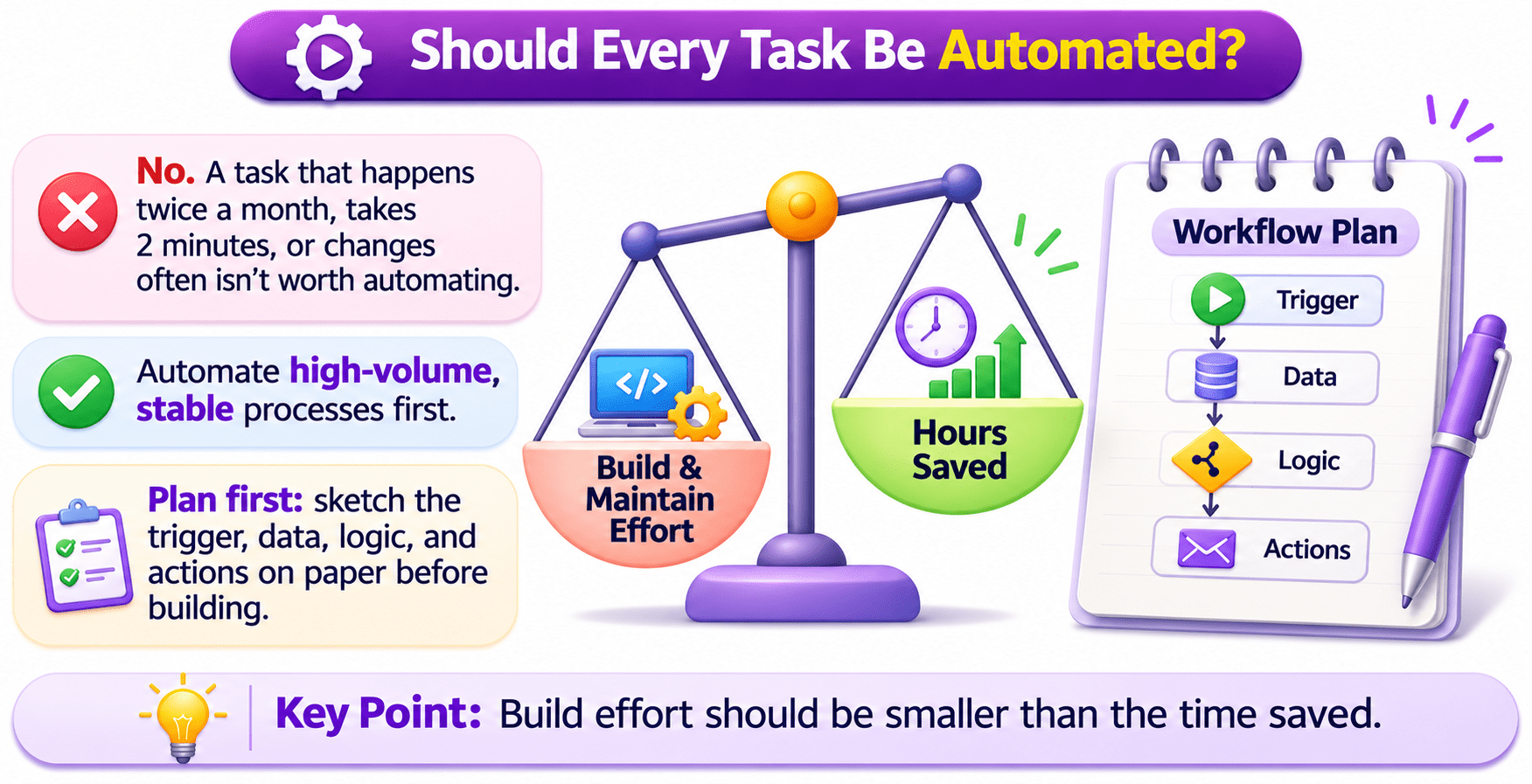
Should Every Task Be Automated?
Summary
5
Automate high-volume, stable processes first.
4
Make builds scenarios visually on a canvas.
3
Linear repeats the same steps; conditional decides first.
2
Workflows are linear, conditional, scheduled, or bulk.
1
Workflows have a trigger, data, logic, actions, and an outcome.
Quiz
On the 1st of each month, every student with a pending instalment gets a reminder. Which types apply?
A. Linear
B. Conditional only
C. Scheduled and Bulk
D. Linear and Bulk
On the 1st of each month, every student with a pending instalment gets a reminder. Which types apply?
A. Linear
B. Conditional only
C. Scheduled and Bulk
D. Linear and Bulk
Quiz-Answer
By Content ITV