















Content ITV PRO
This is Itvedant Content department
Learning Outcome
5
Apply valuation insights to financial decisions.
4
Analyze key valuation assumptions.
3
Evaluate valuation ranges.
2
Differentiate Enterprise Value and Equity Value.
1
Interpret DCF, CCA, and PTA results.
Analogy
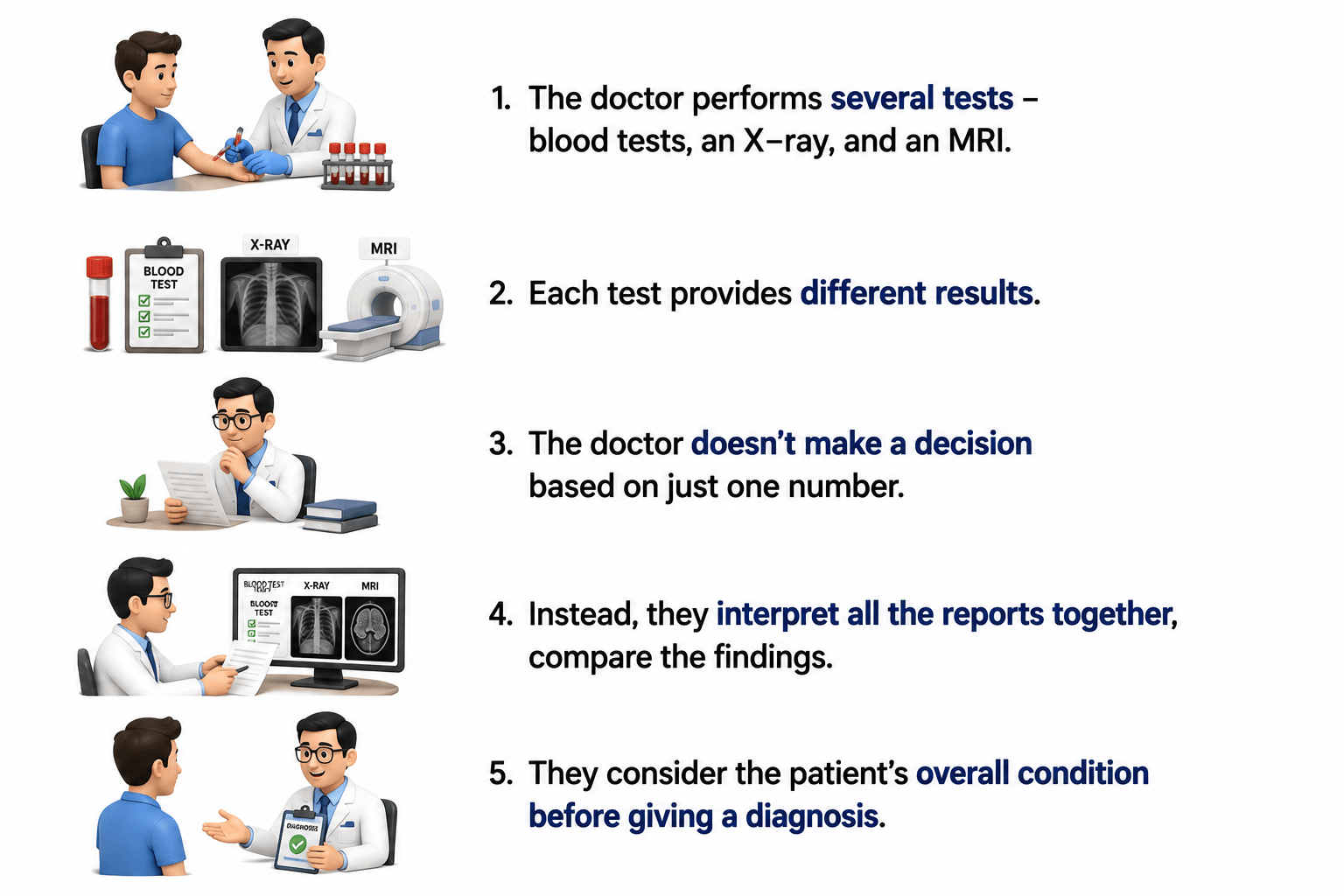
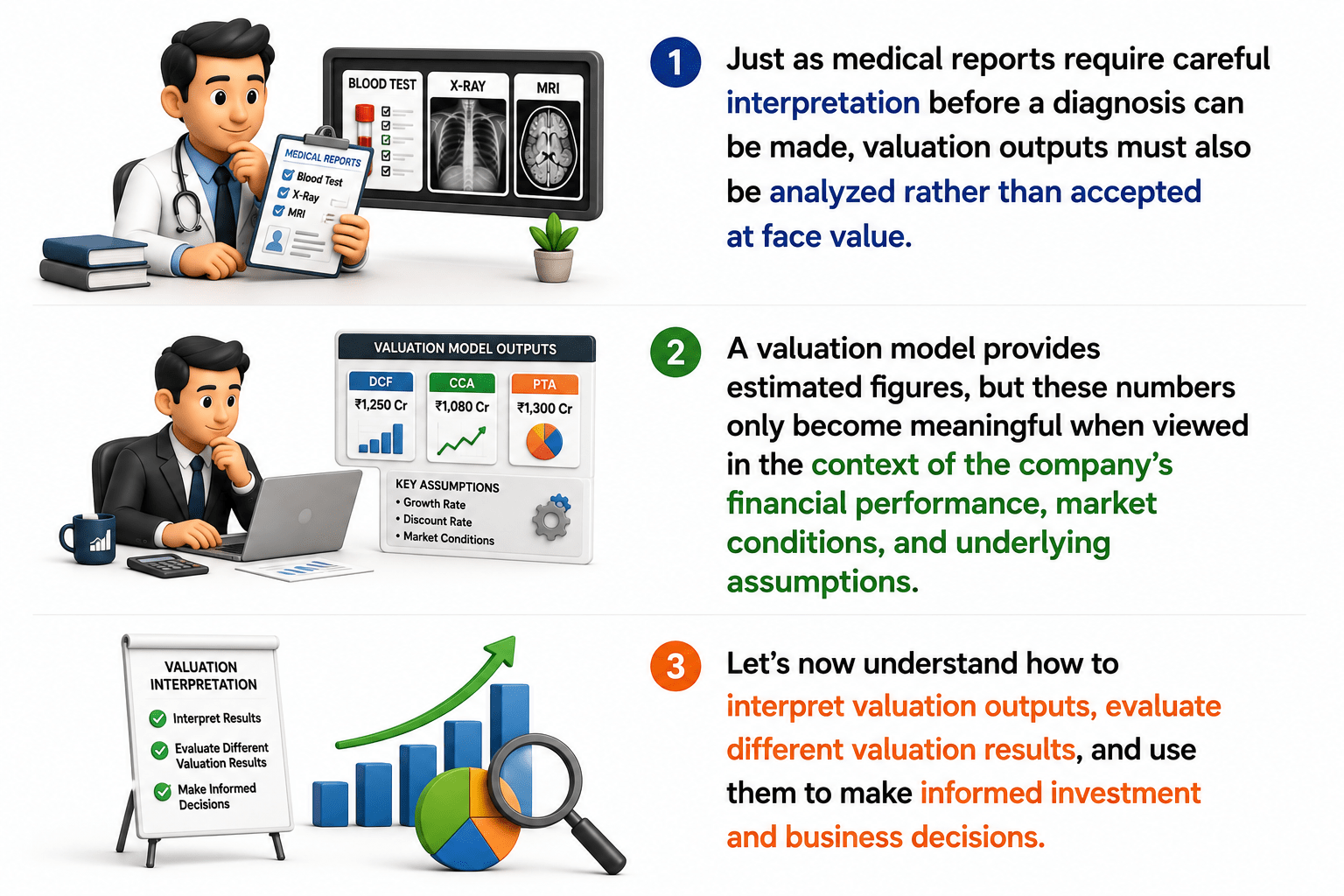
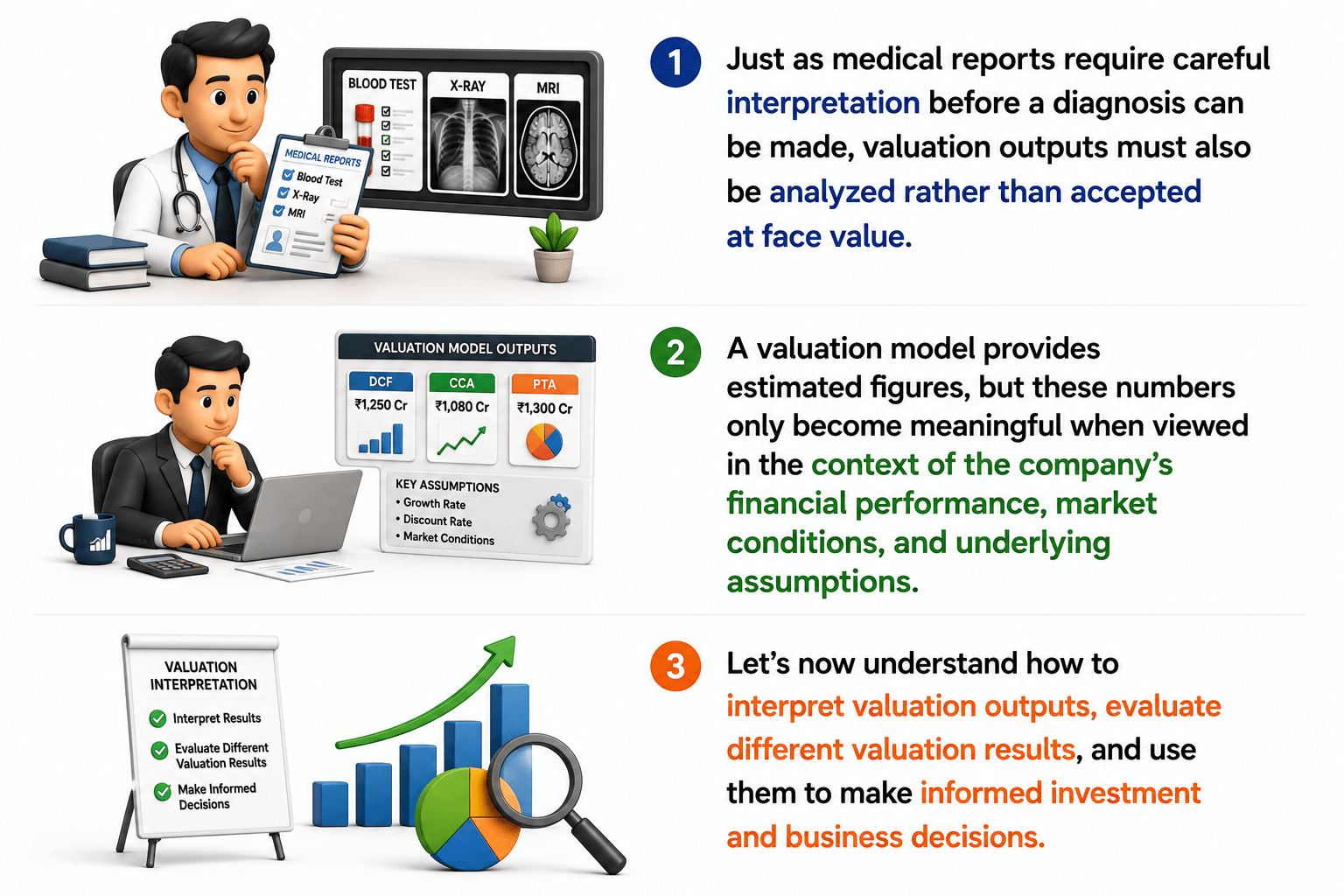
Imagine a doctor performs several tests—blood tests, an X-ray, and an MRI—to assess a patient's health.
Each test provides different results,
the doctor doesn't make a decision based on just one number.
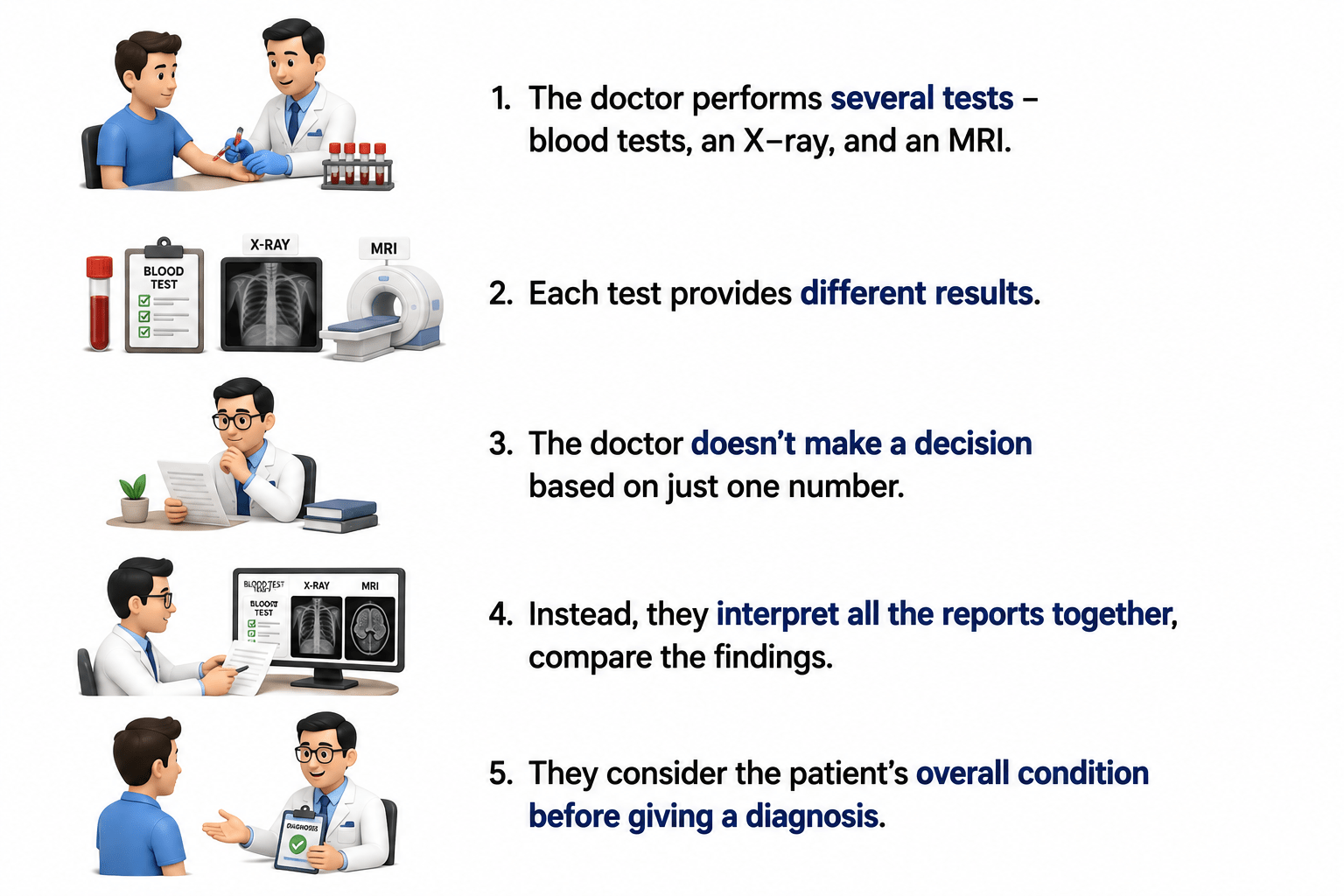
Analogy
Instead, they interpret all the reports together, compare the findings,
They consider the patient's overall condition before giving a diagnosis.
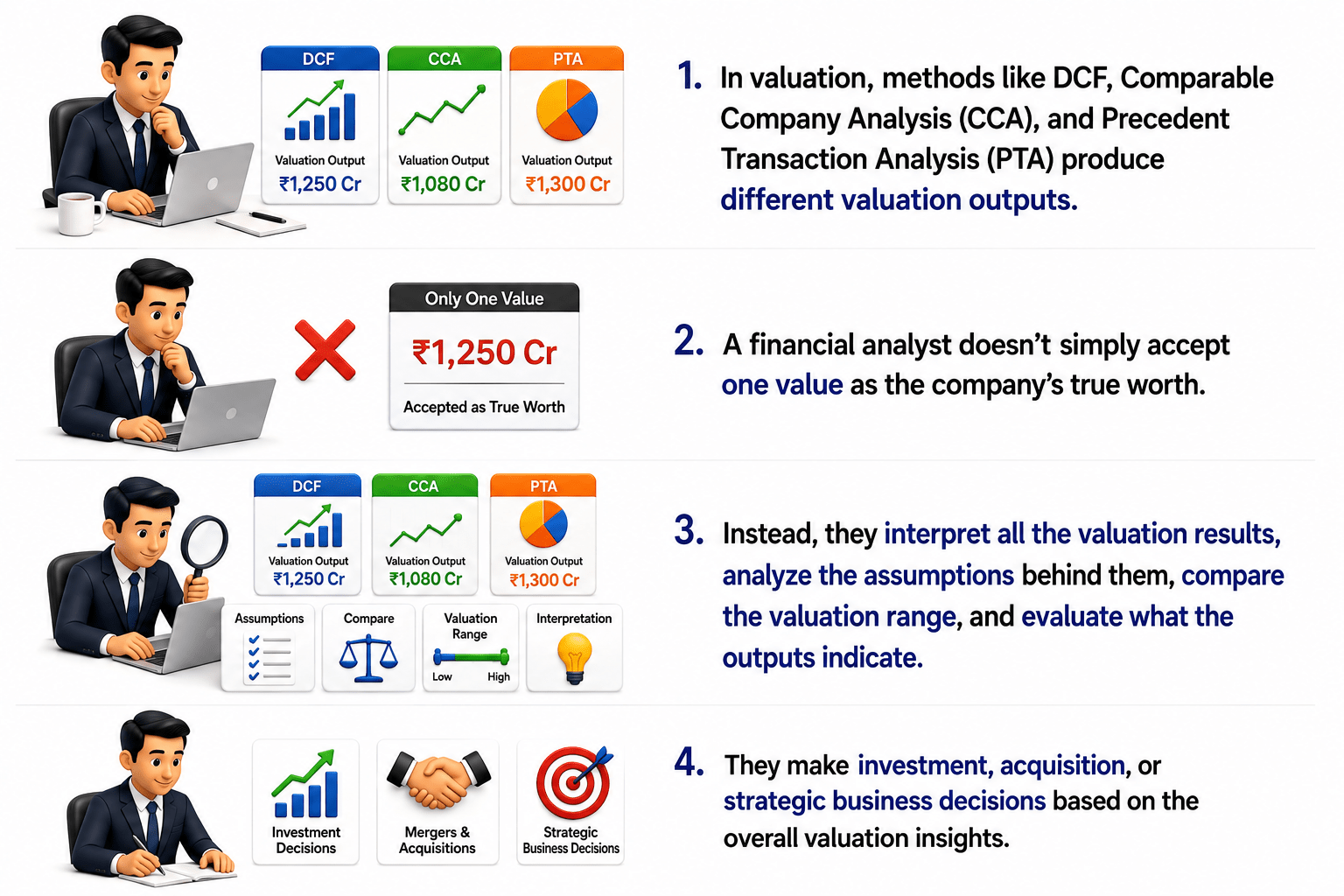
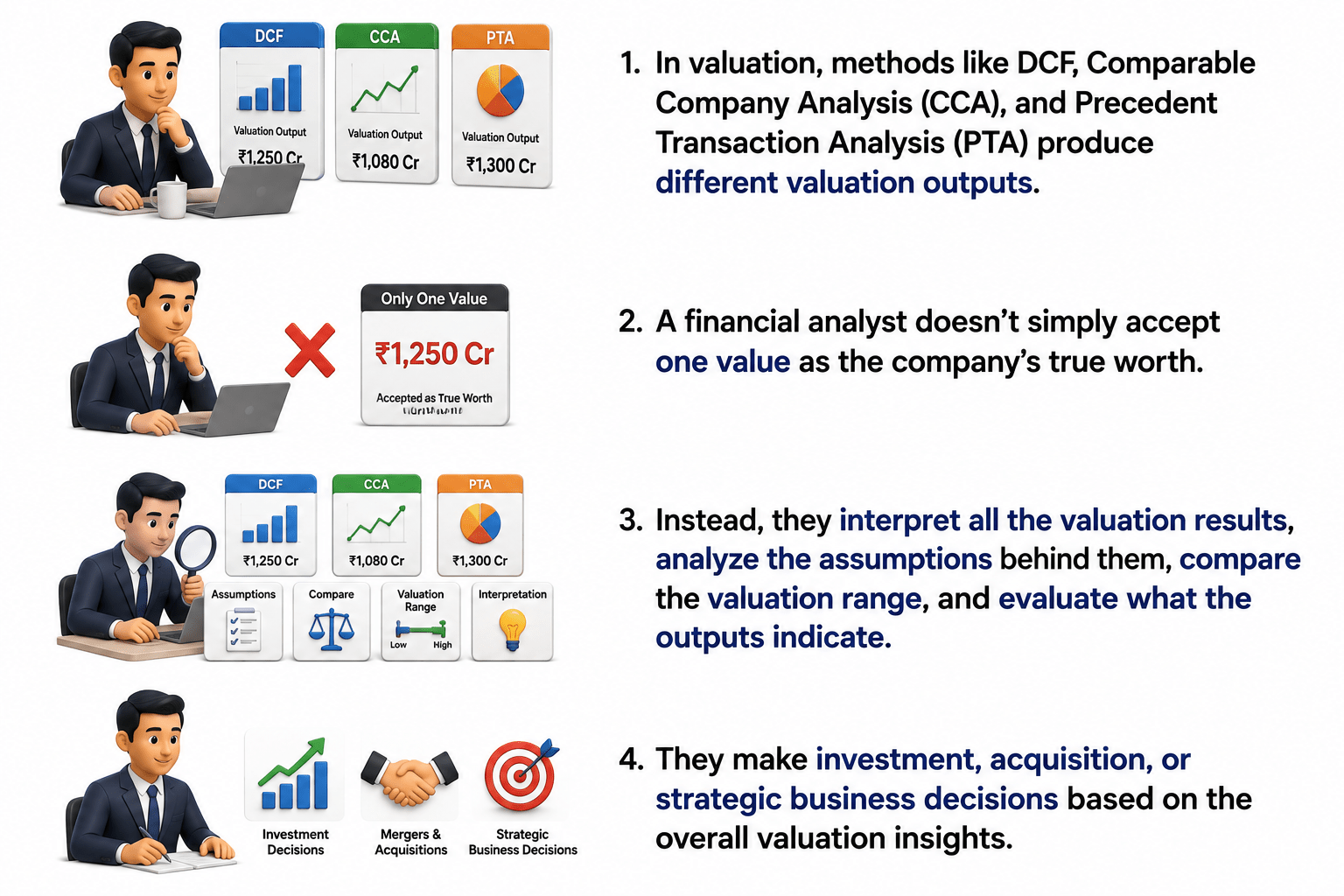
In valuation, methods like DCF, Comparable Company Analysis (CCA), and Precedent Transaction Analysis (PTA) produce different valuation outputs.
Similarly,
A financial analyst doesn't simply accept one value as the company's true worth.
Instead, they interpret all the valuation results, analyze the assumptions behind them, compare the valuation range, and evaluate what the outputs indicate
They make investment, acquisition, or strategic business decisions.
Transition to Concept
Just as medical reports require careful interpretation before a diagnosis can be made, valuation outputs must also be analyzed rather than accepted at face value. A valuation model provides estimated figures, but these numbers only become meaningful when viewed in the context of the company's financial performance, market conditions, and underlying assumptions.
Let's now understand how to interpret valuation outputs, evaluate different valuation results, and use them to make informed investment and business decisions.
Definition
Interpretation of Valuation Outputs is the process of analyzing, comparing, and evaluating the results generated by different valuation techniques to determine a company's most reasonable estimated value. Rather than relying on a single valuation figure, analysts examine the valuation range, underlying assumptions, market conditions, and company-specific factors to arrive at a fair and well-supported investment conclusion.
Since every valuation method uses different assumptions and perspectives, the estimated values often vary. Therefore, interpreting valuation outputs is not about identifying one "correct" value but about understanding why the values differ, assessing their reliability, and selecting an appropriate valuation range for decision-making.
Core Concepts of Interpretation of Valuation Outputs
1. Analyze Results from Multiple Valuation Techniques
Different valuation methods estimate a company's value from different perspectives. Therefore,analysts compare results from multiple methods instead of depending on only one.
Common valuation methods include
Comparable Company Analysis (CCA):
Based on valuation multiples of similar publicly traded companies.
Discounted Cash Flow (DCF):
Based on the company's future cash-generating ability.
Precedent Transaction Analysis (PTA):
Based on prices paid in similar past acquisitions.
| Valuation Method | Estimated Enterprise Value |
|---|---|
| DCF | $520 million |
| Comparable Company Analysis | $495 million |
| Precedent Transaction Analysis | $545 million |
Example:
Although each method gives a different value, all three collectively help estimate the company's reasonable market value.
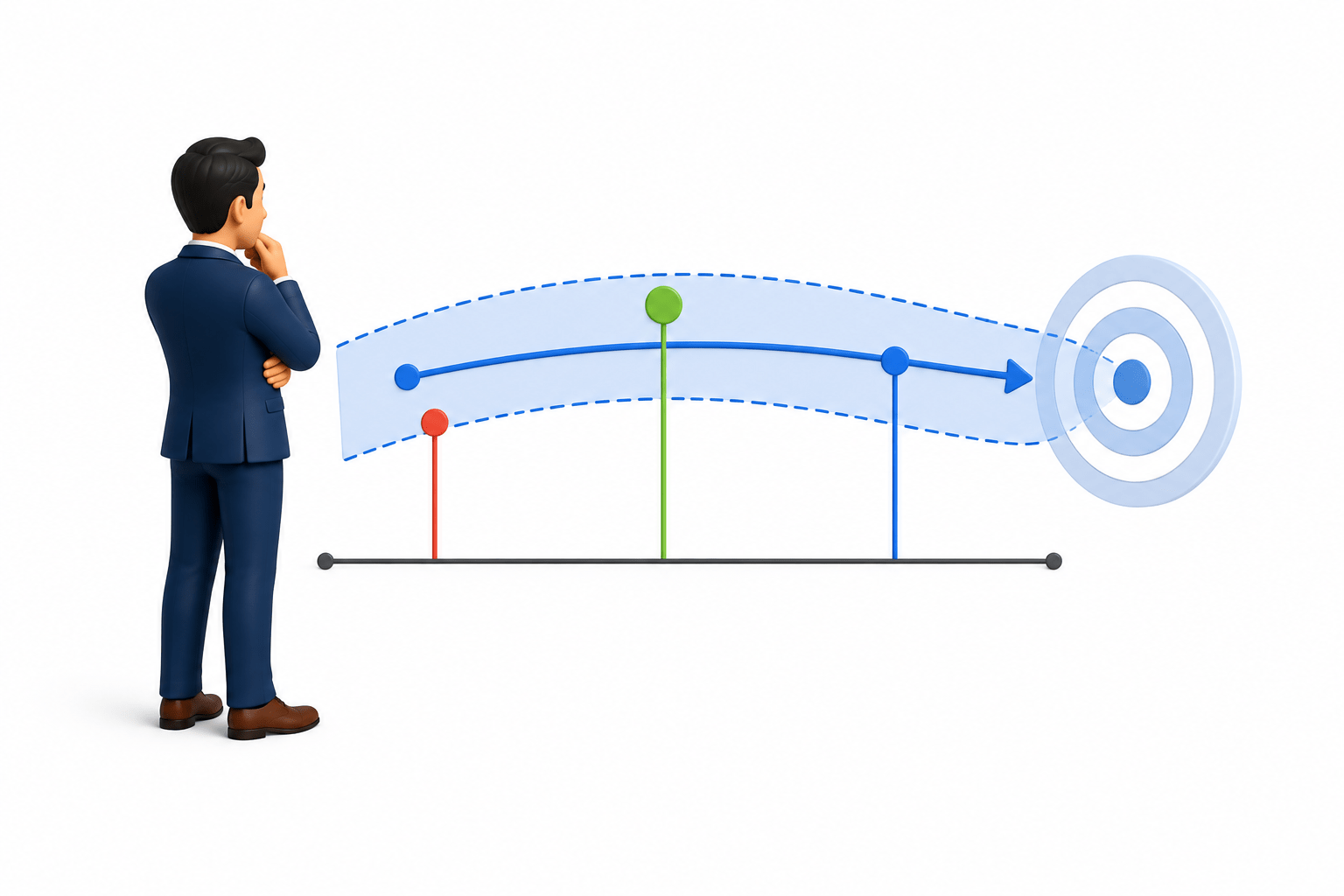
2. Determine a Reasonable Valuation Range
For example:
Lowest valuation = $495 million
Highest valuation = $545 million
Reasonable valuation range: $495–545 million
A valuation range provides greater flexibility and reflects uncertainty arising from assumptions, market conditions, and future business performance.
Valuation is an estimate—not an exact science. Instead of focusing on a single figure, analysts identify a valuation range within which the company's fair value is likely to lie.
3. Understand Why Valuation Results Differ
Different valuation techniques often produce different outputs because they rely on different assumptions and data.
different assumptions and data.
Some common reasons include:
Different revenue growth assumptions
Different discount rates (WACC)
Different EBITDA or earnings multiples
Market sentiment and industry conditions
Control premium included in acquisition transactions
Company-specific risks and future expectations
Understanding these differences helps analysts judge which valuation method is most appropriate for a particular company.
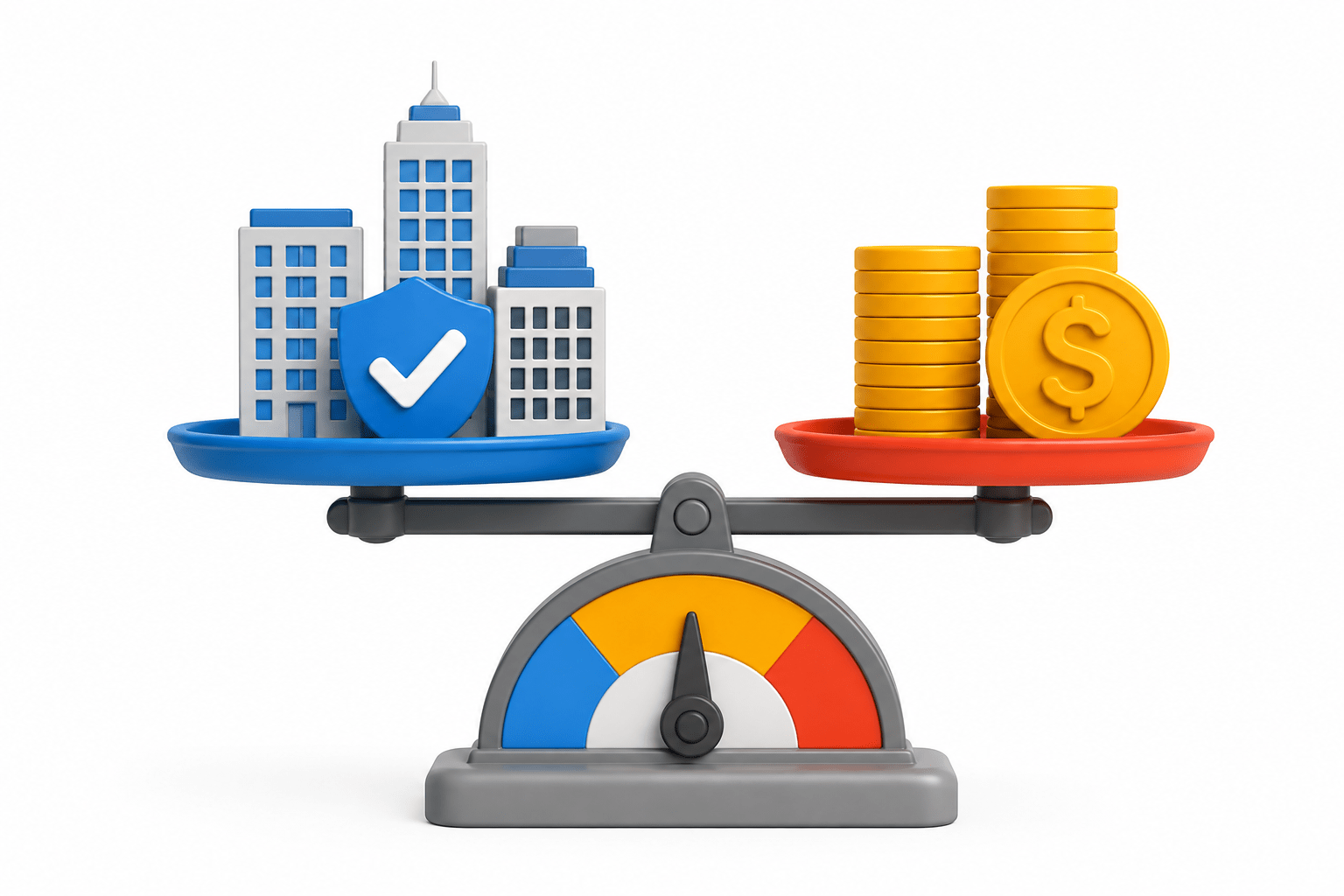
4. Assess Whether the Company is Undervalued or Overvalued
Intrinsic Value > Market Value: Company may be undervalued, indicating a potential buying opportunity.
Intrinsic Value ≈ Market Value: Company appears fairly valued.
Intrinsic Value < Market Value: Company may be overvalued, suggesting caution for investors.
This comparison forms the basis for many investment recommendations.
Once the valuation range is determined, analysts compare it with the company's current market value.
5. Support Investment and Strategic Decisions
The final purpose of interpreting valuation outputs is to support informed financial decisions.
Valuation outputs are used to:
Make Buy, Hold, or Sell investment recommendations.
Evaluate mergers and acquisitions (M&A).
Negotiate acquisition prices.
Assess fundraising and IPO pricing.
Support strategic business expansion and corporate planning.
Proper interpretation transforms valuation numbers into actionable business insights that guide investors, management teams, and financial advisors toward better decision-making.
6. Evaluate the Reliability of Each Valuation Method
For example:
DCF is generally more reliable for mature companies with predictable cash flows.
CCA is useful when many comparable publicly listed companies exist.
PTA is preferred when analyzing acquisition values because it includes control premiums.
The analyst may assign greater weight to one method depending on the purpose of the valuation.
Not all valuation methods carry equal importance in every situation. Analysts assess which method provides the most reliable estimate based on the company's characteristics and available data.
7. Consider the Impact of Key Assumptions
Valuation outputs are highly sensitive to assumptions made during the valuation process. Even small changes in assumptions can significantly affect the estimated value.
Some critical assumptions include:
Revenue growth rate
Profit margins
Capital expenditure (CapEx)
Working capital requirements
Discount rate (WACC)
Terminal growth rate
Valuation multiples
Understanding these assumptions helps analysts judge how realistic and dependable the valuation results are.
8. Compare Enterprise Value and Equity Value
A complete interpretation involves understanding whether the valuation output represents Enterprise Value (EV) or Equity Value.
Enterprise Value represents the value of the entire business, including debt and equity.
Equity Value represents the value available to shareholders after subtracting net debt from Enterprise Value.
Analysts must interpret the correct valuation measure before making investment or acquisition decisions.
9. Perform Sensitivity and Scenario Analysis
Since valuation depends on assumptions, analysts often test how valuation changes under different scenarios.
Common scenarios include:
Base Case – Most likely assumptions.
Optimistic Case – Higher growth and profitability.
Pessimistic Case – Lower growth and higher risks.
Sensitivity analysis shows which variables have the greatest impact on valuation and helps assess investment risk.
Summary
5
Valuation helps identify undervalued, fair,overvalued companies.
4
Growth, WACC, terminal growth, and multiples affect valuation.
3
Use multiple methods to determine a valuation range.
2
DCF, CCA, and PTA may produce different values.
1
Interpret valuation outputs to estimate fair value.
Quiz
If a company's intrinsic value is higher than its current market value, the company is generally considered:
A. Overvalued
B. Fairly valued
C. Undervalued
D. Bankrupt
Quiz-Answer
If a company's intrinsic value is higher than its current market value, the company is generally considered:
A. Overvalued
B. Fairly valued
C. Undervalued
D. Bankrupt
By Content ITV