










Content ITV
This is Itvedant Content department
Learning Outcome
4
Identify whether RAG issues come from document loading or chunking.
3
Recognize the common chunking strategies and the trade-offs of chunk size.
2
Identify the difference between document loading and document chunking.
1
Understand document preprocessing and its role in building a good RAG pipeline.
Let's Recall
We saw document ingestion as just one step in the pipeline — but what actually happens inside that step to turn messy, varied source material into something a RAG system can use well?
The RAG Architecture: RAG Pipeline – RAG works through document ingestion, embedding and indexing, retrieval, augmentation, and generation, all coordinated by an orchestrating layer.
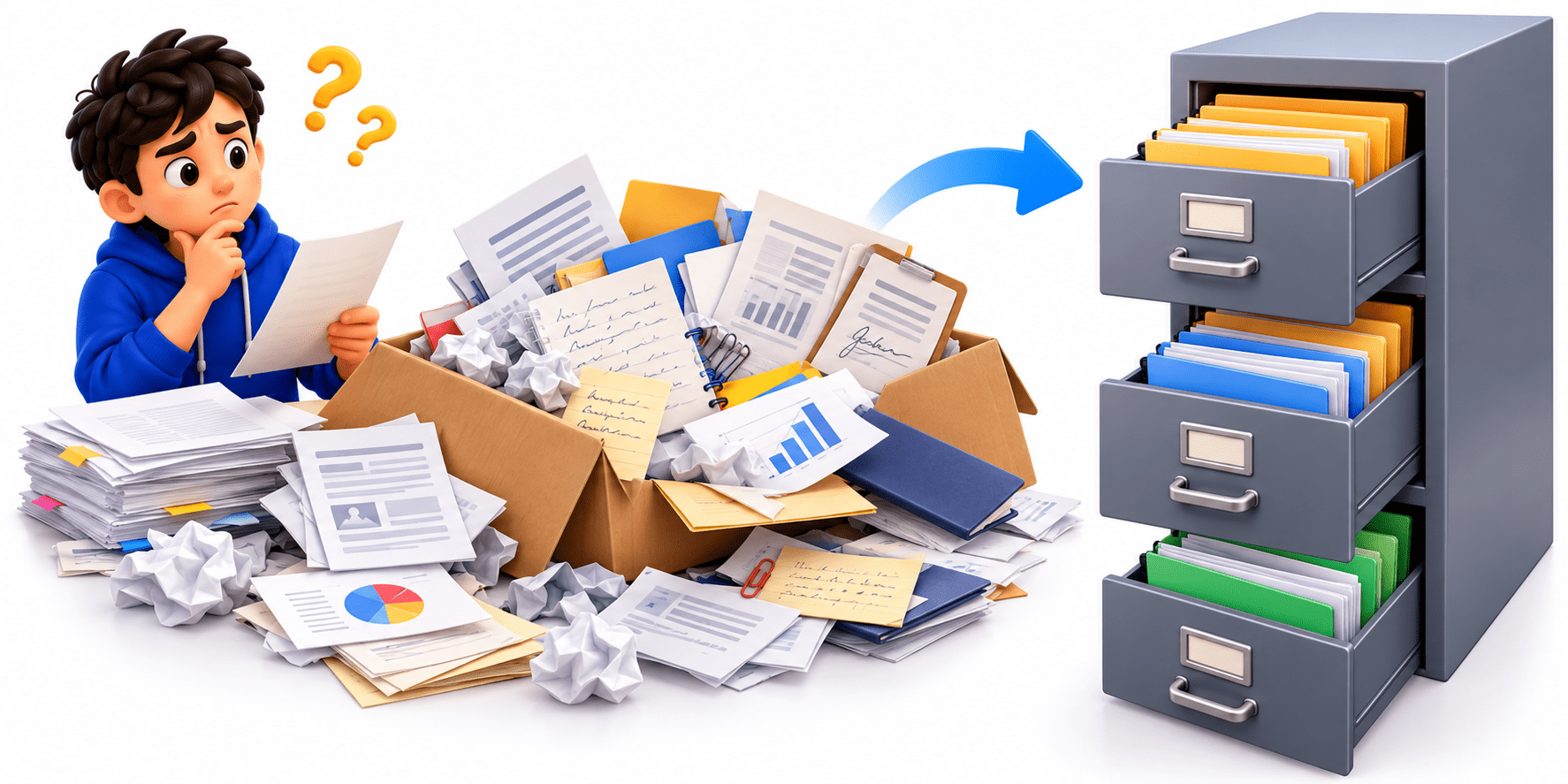
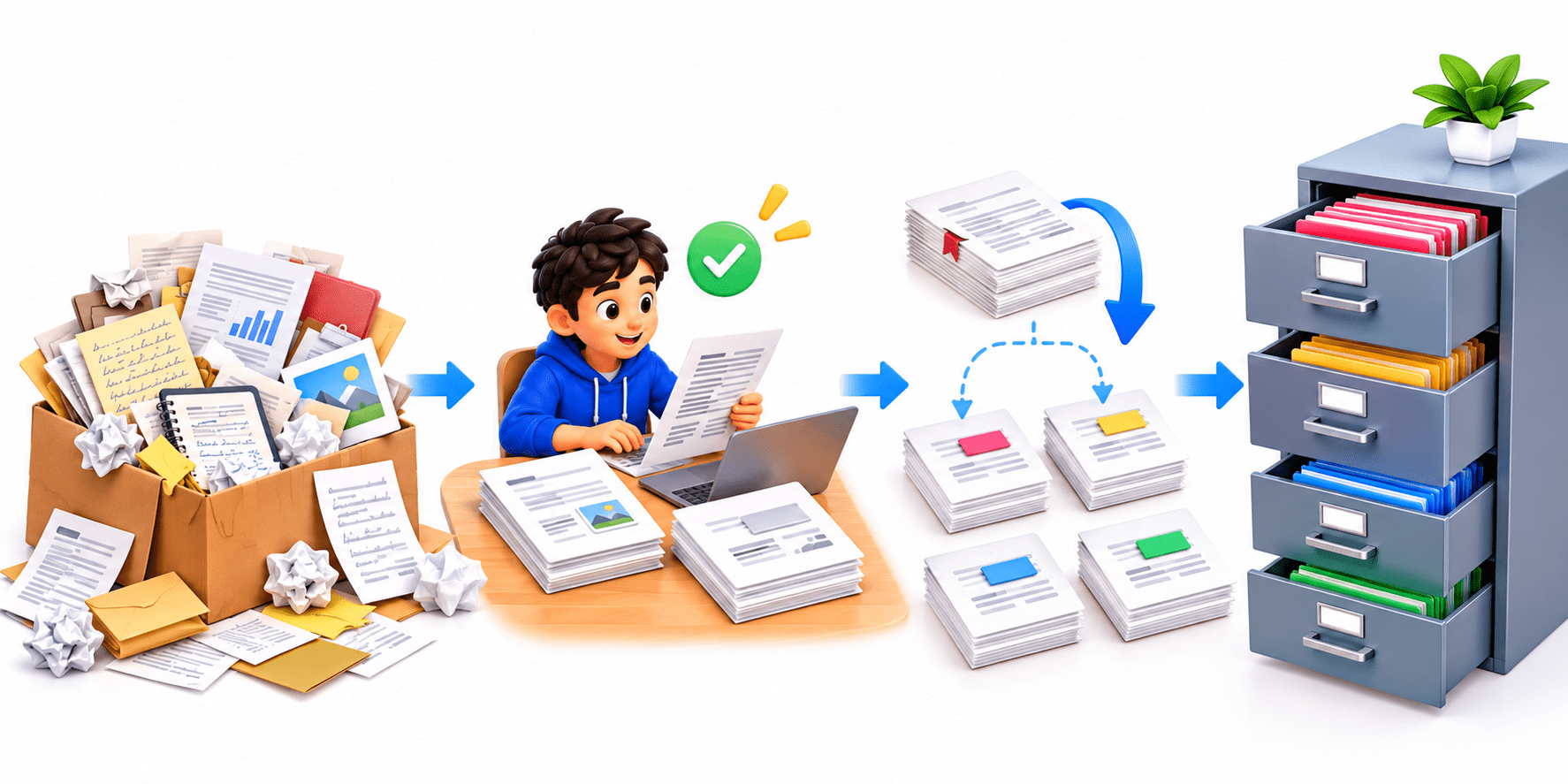
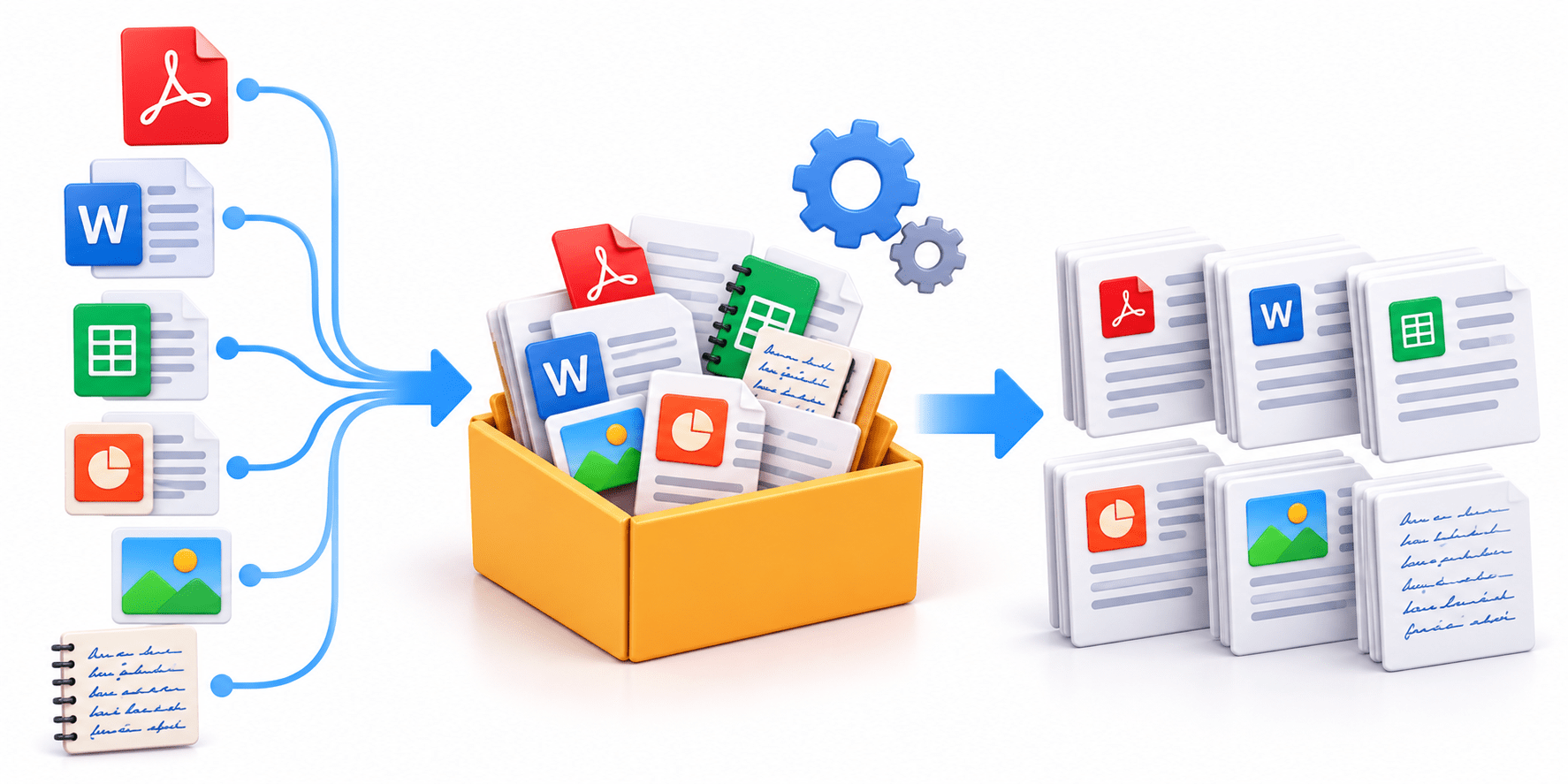
Imagine being given a messy box of paperwork that needs to be organised into a filing cabinet.
The box contains different types of documents, such as contracts, handwritten notes, and printed reports. Some pages are difficult to read or arranged in the wrong order.
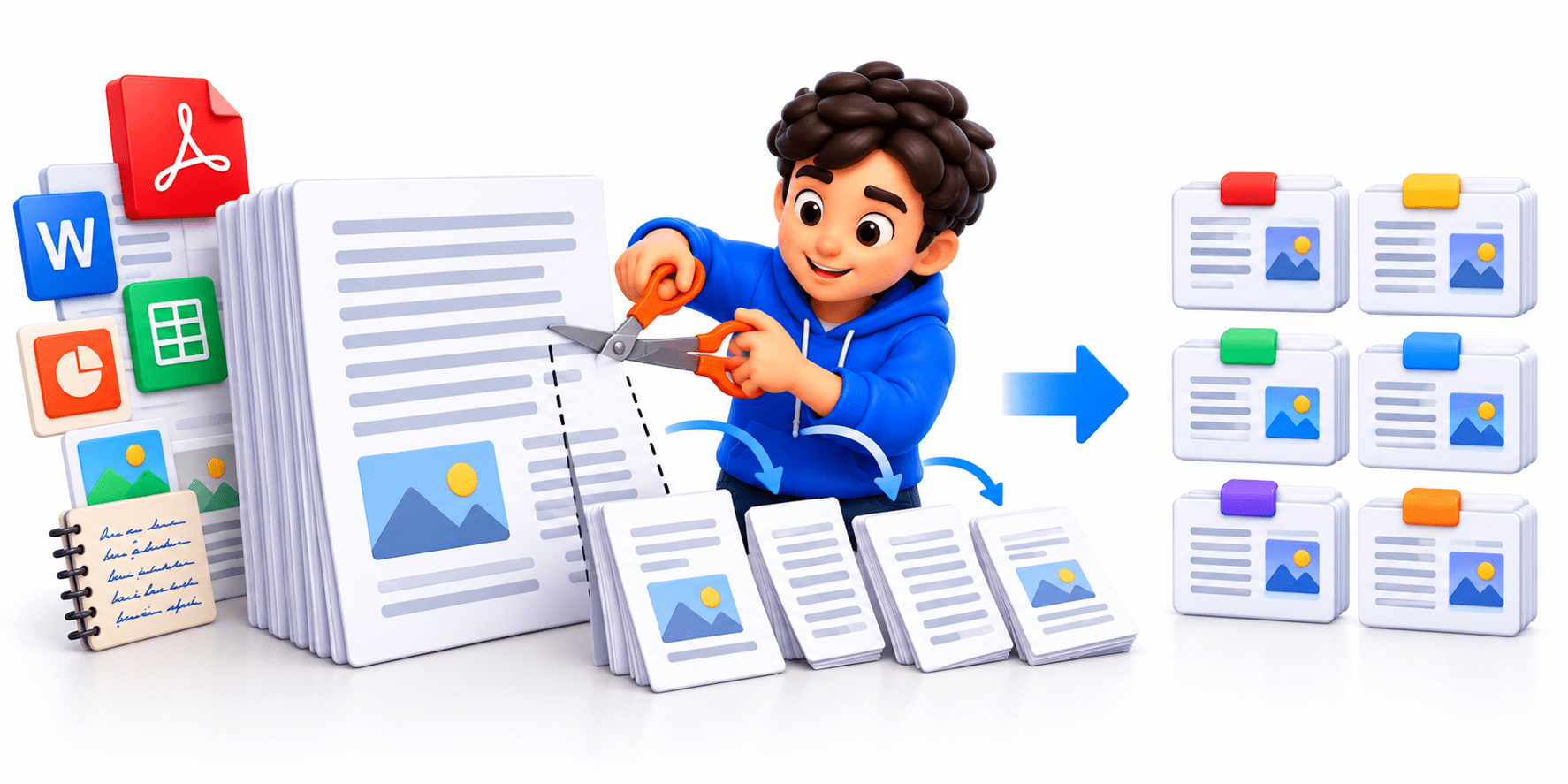
Before organising them, you first need to make sure every document is readable and in a consistent format. Then, instead of placing an entire 50-page contract into one section, you divide it into smaller, meaningful sections with clear labels.
This makes it easier for anyone to find specific information, such as a termination clause, without searching through the entire document.
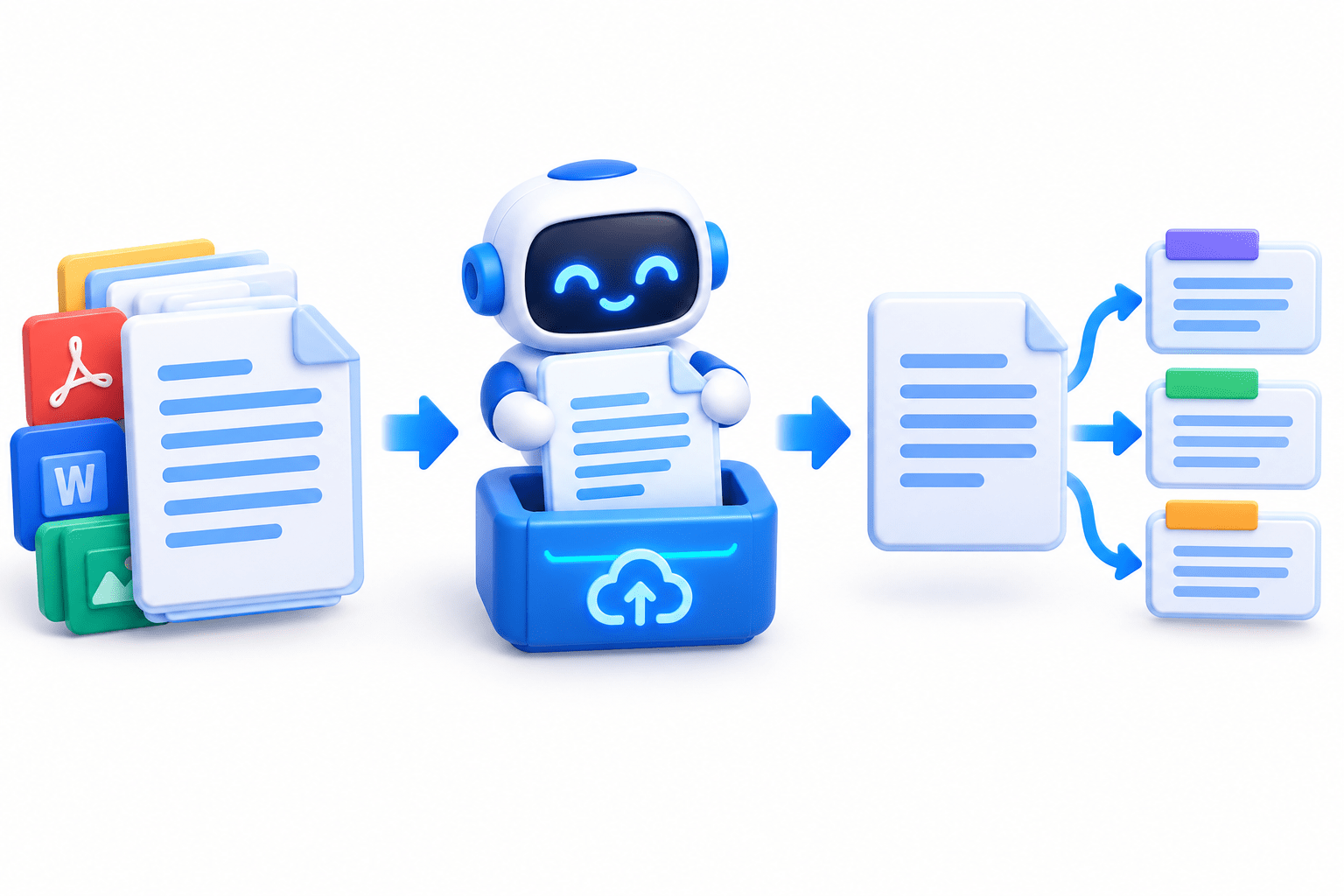
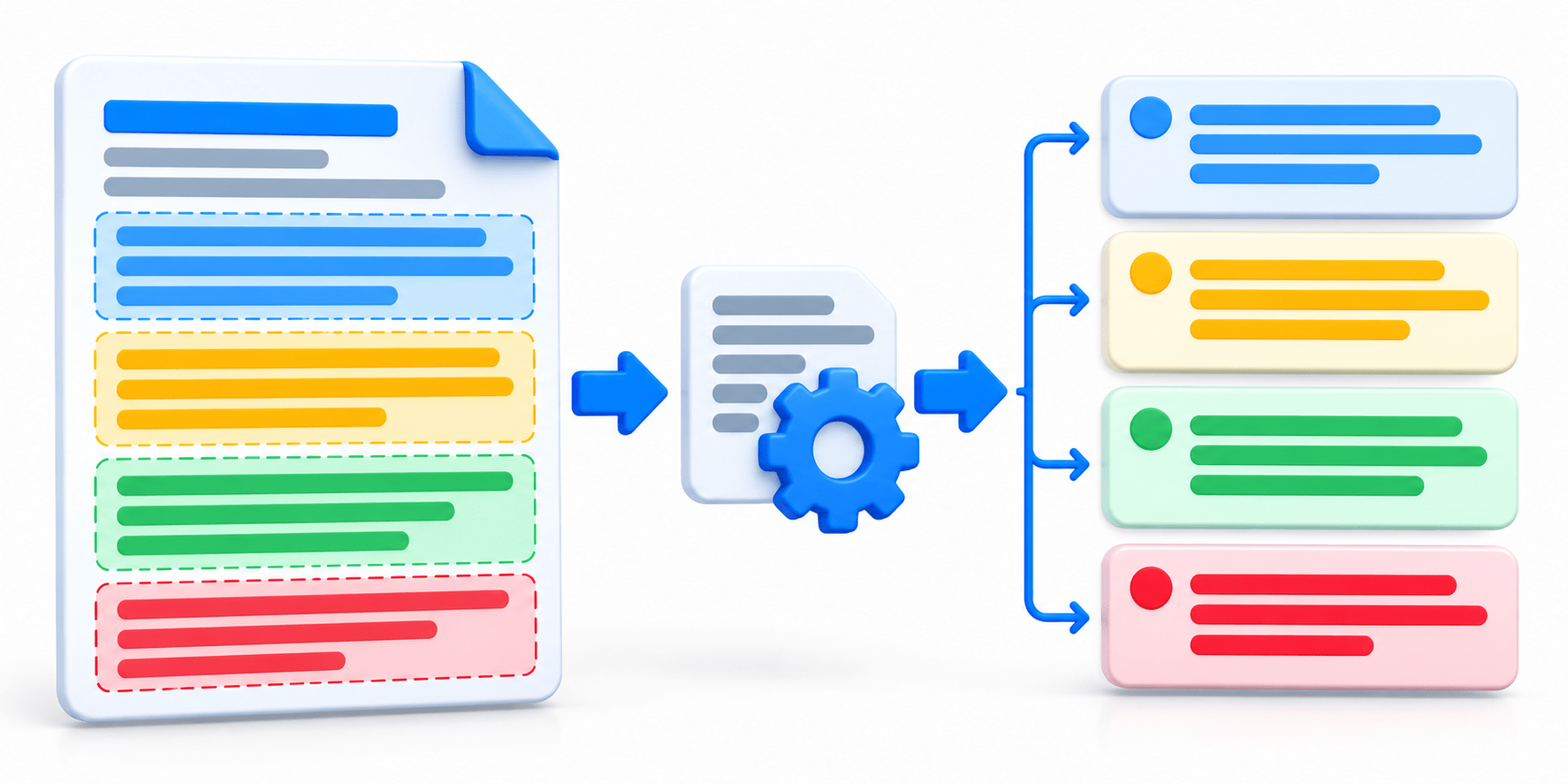
Document Loading and Document Chunking in RAG work in a similar way. Document loading is the first step, where different source documents are collected and converted into a usable format.
Document chunking is the next step, where those documents are divided into smaller, meaningful pieces so relevant information can be easily searched and retrieved.
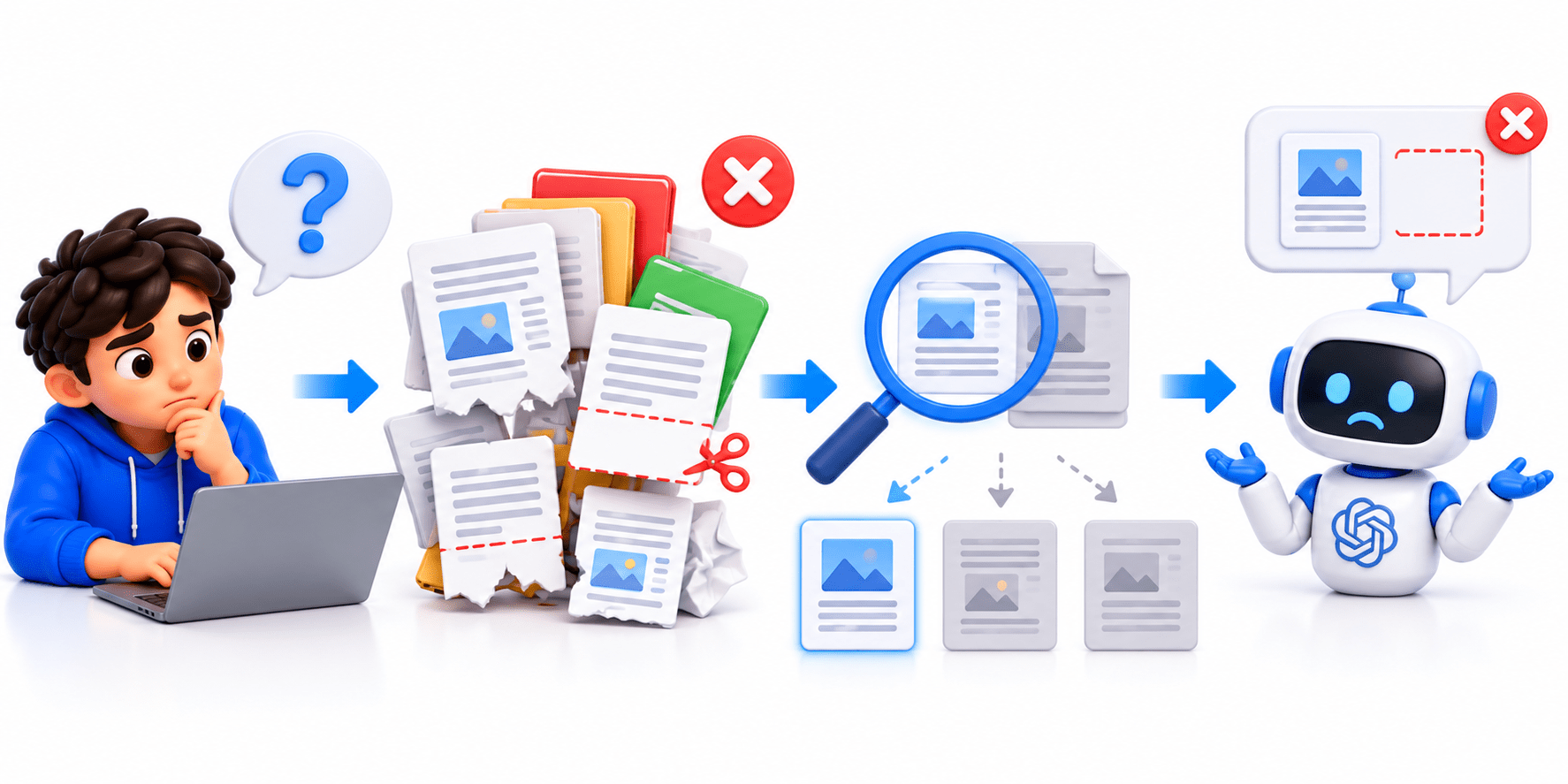
Now imagine someone files the documents incorrectly or loses important pages during this process. Even if someone is excellent at searching, they may not find the correct information.
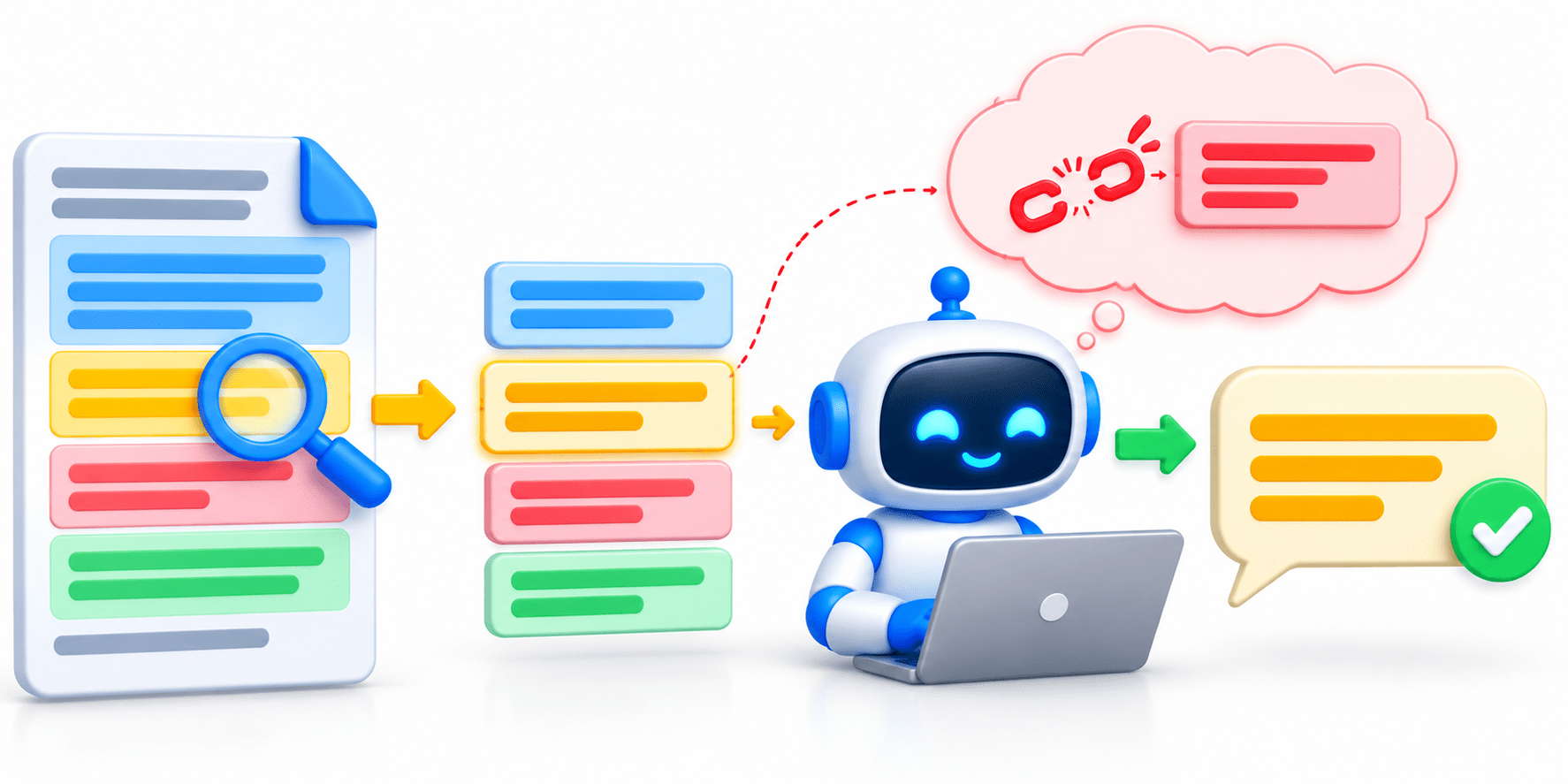
Similarly, if a RAG system receives poorly loaded or incorrectly divided documents, it may retrieve incomplete or irrelevant information. Even a powerful language model cannot fully recover information that was lost during preprocessing.
What is Document Loading?
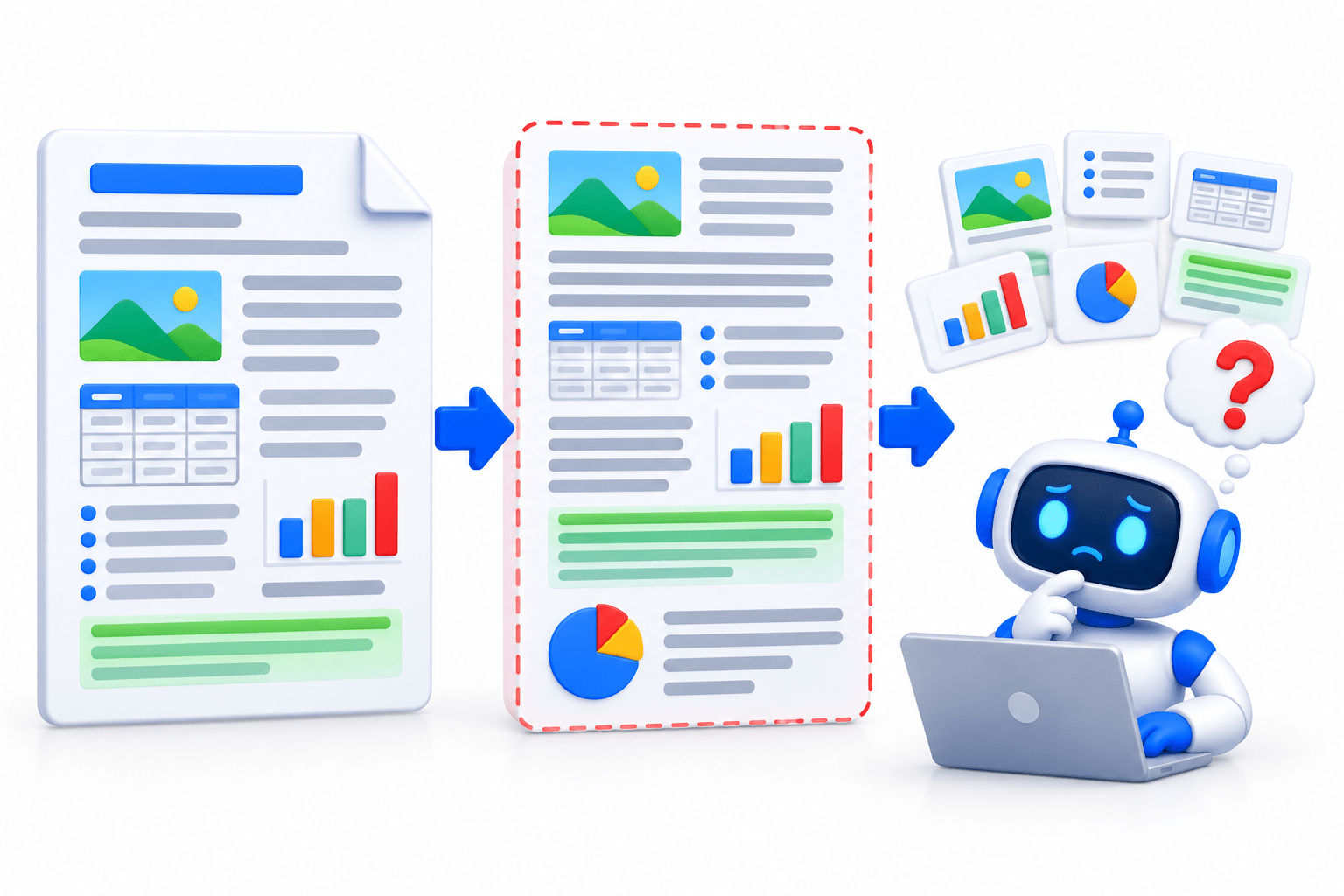
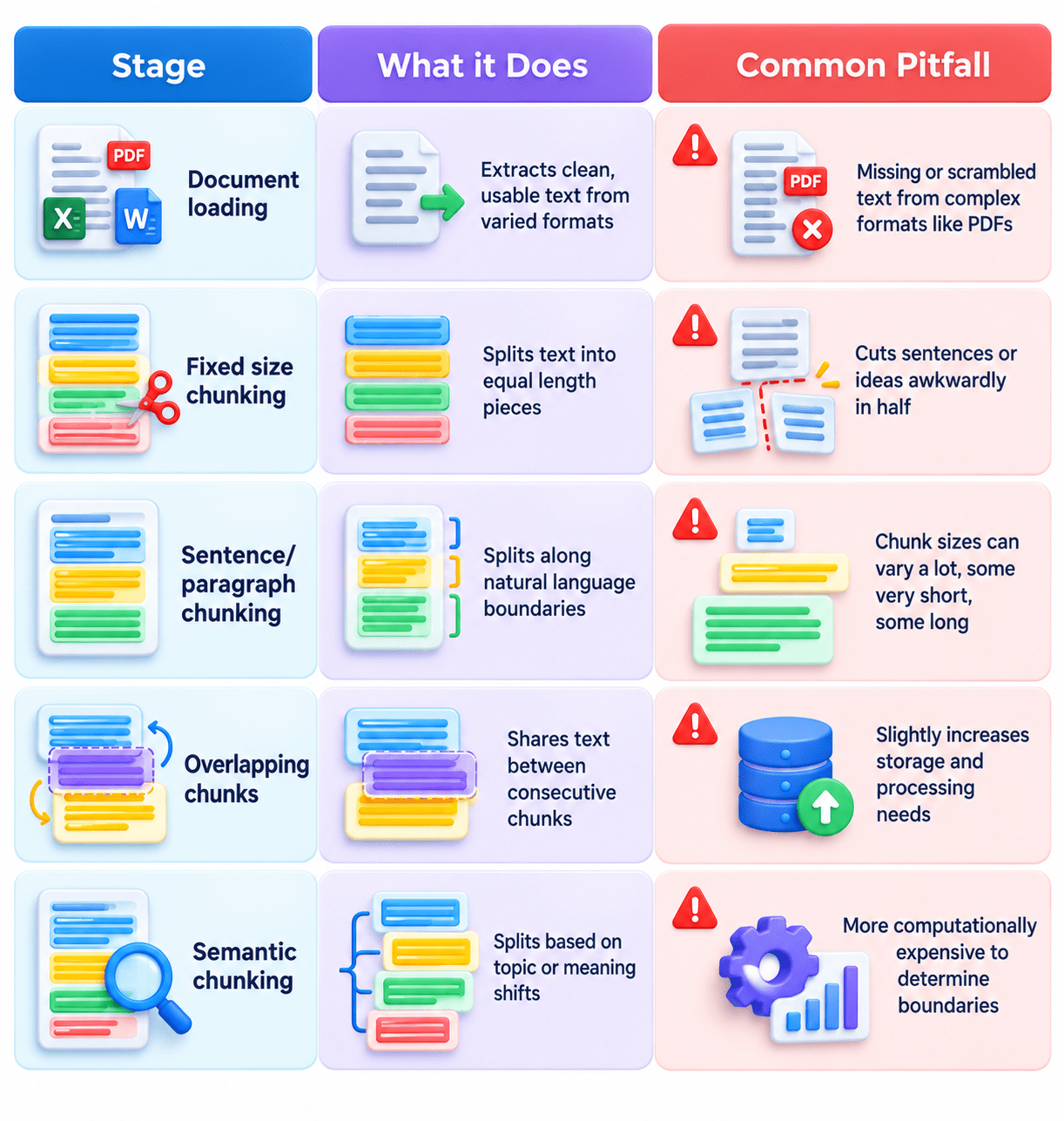
Document loading is the process of taking source material, in whatever format it originally exists, and converting it into clean, extractable text that a RAG system can actually work with.
PDFs – reports, policy documents, manuals, often mixing text, tables, and images
Word documents – internal memos, drafts, contracts AI background remover for images
Web pages – HTML content with formatting and navigation clutter that isn't actual content
What is Document Loading?
Spreadsheets – structured tabular data needing different handling than plain text
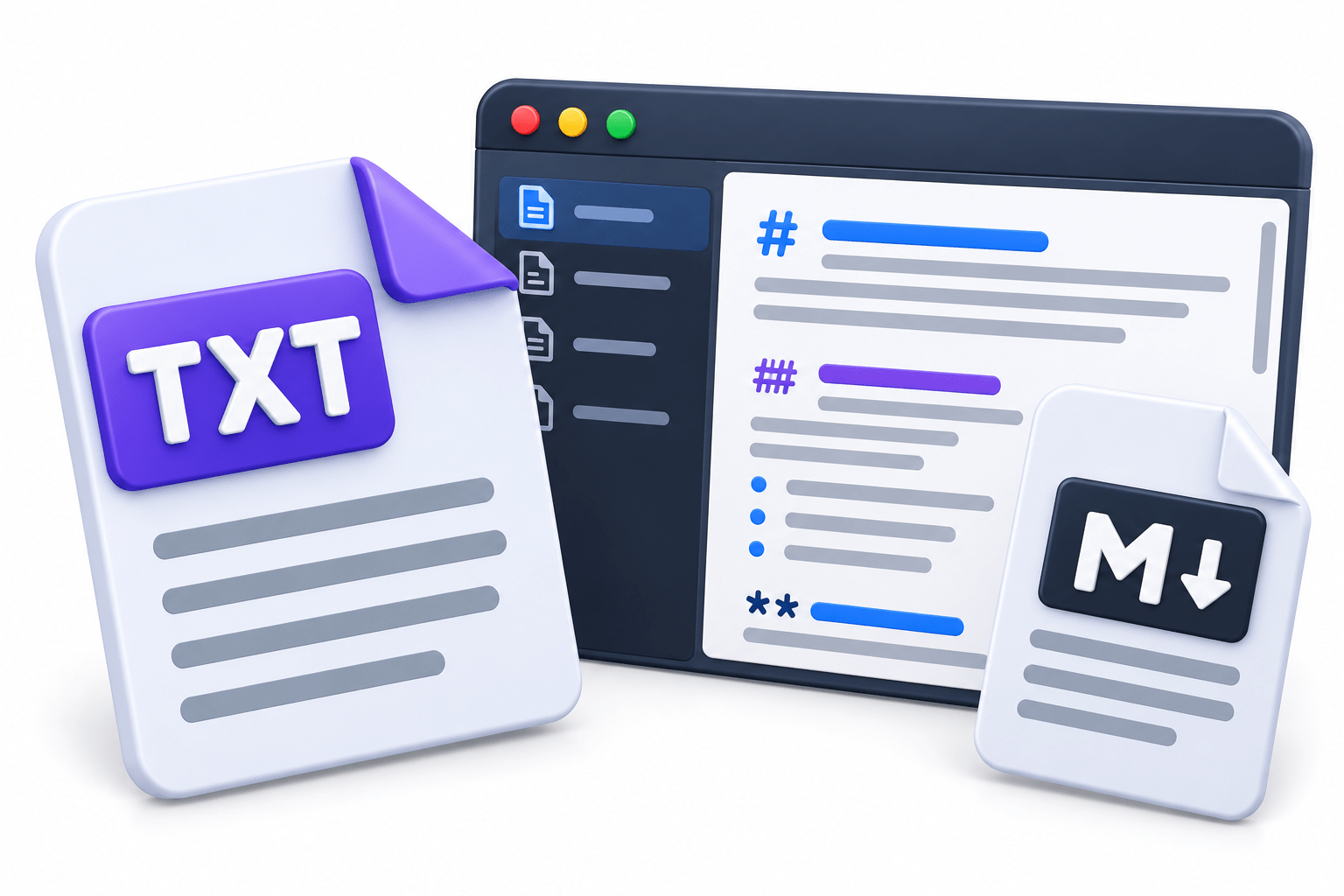
Plain text or markdown files – already close to usable, but still need consistent handling
A document loader extracts and cleans text into a consistent format. Poor loading, such as missing table text or scrambled content, makes information unavailable for retrieval.
What is Document Chunking?
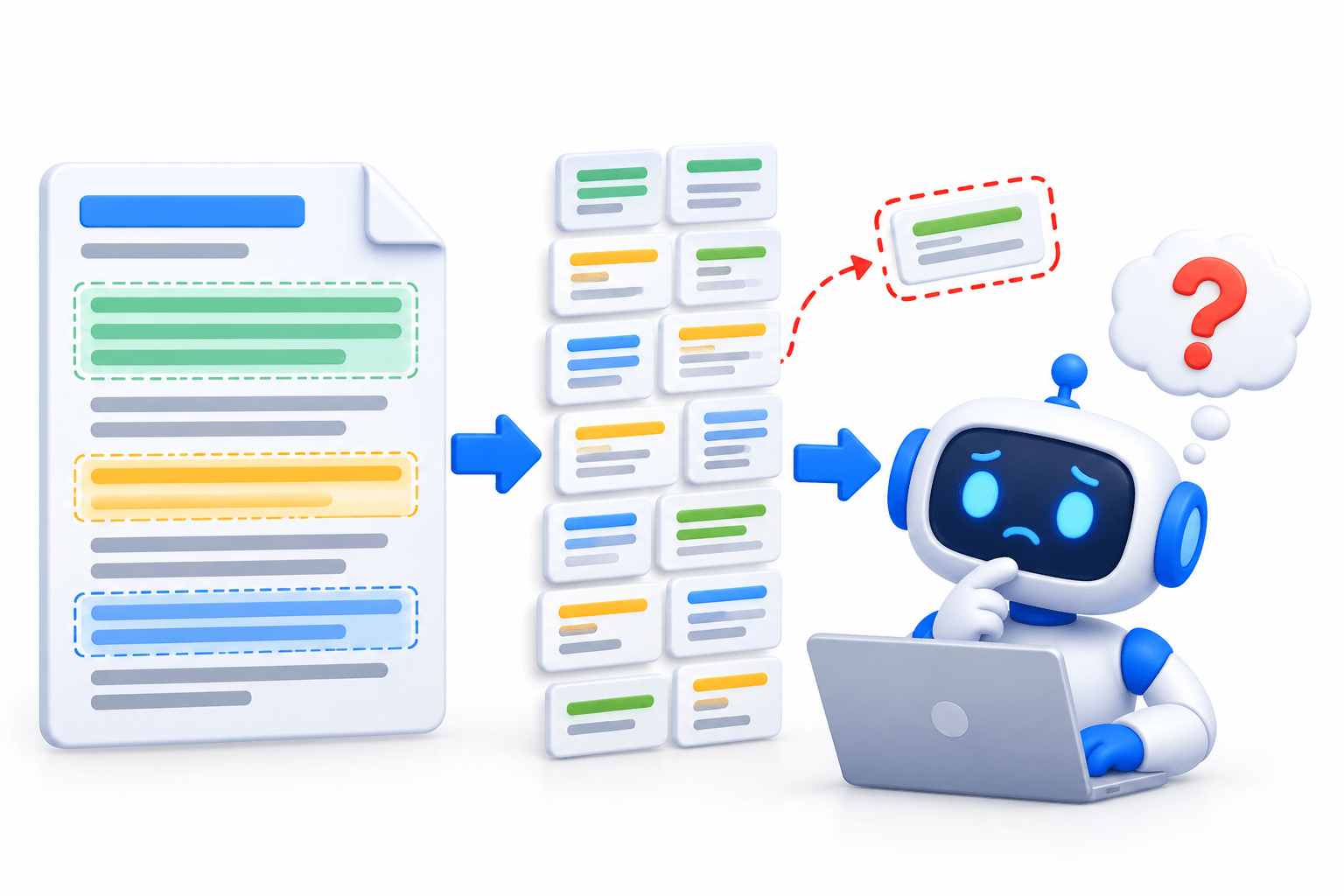
Once documents are loaded as clean text, chunking breaks them into smaller, manageable pieces called chunks, which are embedded and stored individually for relevant retrieval.
Chunks too large – may contain a lot of irrelevant information mixed in, diluting the embedding's meaning and making retrieval less precise.
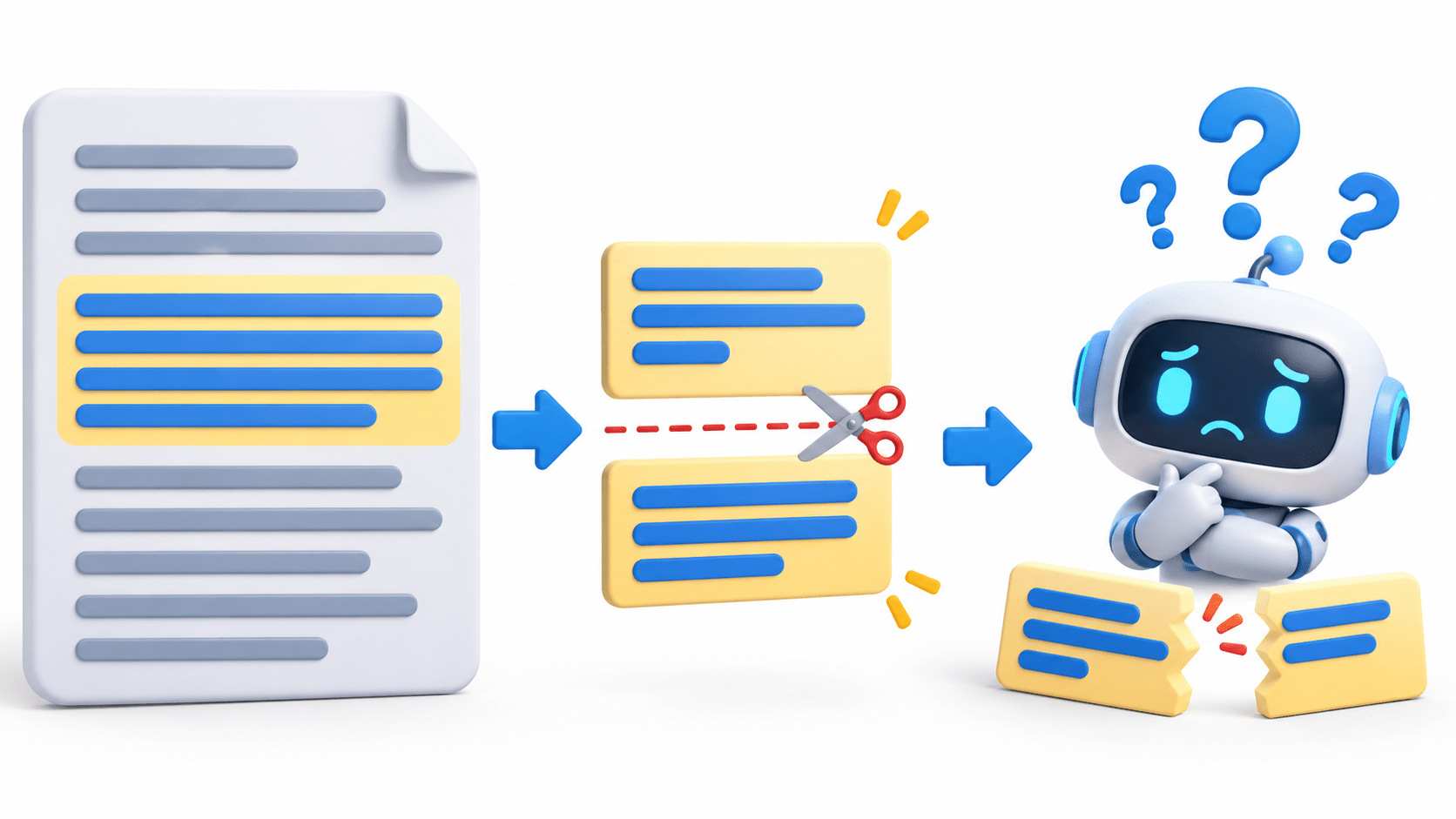
Chunks too small – may lose important context; a sentence that only makes sense alongside its surrounding paragraph can have its meaning stripped out entirely if split apart.
Common Chunking Strategies
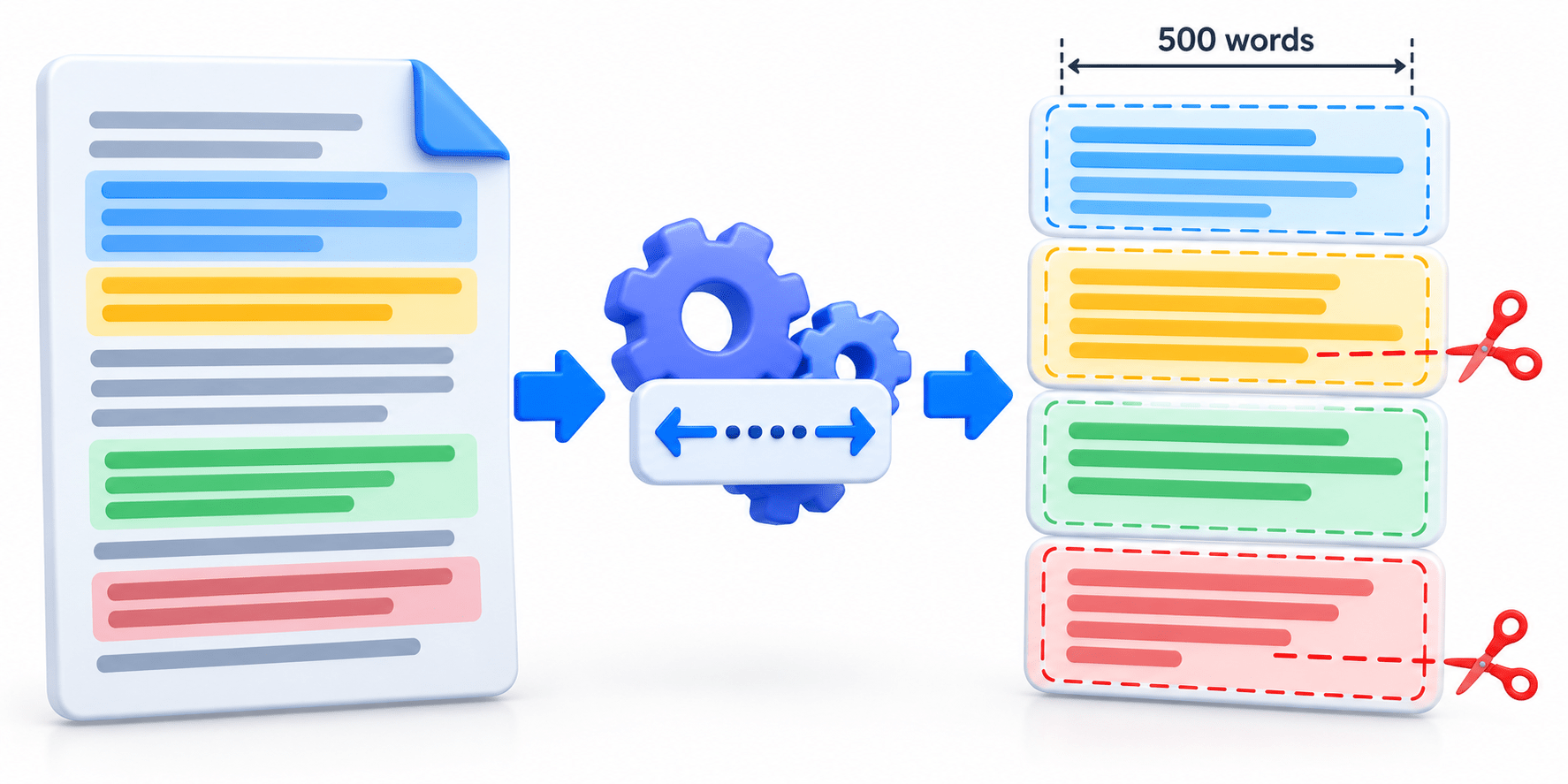
Fixed size chunking – splitting text into chunks of a set length, like every 500 words, regardless of sentence or paragraph boundaries. Simple, but can awkwardly cut sentences or ideas in half.
Sentence or paragraph based chunking – splitting along natural language boundaries, so each chunk stays coherent and complete
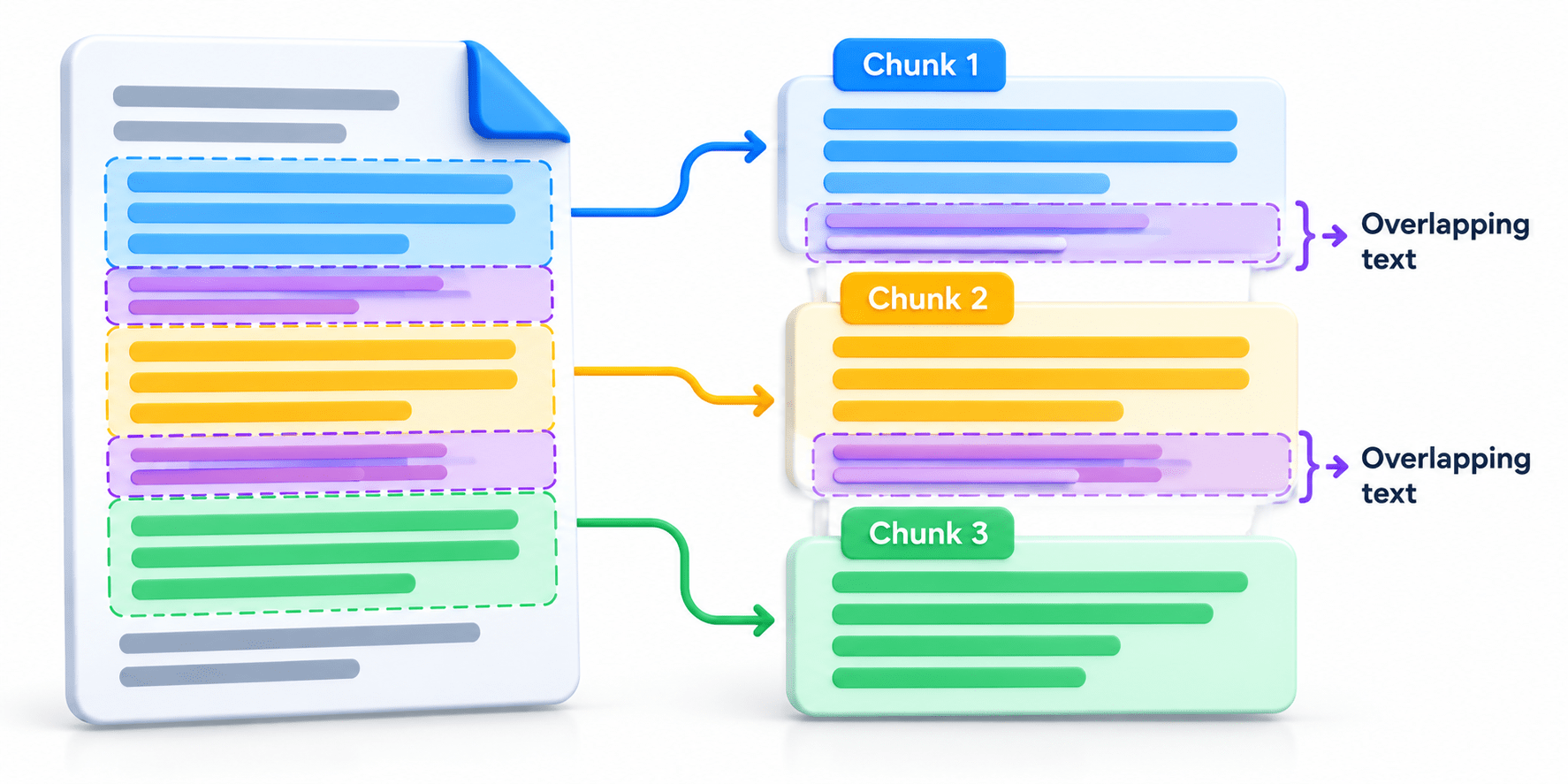
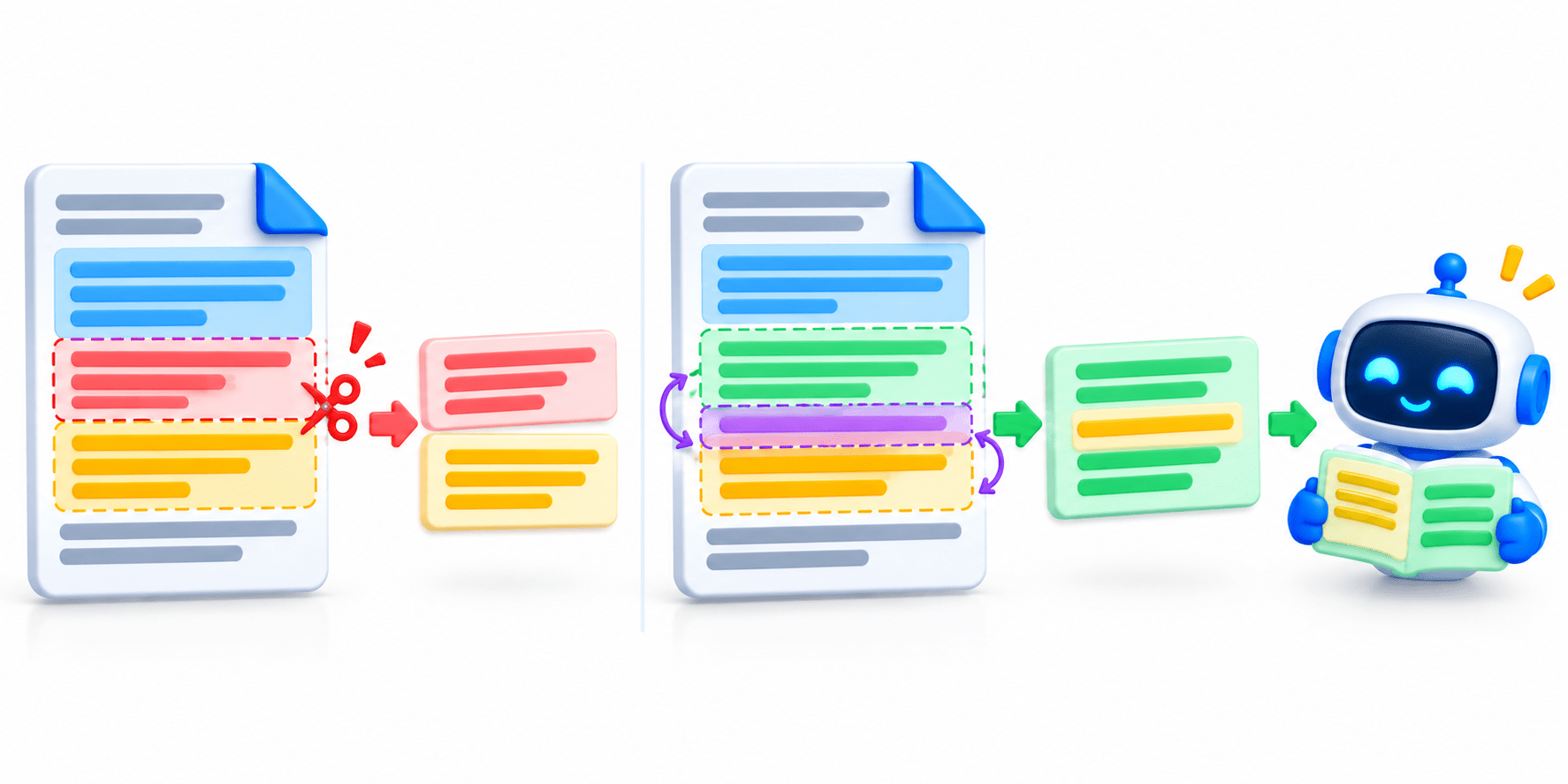
Overlapping chunks – allowing consecutive chunks to share a small amount of overlapping text, so context near chunk boundaries isn't lost entirely to either side.
Common Chunking Strategies
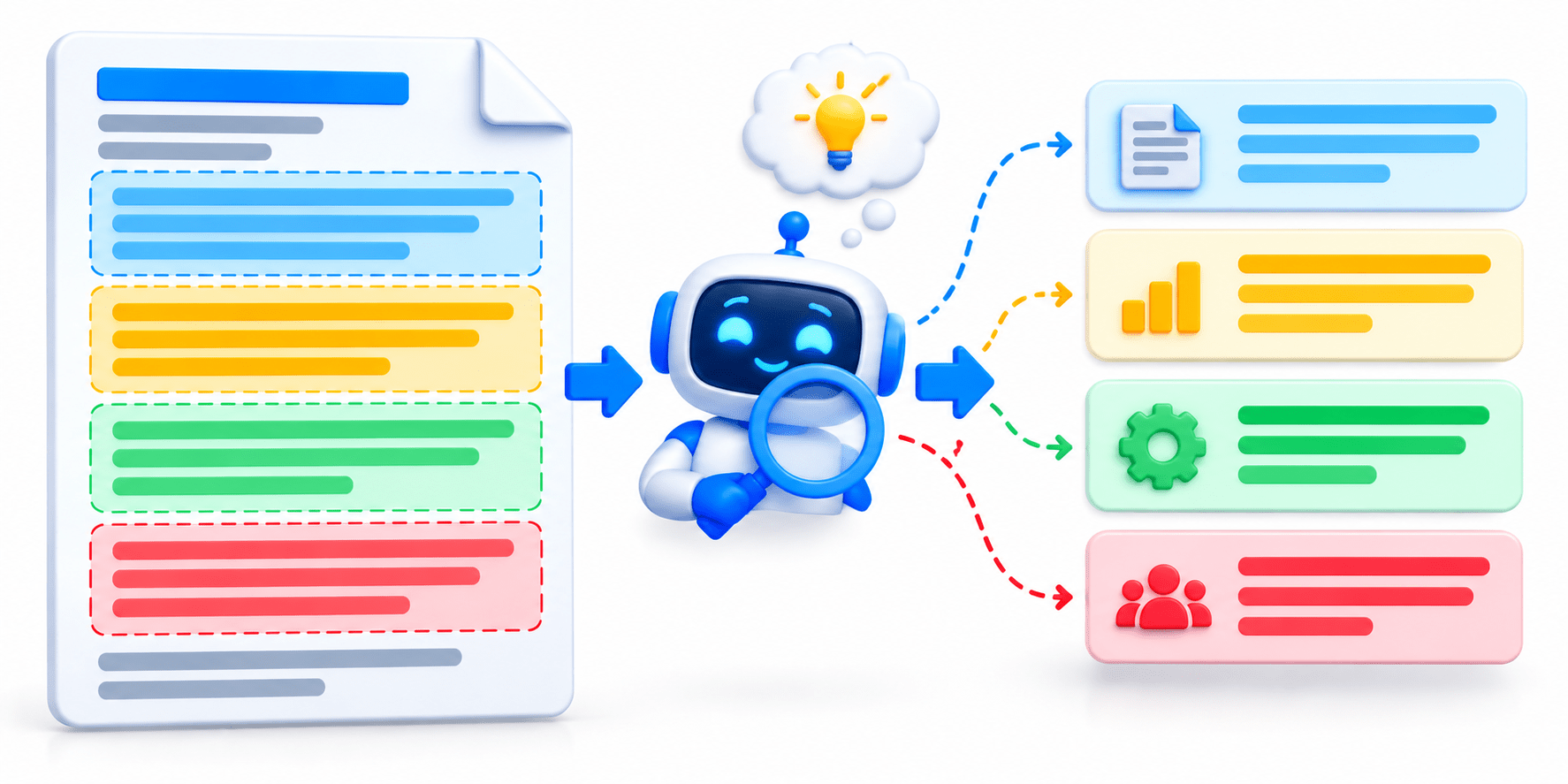
Semantic chunking – splitting based on shifts in meaning or topic, rather than a fixed length, so each chunk represents one coherent idea, regardless of how many words that takes.
Why This Stage Matters So Much
Document loading and chunking happen before embedding, retrieval, or generation ever come into play which means any mistakes made here quietly limit everything downstream.
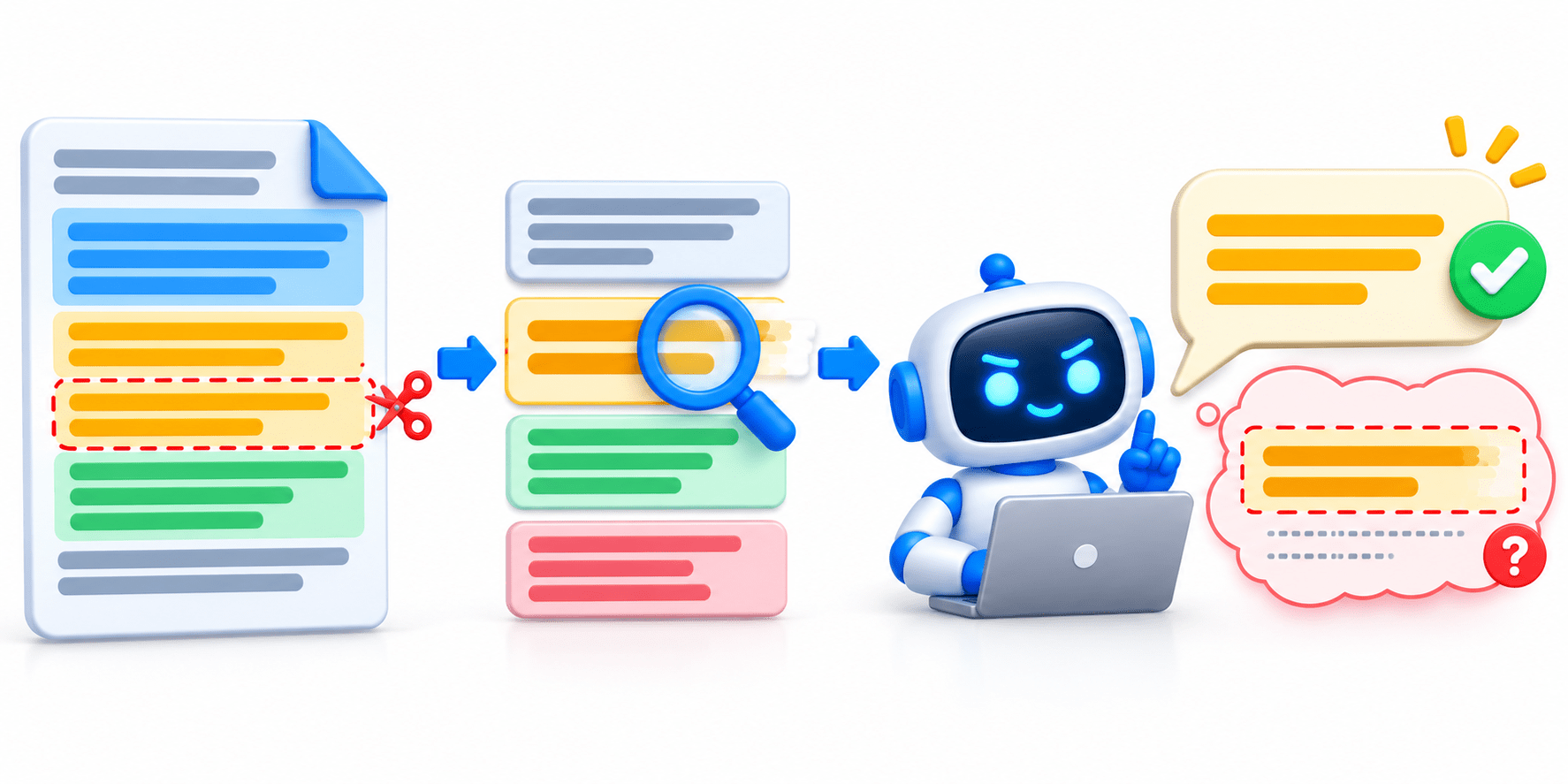
RAG retrieves a partially cut-off chunk, causing the model to generate a confident but incomplete and misleading answer.
Step 1
Identify the error at the chunking stage, where the explanation was split across two chunks.
1
Why This Stage Matters So Much
Step 2
Recognise that retrieval and generation used the available chunk correctly, but the information was incomplete.
2
Step 3
Fix it by using sentence- or paragraph-based chunking with overlap to keep explanations intact.
3
Applications of Document Preprocessing
Legal – contracts and case files are loaded and chunked so that clauses remain intact and self-contained for accurate retrieval.
Customer Support Knowledge Bases – FAQ documents are chunked so each question-answer pair can be retrieved independently.
Enterprise Document Search – mixed-format files (PDFs, Word docs, spreadsheets) are loaded and standardised so employees can search across all of them consistently.
Research and Academia – long papers and reports are chunked to preserve full arguments or findings within a single retrievable piece.
Daily Life Applications
A student gets garbled text when uploading scanned lecture notes due to poor document loading.
A note-taking app splits a long meeting transcript into topic-based sections for easy access.
|
An AI assistant summarising a long article by first breaking it into coherent sections rather than one giant block of text. |
A resume-screening tool extracting and organising a candidate's experience into clean, comparable sections instead of one long unformatted document.
Summary
4
Preprocessing errors can affect every stage of the RAG system.
3
Chunking balances relevance and context, as each strategy has its own trade-offs.
2
Poor loading can hide information from the system, even with effective retrieval.
1
Document preprocessing involves loading clean text and splitting it into retrievable chunks.
Quiz
A RAG system retrieves an incomplete explanation due to a poorly placed chunk boundary. Which preprocessing stage caused this issue?
A. Document loading
B. Document chunking
C. Embedding and indexing
D. Generation
A RAG system retrieves an incomplete explanation due to a poorly placed chunk boundary. Which preprocessing stage caused this issue?
A. Document loading
B. Document chunking
C. Embedding and indexing
D. Generation
Quiz-Answer
By Content ITV