Adding Blush To the Digital World
Sephoras digital transformation
BY:LEA, MAIYA, LIZETT, AND BEN
- Sephora is a global beauty retailer owned by LVMH operating thousands of stores worldwide alongside a major e-commerce and mobile business
- Their brand promise is centered on discovery and experimentation by allowing users to try before their buy whether its online or in store
- 3000 stores worldwide
- 2017 digital and retail teams merged
- 2018 won retailer of the year award

The Business Problem
This important buisness statment sephora holds is hard to replicate online
1
Try before buy
Customers data was fragmented across separate digital and in-store teams
2
Data
IShoppers expected a seamless transition between app, in-store and online shopping
3
Shoppers
Technology used
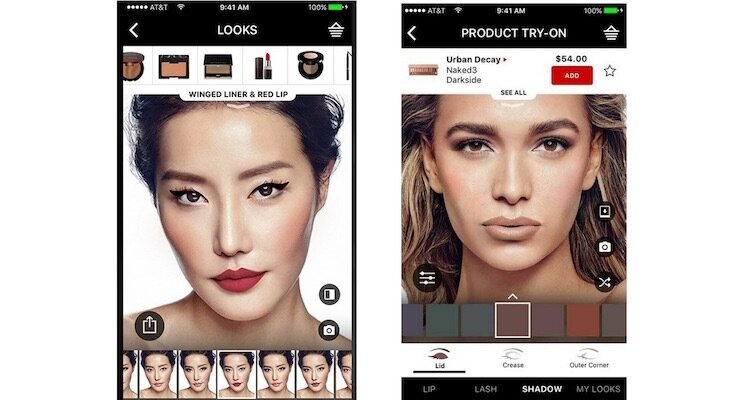
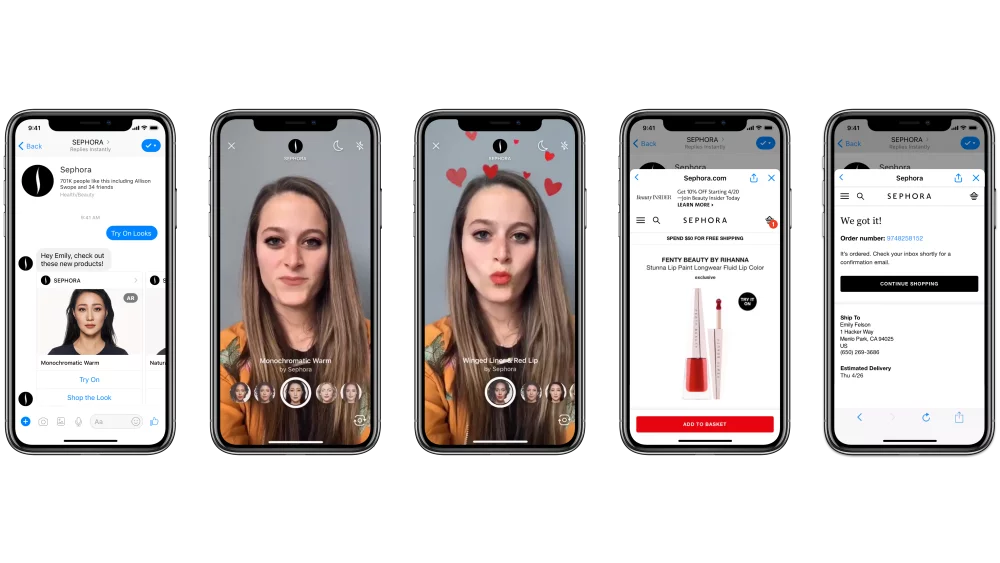
VIRTUAL ARTIST- face-mapping augmented reality that lets customers try on makeup through the app
AI SHADE MATCH- built with modiface a phot based tool that recommends a foundation and color matches using AI
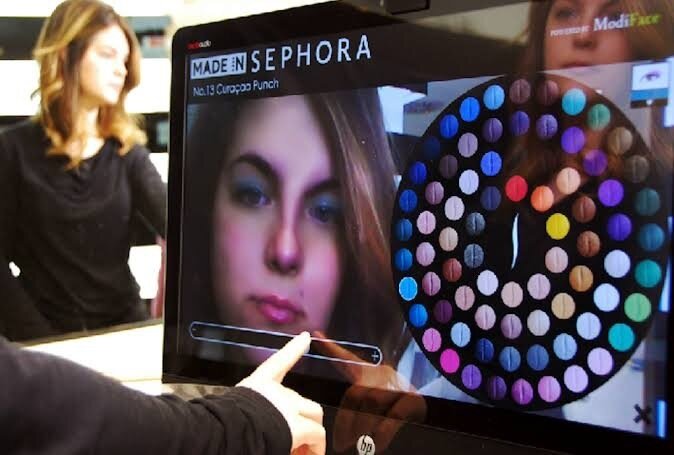
RFID AND SMART MIRRORS- in flagship locations, RFID sensors surface product info and review at shelf
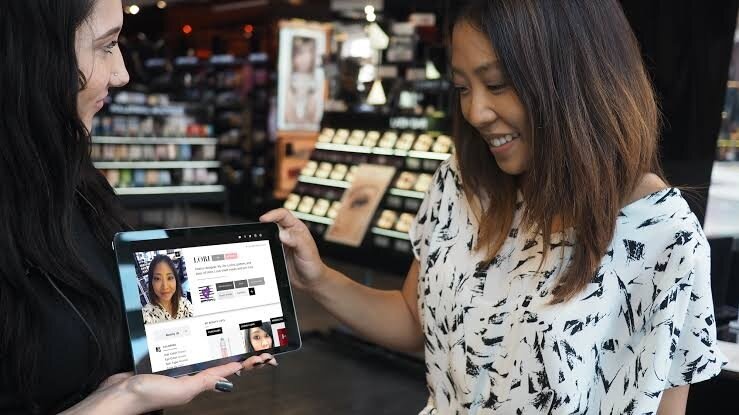
MOBILE POINT OF SALE- allows employs to check out anywhere in store
BEAUTY INSIDER PROFILES- merges retail teams to build one profile


What did they do?
Restructured the organization- merged its digital and retail teams so every channel worked from one customer profile
Build customer facing technology's- Rolled out AI facing, Virtual Artist, and smart mirrors
Invest in digital marketing-
Used social media, targeted online ads, and virtual campaigns to publizise products and research customers directly
Unified and loyalty ecosystem-
Connected purchases, preferences, and rewards through Beauty Insider across app, web, and in-store
1
2010 mobile app formed
3
2016 Messenger Chat Box for customer support and shade match
5
2026 Sephora app launches in Chat GPT
2
2012 Color IQ shade match
4
2017 Virtual Artist AR digital and retail teams merged
TIMELINE
Emerging Technology
Generative AI
- Personalized beauty recommendations
- Conversational product discovery
- AI-powered shopping assistance
Augmented Reality
- Virtual makeup try ons
- More realistic Product Visualization
Connected Omnichannel
- Connects app, online, and in store shopping
- Personalized experiences using customer data
How did they do it?
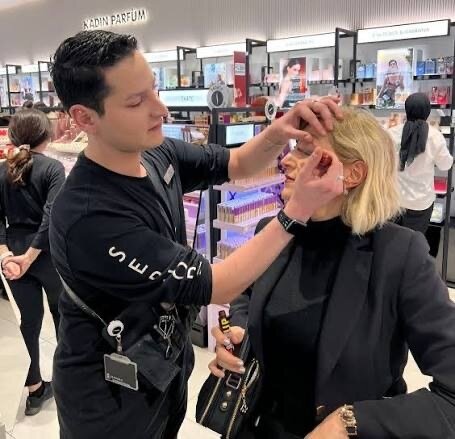
1. Connected Physical + Digital:
- Combine online, mobile, and in-store experiences
2. Invested Innovation
- Virtual Assitant
- Mobile Technology
- Digital Tools
3. Unified the Organization
- Digital and Retail Teams Brought together
VIDEO
Text
Our Research
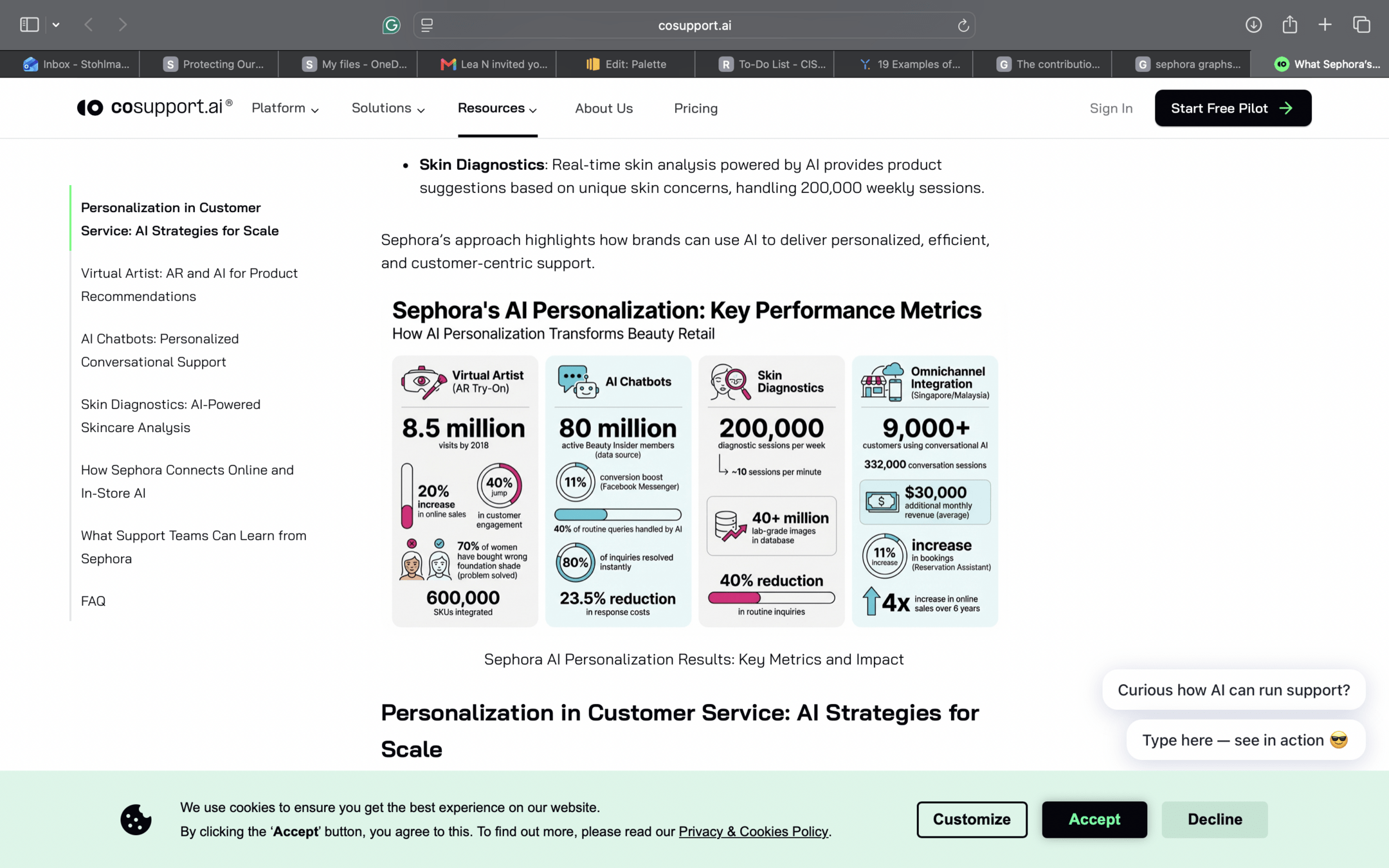
- Personalization: AI allows Sephora to tailor recommendations and experiences
- Omnichannel Integration: Digital and physical shopping work together rather than separately
- Customer Experience: AR reduces uncertainty and makes online beauty shopping more interactive
Research Metrics
- Sephora is leading the beauty industry in online AI-powered transactions
- Personalization and convenience has built brand loyalty and expanded their presence in the beauty industry
Success Story: Competition
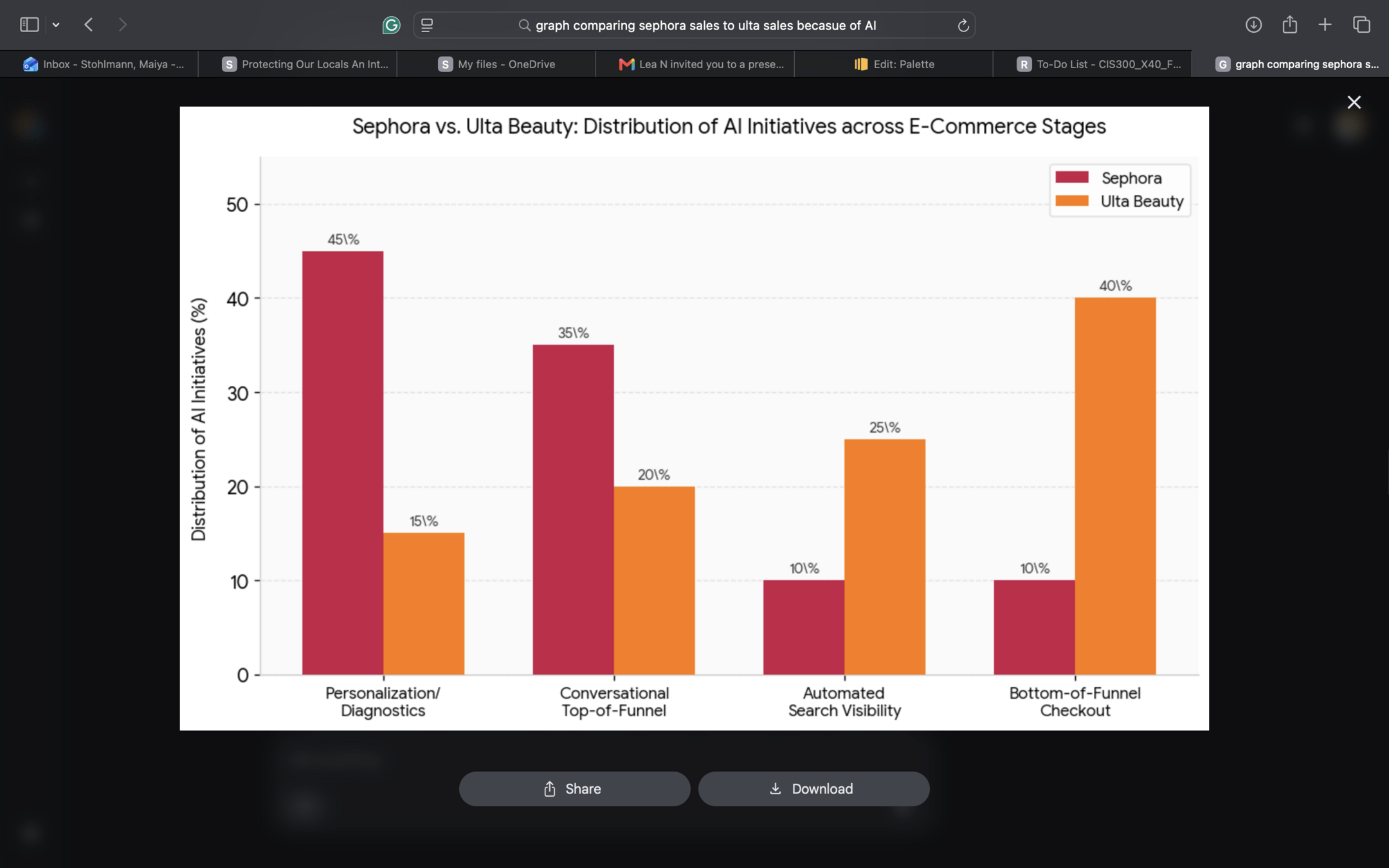
Sephora AI technology surpasses competitors like Ulta by focusing on
- Personalization & diagnostics
- AI conversational experience
This creates the luxury experience Sephora markets on the app and in-person, keeping users in their premium ecosystem
Impact on their future
1. Lower return rates
2. Deeper customer engagement
3. Higher revenue
4. Optimized operation chains
- Conceptualization
- Product Design
- Development
- UI/UX Testing
- Branding
- Personalization
Takeaways
Thank You!
Questions?
"Digital Transformation in Multinational Companies. – Sephora Case Study." ResearchGate.
Sources
- "We Are at home: How augmented reality shapes mobile marketing and consumer-brand relationships." E ScienceDirect
Sabrina, M. (2026). The contribution of artificial intelligence in enhancing sensory marketing – A case study of Sephora –. Economics Financial Banking & Management Journal, 15(1), 157–176.