Financial System & Market


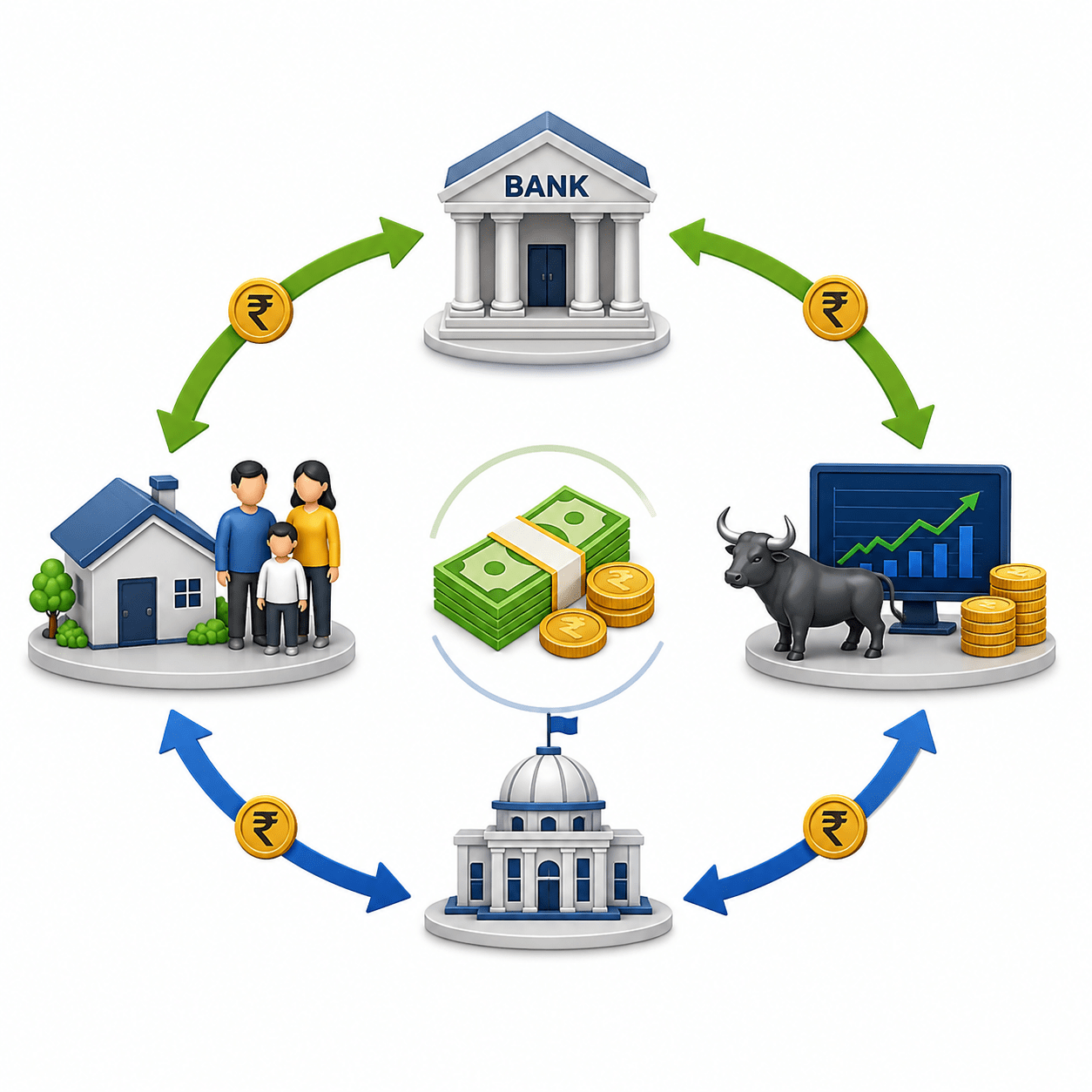
Flow of money in the economy


Learning Outcome
5
Where Investment banking = the “pump” moving money
4
How Savings → Investment via banks & markets?
3
How the circular flow works: spending → income → spending
2
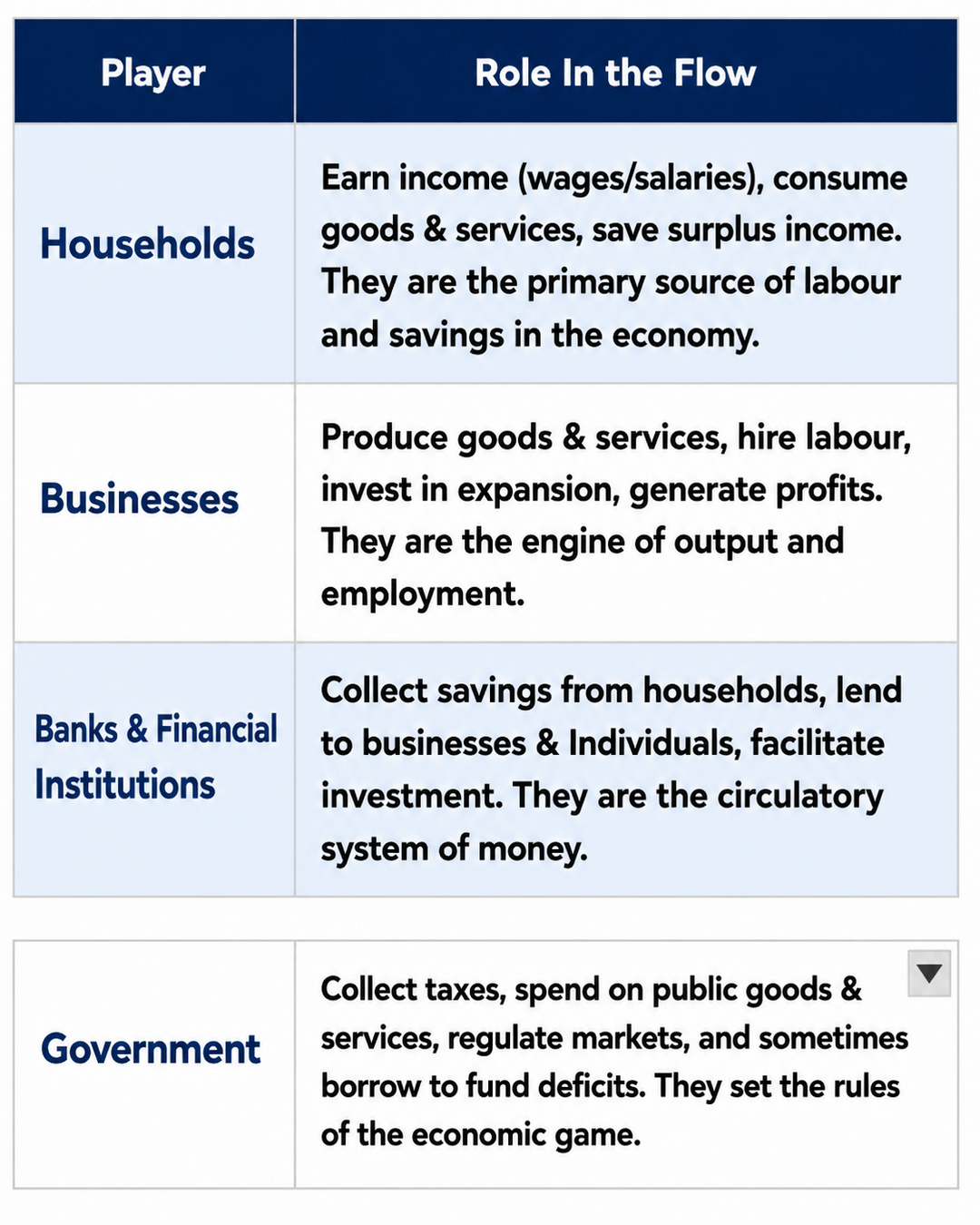
Key players: Households, Businesses, Banks, Government
1
What 'flow of money' actually means in the real world
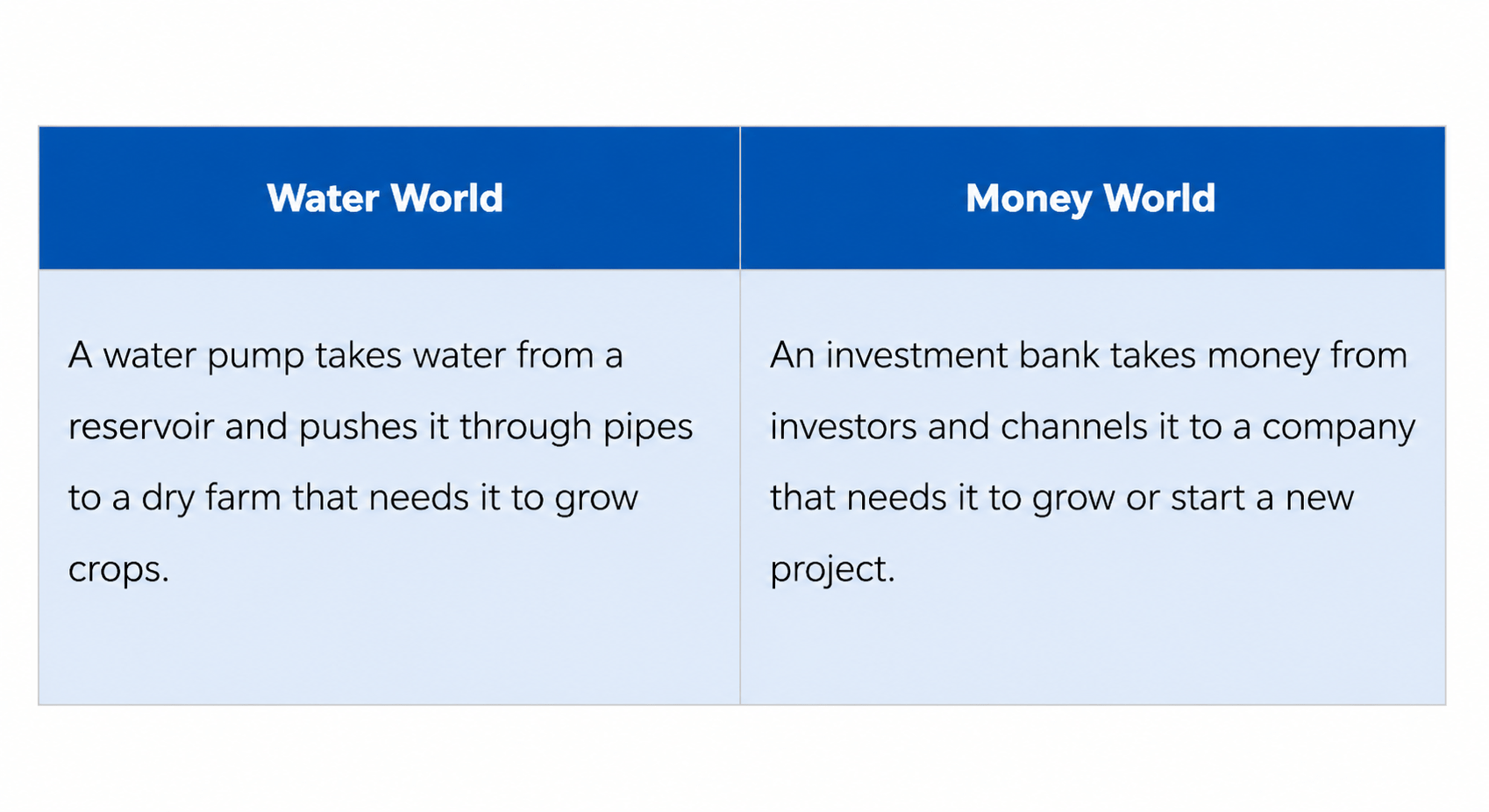
The Water Analogy: Money Flows Like Water
Money flows through the economy exactly like water flows through this system.
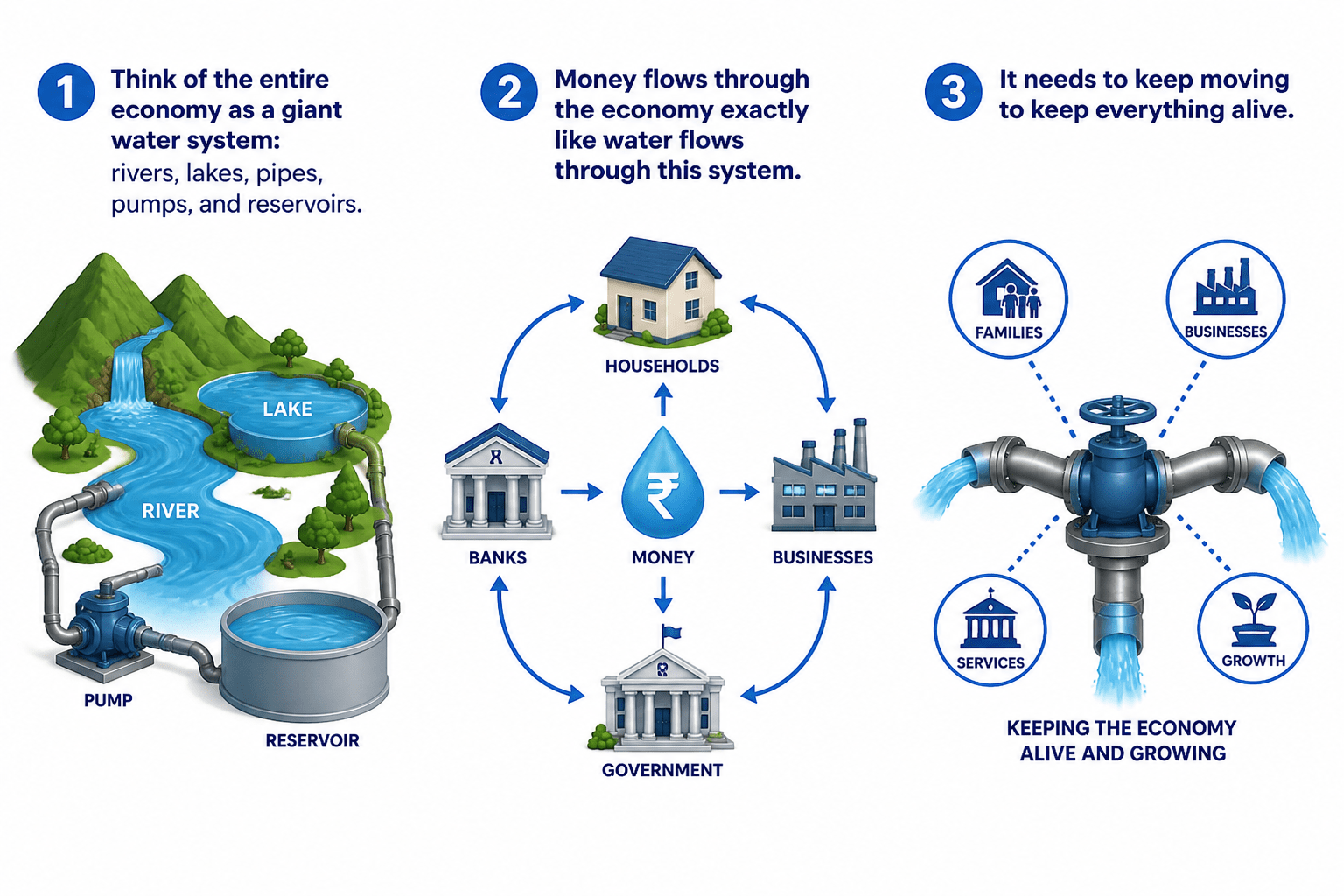
Think of the entire economy as a giant water system: rivers, lakes, pipes, pumps, and reservoirs.
It needs to keep moving to keep everything alive.
|
Water World |
Money World |
|
Water sitting still in a pond does nothing. It must flow to fields, homes, and factories to be useful. |
Money sitting idle in someone's safe does nothing. It must flow to businesses, projects, and people to create value. |
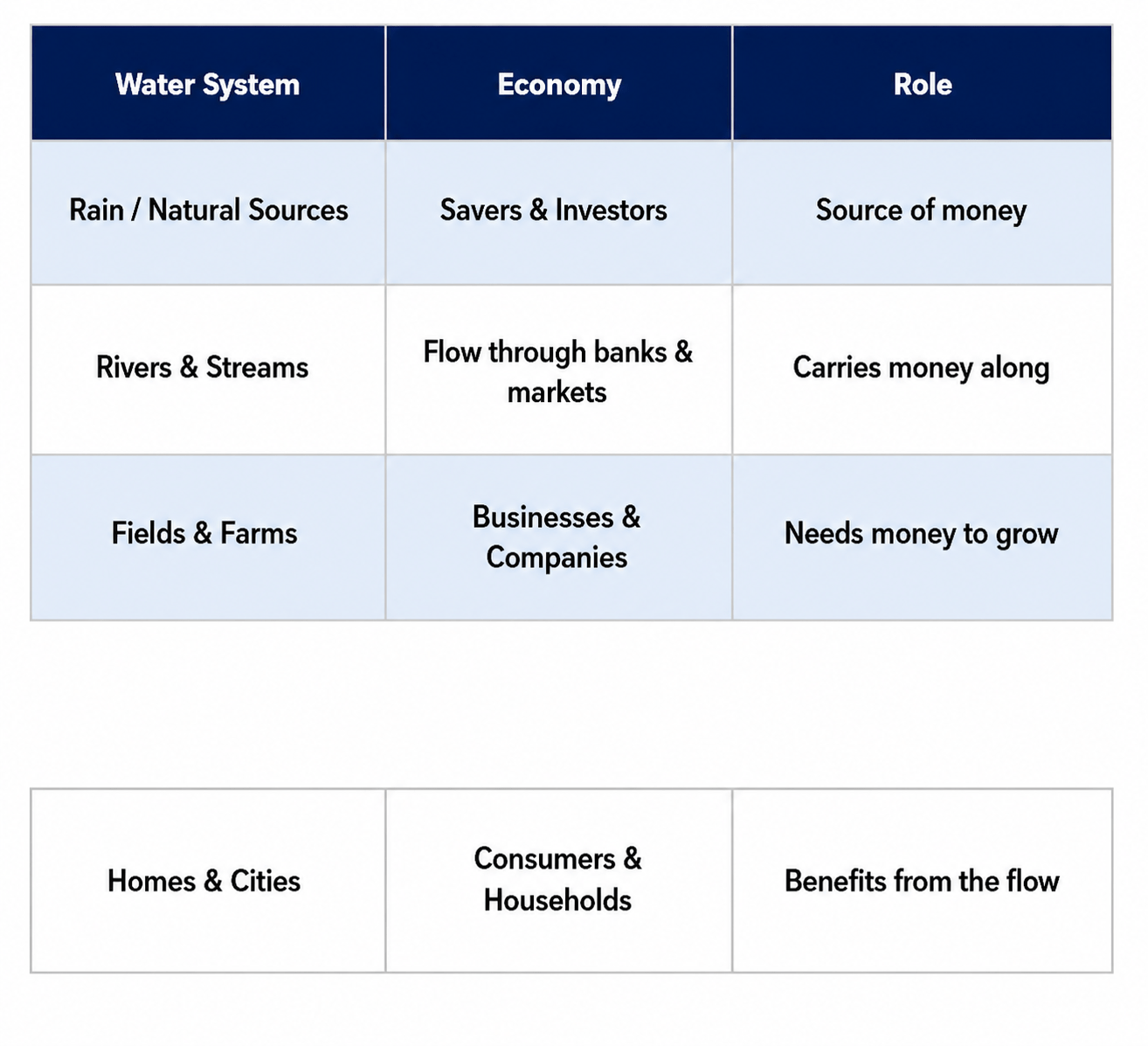
The Players in the Water System
In any water system, there are different parts doing different jobs. The economy is the same:
Investment Banks — The Water Pumps!
In a water system, water does not always flow naturally from where it is stored to where it is needed.
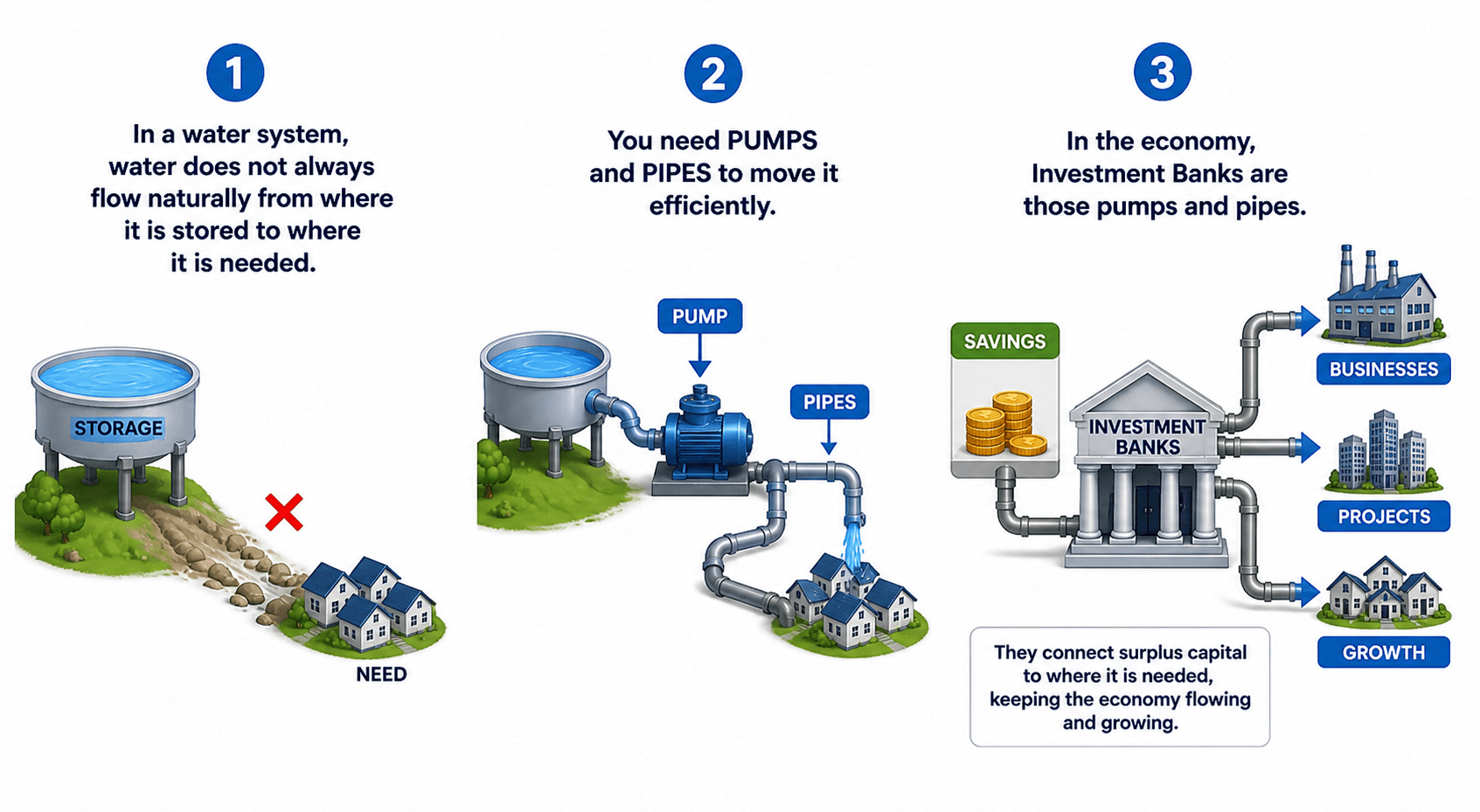
You need PUMPS and PIPES to move it efficiently.
In the economy, Investment Banks are those pumps and pipes.
Now that you have visualised the economy as a water system, let us translate that analogy into the actual economic concepts at work.
Meaning of Flow of Money in the Economy
Key insight: Money isn’t used up—it changes hands. Spending becomes income, creating a circular flow.
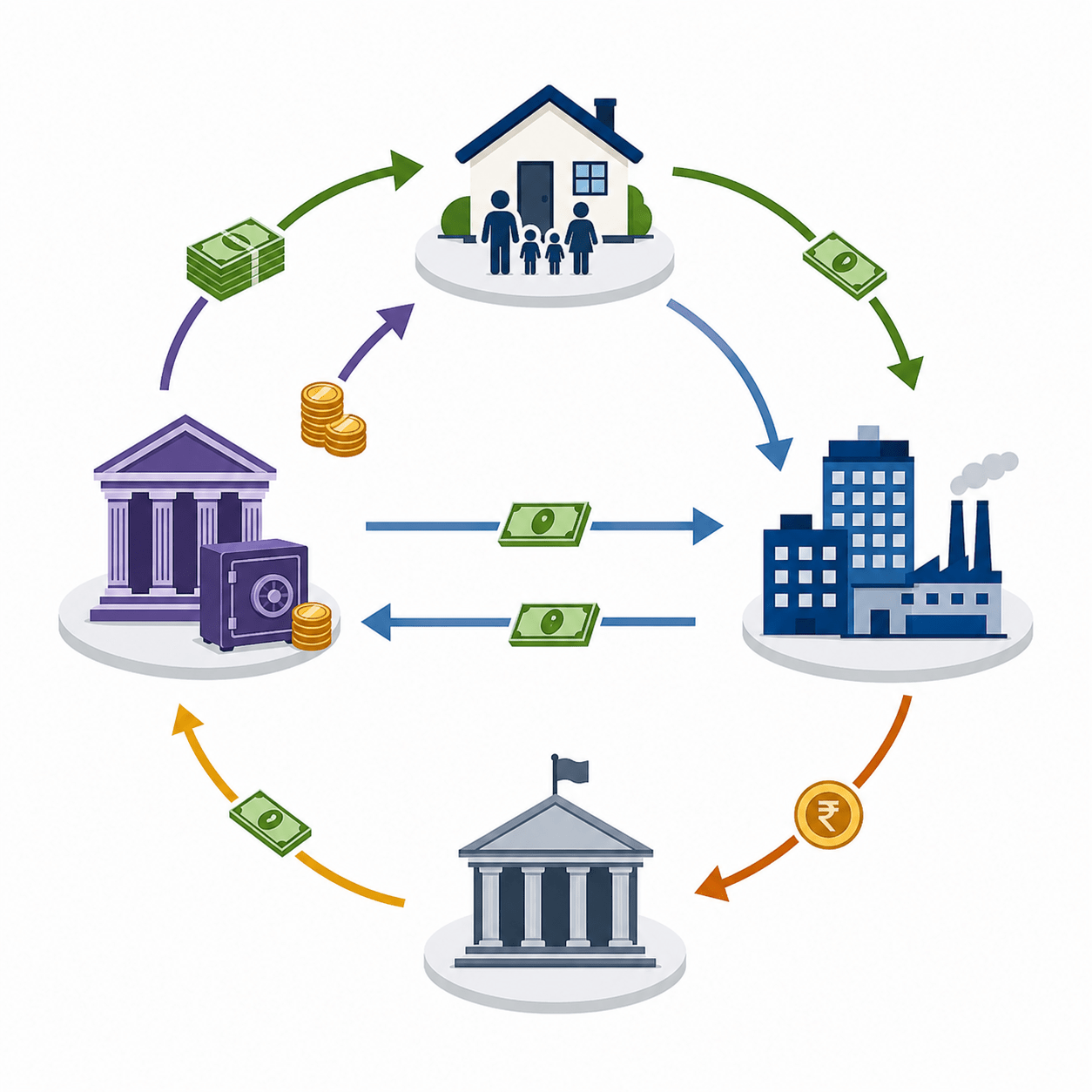
The flow of money refers to the continuous movement of money between economic agents — households, businesses, governments, and financial institutions — as they buy goods and services, earn income, save, invest, and pay taxes. This movement is what drives economic activity.
Key Players in the Economy
The Circular Flow — Spending → Income → Spending
The circular flow model shows how money moves in a loop between households and businesses:
Step
1
Households supply labour to businesses and receive wages/salaries in return.
Step
2
Households use this income to buy goods and services from businesses.
Step
3
Businesses receive revenue from sales and use it to pay wages — the cycle repeats.
Step
4
Any income not spent is saved — these savings are channelled back via banks and markets as investment.
Savings → Investment: How Money Moves Through Banks & Markets
Not all income is spent immediately. Households save a portion. These savings do not just sit idle but they are mobilised into investment through two main channels:
Banks: Collect savings as deposits → lend to businesses as loans → businesses invest in expansion, equipment, jobs.
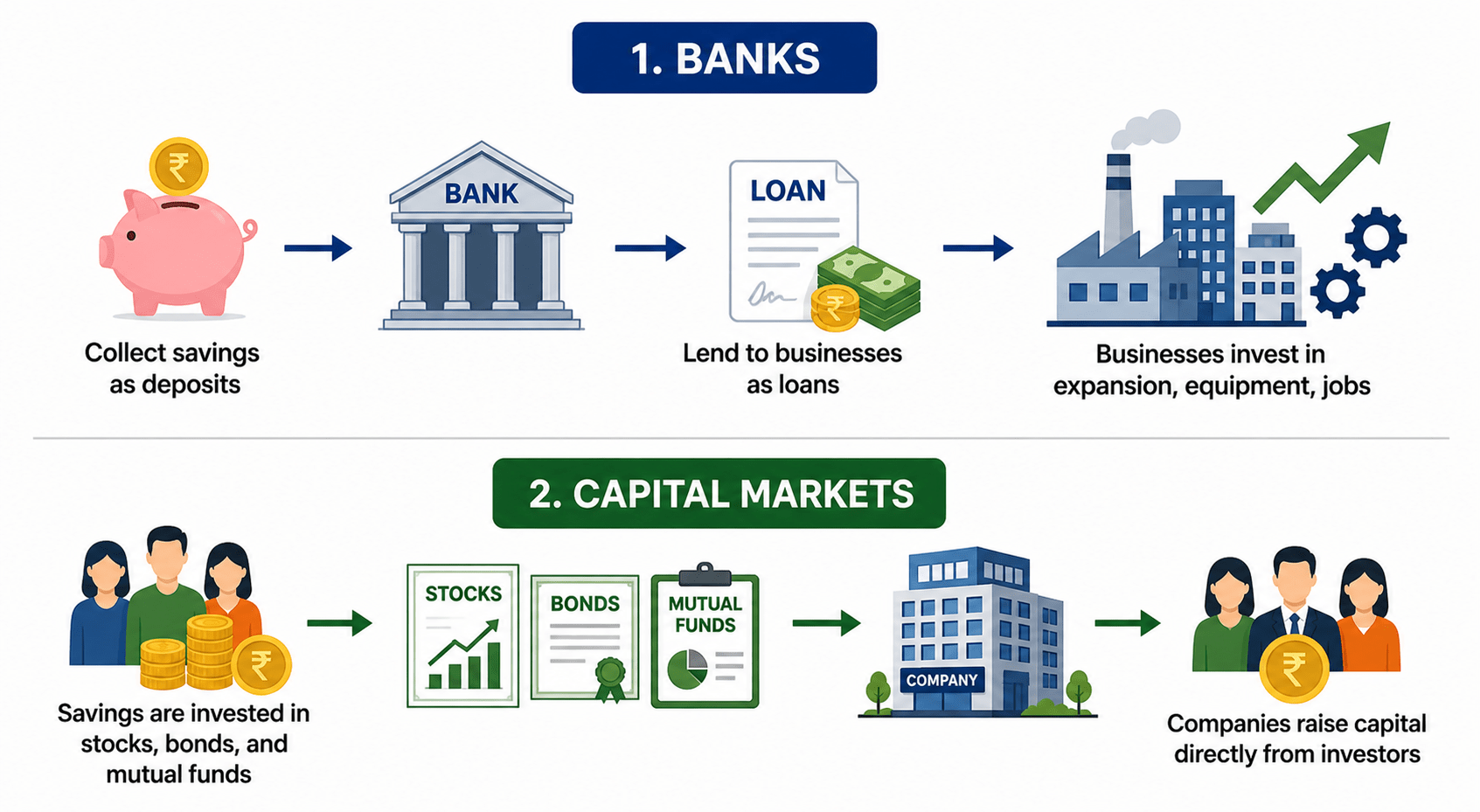
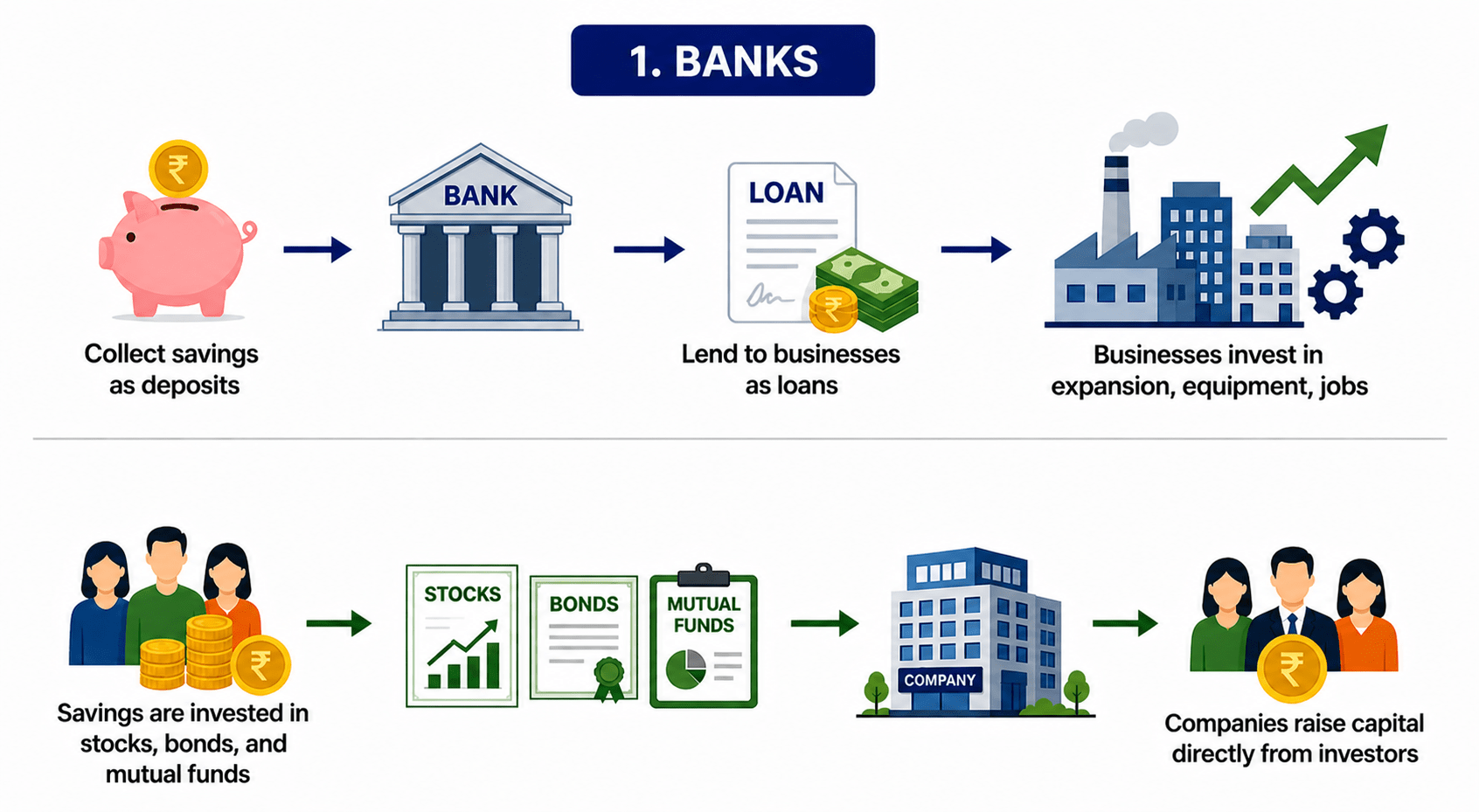
Capital Markets: Savings are invested in stocks, bonds, and mutual funds → companies raise capital directly from investors.
This savings-investment link is critical. Without it, productive companies would lack funding, and the economy would stagnate.
Where Investment Banking Fits
Investment banks sit at the intersection of capital supply (savings, investor funds) and capital demand (companies, governments needing funds).
Their core functions:
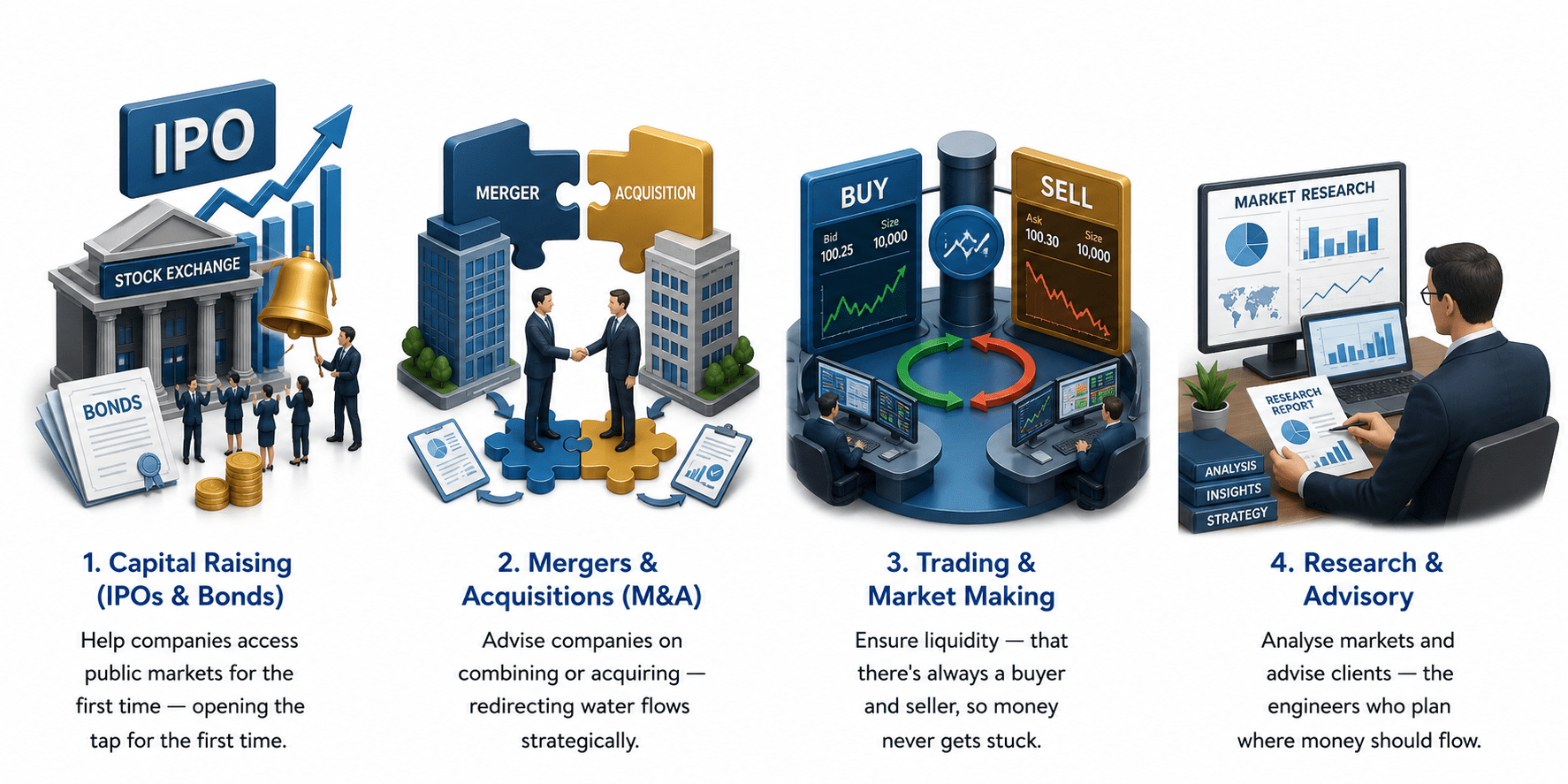
Capital Raising (IPOs & Bonds): Help companies access public markets for the first time — opening the tap for the first time.
Mergers & Acquisitions (M&A): Advise companies on combining or acquiring — redirecting water flows strategically.
Trading & Market Making: Ensure liquidity — that there's always a buyer and seller, so money never gets stuck.
Research & Advisory: Analyse markets and advise clients — the engineers who plan where money should flow.
Summary
5
Government borrows via bonds for development.
4
Businesses use funds to expand, produce, and create jobs.
3
Banks channel funds into loans and investments.
2
Individuals save by depositing money in banks.
1
Money flows between individuals,banks,businesses,government.
Quiz
Which key player in the economy is described as the 'primary source of savings and labour'?
A. Government
B. Investment Banks
C. Businesses
D. Households

Quiz-Answer
Which key player in the economy is described as the 'primary source of savings and labour'?
A. Government
B. Investment Banks
C. Businesses
D. Households