Accouting Basics


Ledger


Learning Outcome
5
Balance Ledger accounts.
4
Prepare and interpret T-Accounts.
3
Post journal entries to Ledger accounts.
2
Differentiate Journal and Ledger.
1
Understand the purpose of a Ledger.
What is a Ledger?
A Ledger is the Principal Book of Accounts that contains a separate account for every asset, liability, income, expense, and capital item of a business. It is here that all journal entries are classified and sorted by account name.
Think of the Ledger as the filing cabinet of accounting — the Journal is a chronological diary of events, but the Ledger organises those events into labelled folders, one per account. When you want to know the total rent paid this year, you open the 'Rent Expense' folder in the Ledger — not the Journal.
|
Key Characteristics of a Ledger |
|
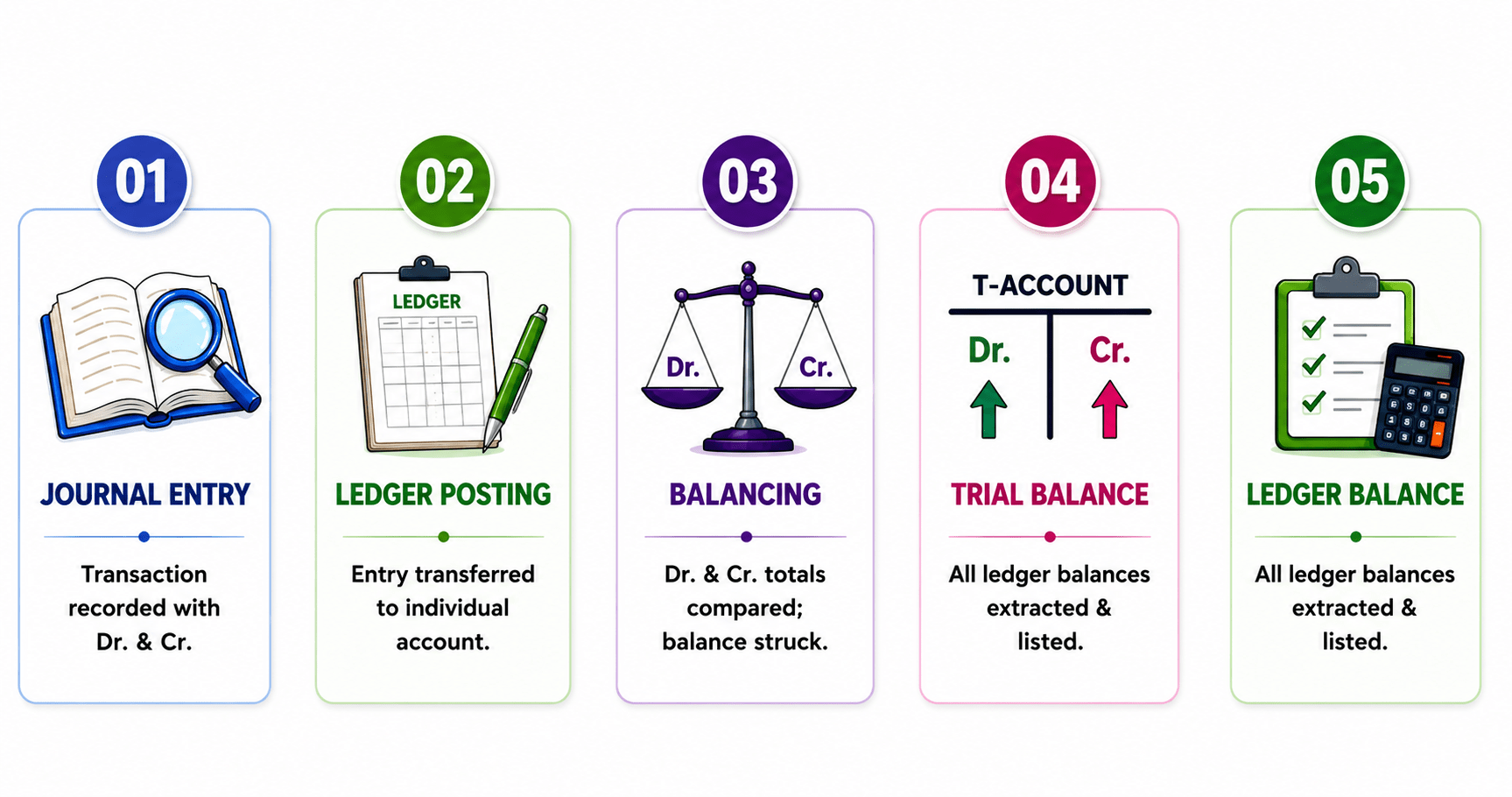
Where Does the Ledger Fit? — The Accounting Flow
The Ledger sits at the heart of the accounting cycle, bridging the Journal and the Trial Balance:
The T-Account Format
Every Ledger account is maintained in the T-Account format — two sides mirror each other, recording all debits on the left and all credits on the right:
Structure of a Ledger Account:
Cash Account
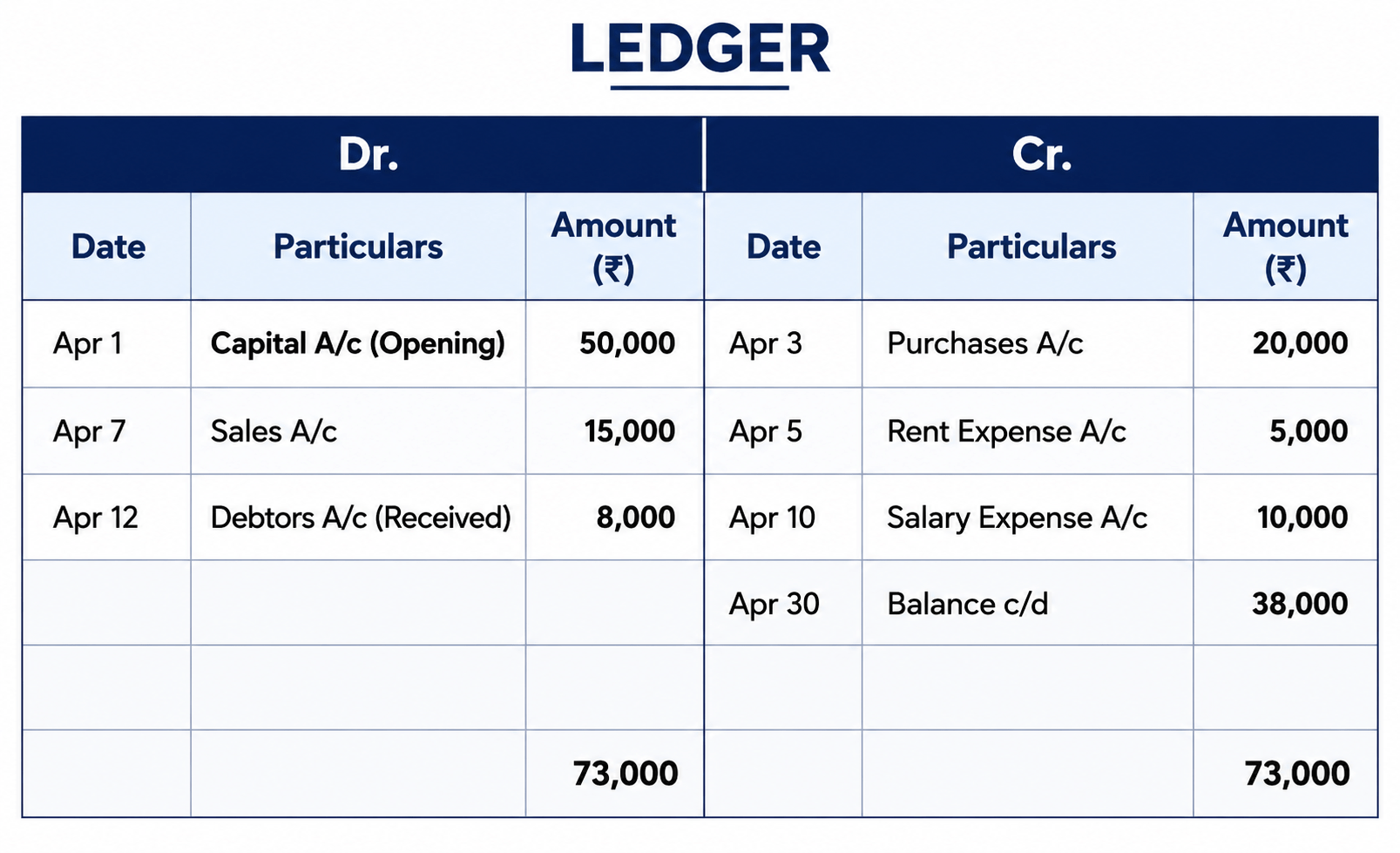
In the example above, the Cash Account shows ₹73,000 on the Credit side resulting in a Credit balance of ₹38,000, meaning the business currently holds ₹38,000 in cash.
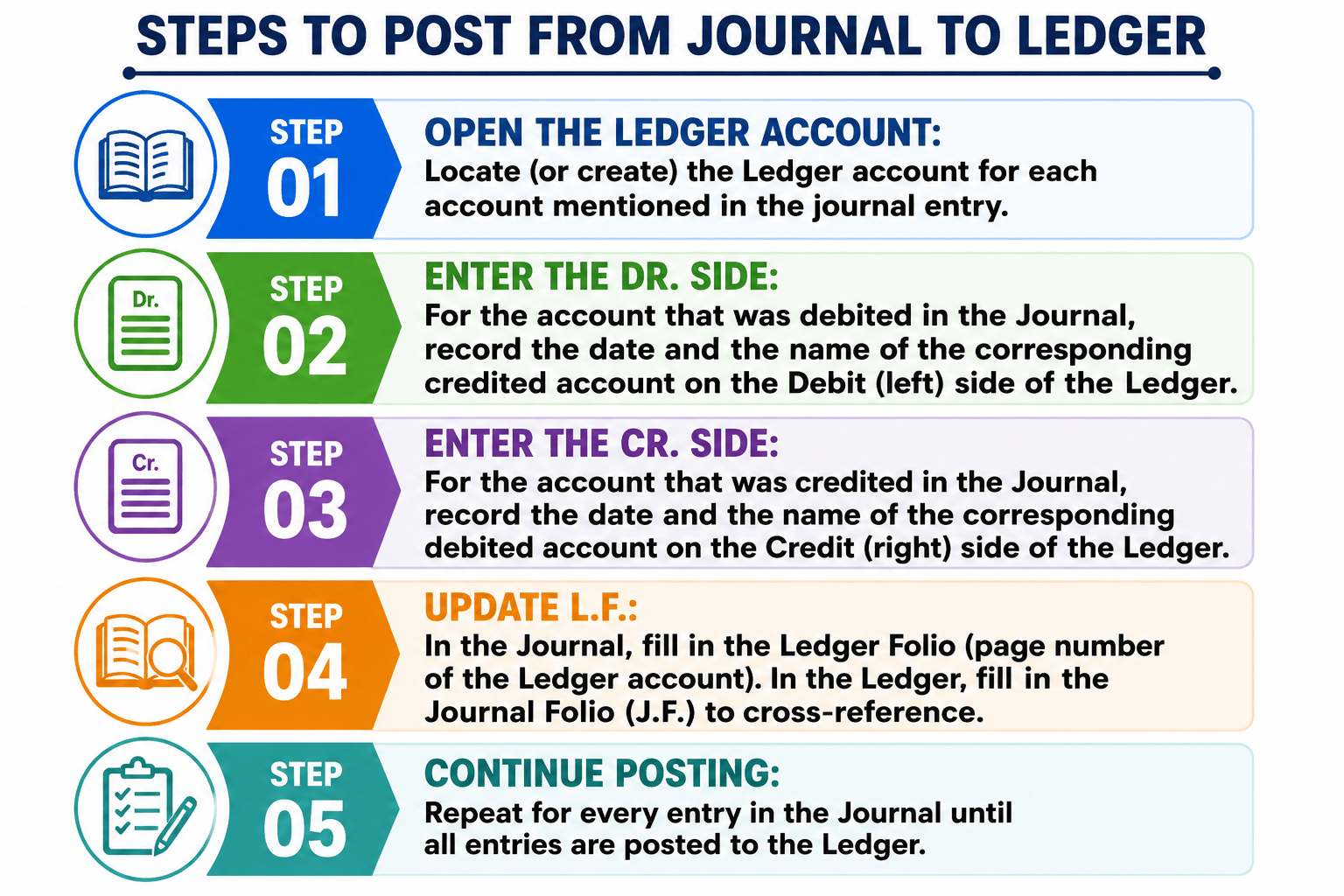
How to Post a Journal Entry to the Ledger
Posting is the process of transferring journal entries to the respective Ledger accounts. Follow these steps:
Balancing a Ledger Account
At the end of an accounting period (monthly, quarterly, or annually), each Ledger account must be balanced. Balancing means calculating the net difference between the total Debit and total Credit sides of the account.
The balance is inserted on the smaller side as 'Balance c/d' (carried down) to make both sides equal. The same amount appears on the opposite side in the next period as 'Balance b/d' (brought down), representing the opening balance.
Ledger vs. Journal — At a Glance
Core Concepts (.....Slide N-3)
Summary
5
Build strong branding
4
Use different marketing channels
3
Target the right audience
2
Create and communicate value
1
Understand customer needs
Choose cool, soft colors instead of vibrant colors
Max 5 Points for Summary & Min 2
Quiz
Which platform is mainly used for professional networking and B2B marketing ?
A. Facebook
B. Instagram
C. LinkedIn
D. Snapchat

Quiz-Answer
Which platform is mainly used for professional networking and B2B marketing ?
A. Facebook
B. Instagram
C. LinkedIn
D. Snapchat