

Break Identification and ageing


Reconcilation & Exception Handling

Learning Outcome
5
Explain why timely resolution of reconciliation breaks is important.
4
Understand how ageing helps track & escalate unresolved breaks.
3
Describe the concept of break ageing and ageing buckets.
2
Identify the different types of reconciliation breaks.
1
Explain what a reconciliation break is and why it occurs
What is a Reconciliation Break?

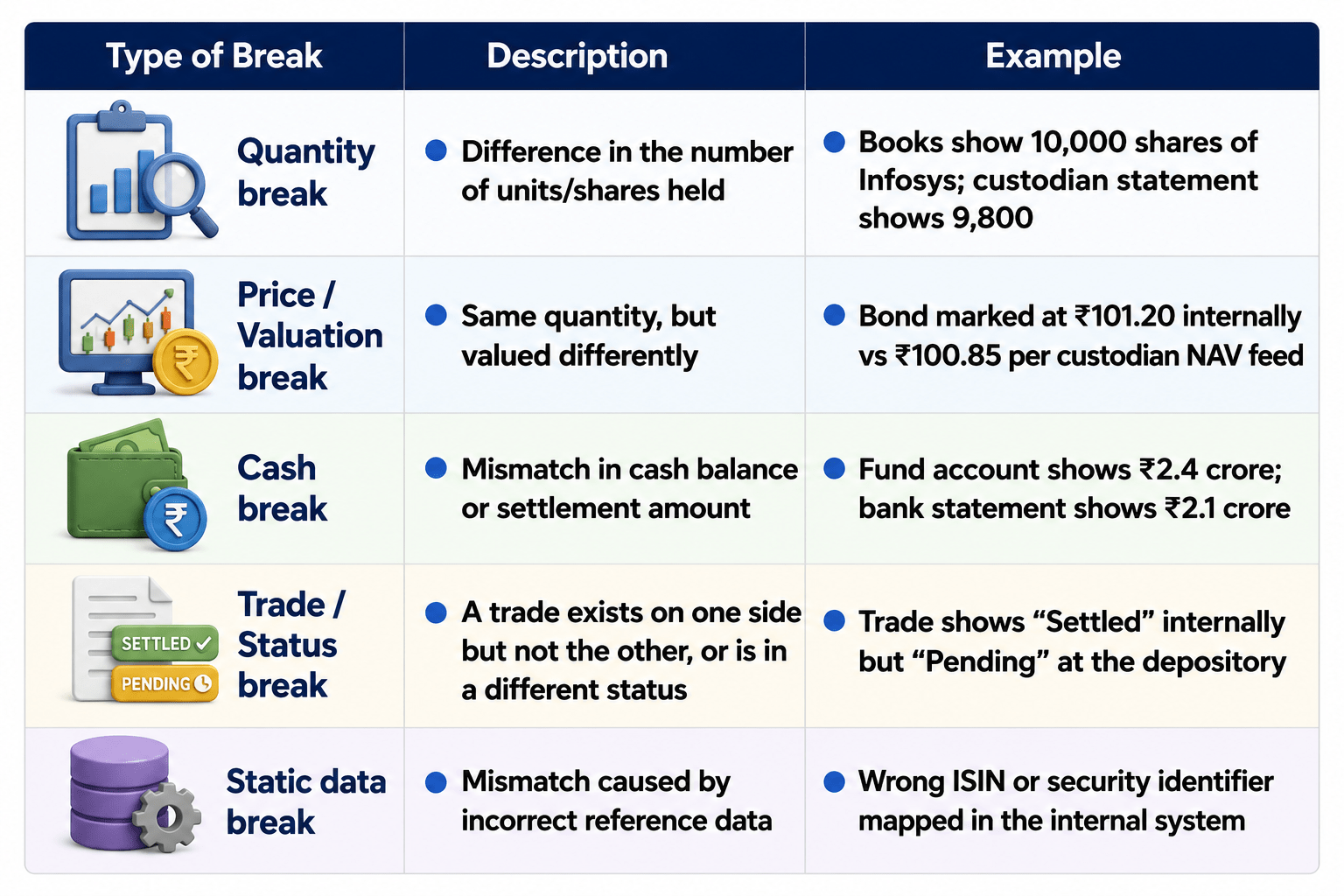
A reconciliation break is any mismatch. It happens when two independent records of the same activity don’t agree — this could be about quantity, value, cash, or reference data. It gets logged as an “exception” in the reconciliation system. It stays open until it is checked and closed.
Reconciliation breaks are commonly classified as follows:
Ageing of Breaks
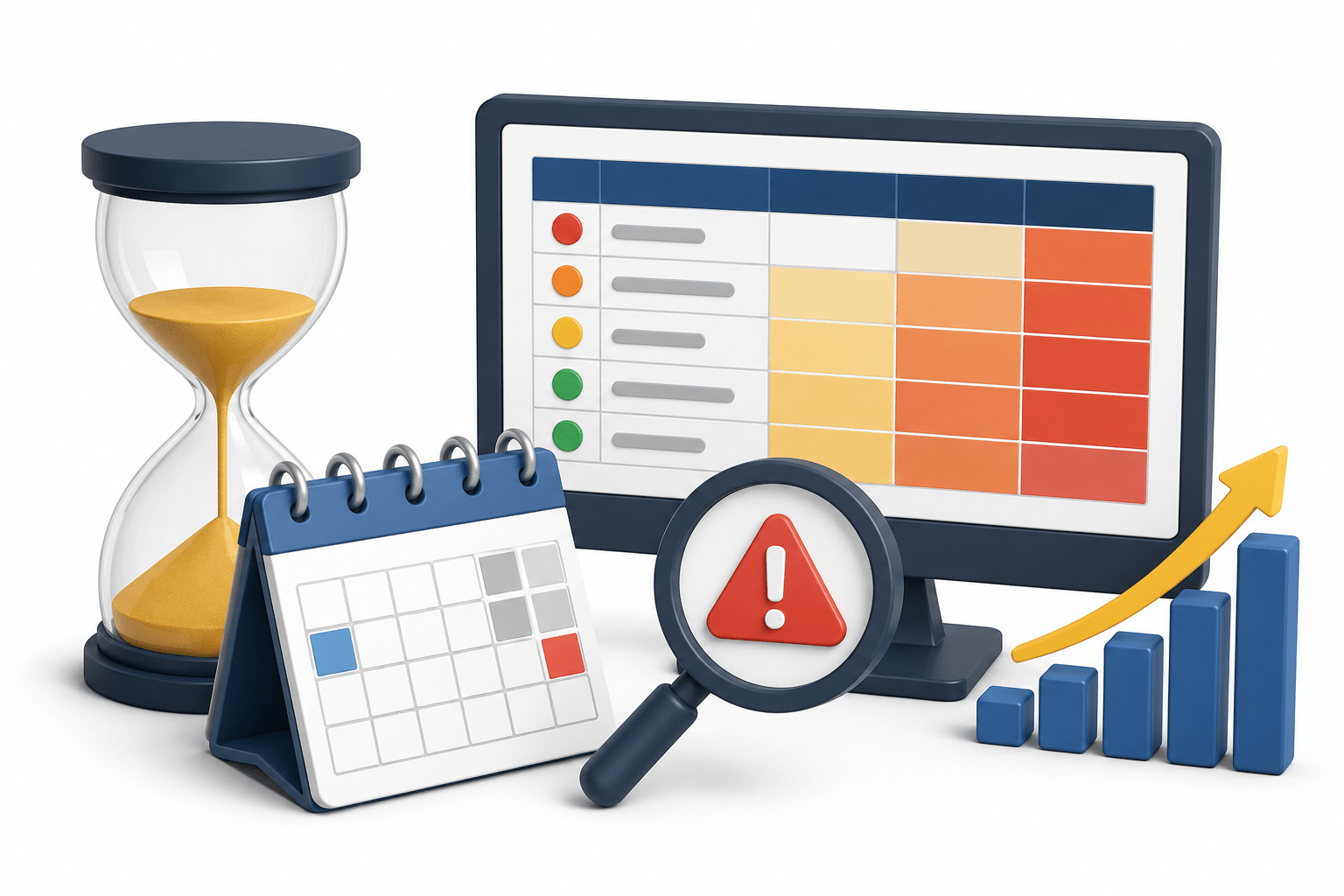
Ageing means tracking how long a break has stayed open. We count from the day it was first spotted (Day 0) to today. Every reconciliation platform keeps an ageing report. This report groups open breaks by how many days they’ve been outstanding. This helps operations and risk teams deal with the oldest and highest-value ones first.
A typical ageing bucket structure used in Indian back-office operations looks like this:
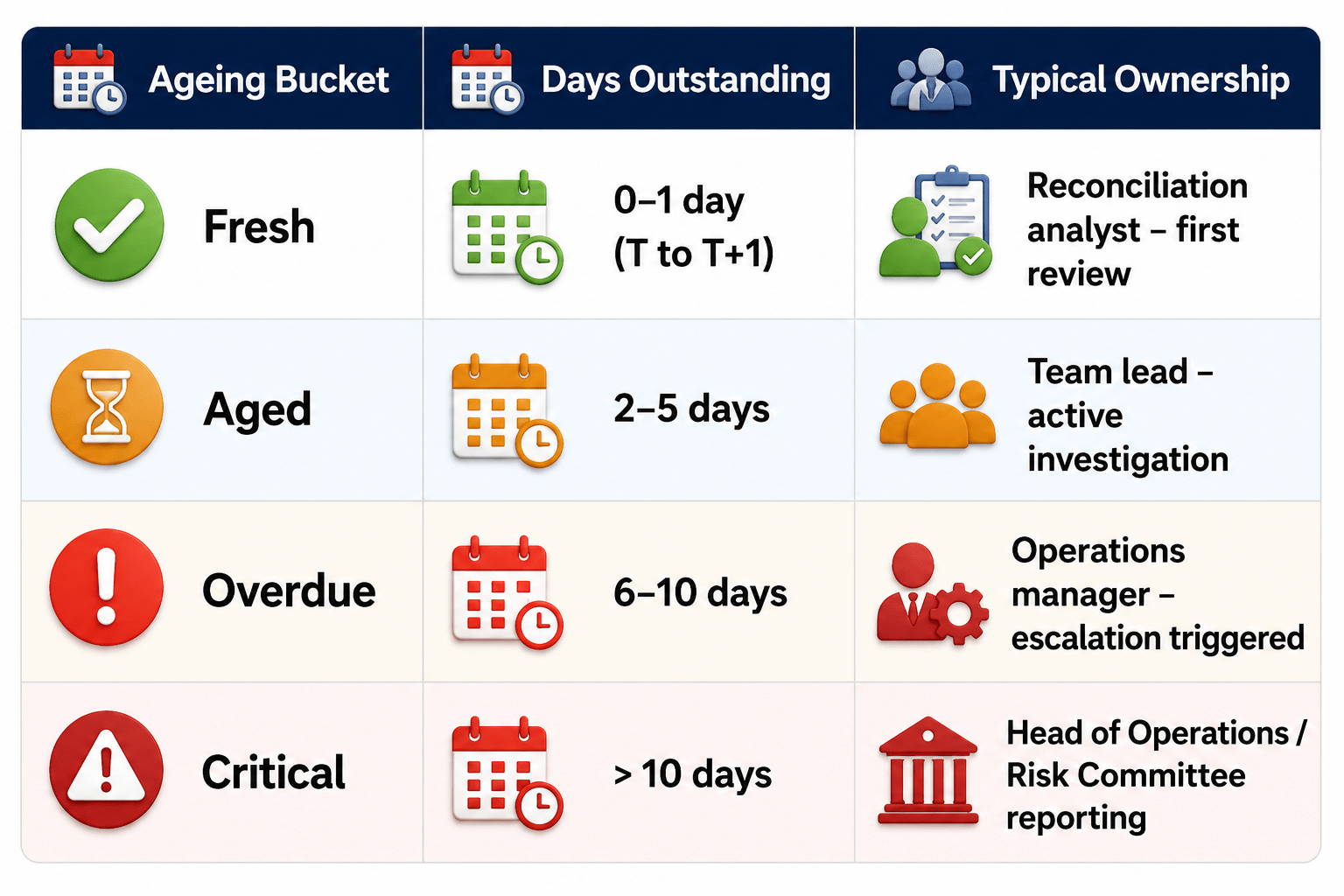
Ageing buckets are not random. They usually match a firm’s internal escalation rules. For regulated entities, they also match SEBI/RBI reporting deadlines for unreconciled items. When a break moves into the next bucket, it usually gets auto-flagged to the next level of authority. This way, nothing gets missed.
Why Timely Resolution Is Important

Financial risk: An unresolved cash or valuation break can show the wrong NAV, P&L, or fund performance, which directly affects investors.
Regulatory risk: SEBI and RBI inspections specifically check ageing reports. A high number of old breaks is seen as a weakness in operational controls.
Audit and compliance risk: Auditors flag long-pending breaks as serious control gaps in their reports.

Operational risk: The longer a break stays open, the harder it is to trace. Supporting documents, trade confirmations, and people’s memory of the details all fade over time.
Reputational risk: If a firm keeps settling late or resolving disputes slowly, it damages relationships with custodians, counterparties, and clients.
Summary
5
Timely resolution reduces risks.
4
Older breaks are escalated.
3
Ageing tracks unresolved breaks.
2
Breaks include quantity, cash, price, trade, and data.
1
A break occurs when records do not match.
Quiz
Why is timely resolution of reconciliation breaks important?
A. To increase trading volume
B. To reduce financial and regulatory risks
C. To calculate interest income
D. To issue bonus shares

Quiz-Answer
Why is timely resolution of reconciliation breaks important?
A. To increase trading volume
B. To reduce financial and regulatory risks
C. To calculate interest income
D. To issue bonus shares
