Reconcilation & Exception Handling


Cash Reconciliation



Learning Outcome
5
Ensure accurate financial records.
4
Investigate and resolve differences.
3
Identify cash differences.
2
Understand the reconciliation process.
1
Explain cash reconciliation purpose.
What is Cash Reconciliation?
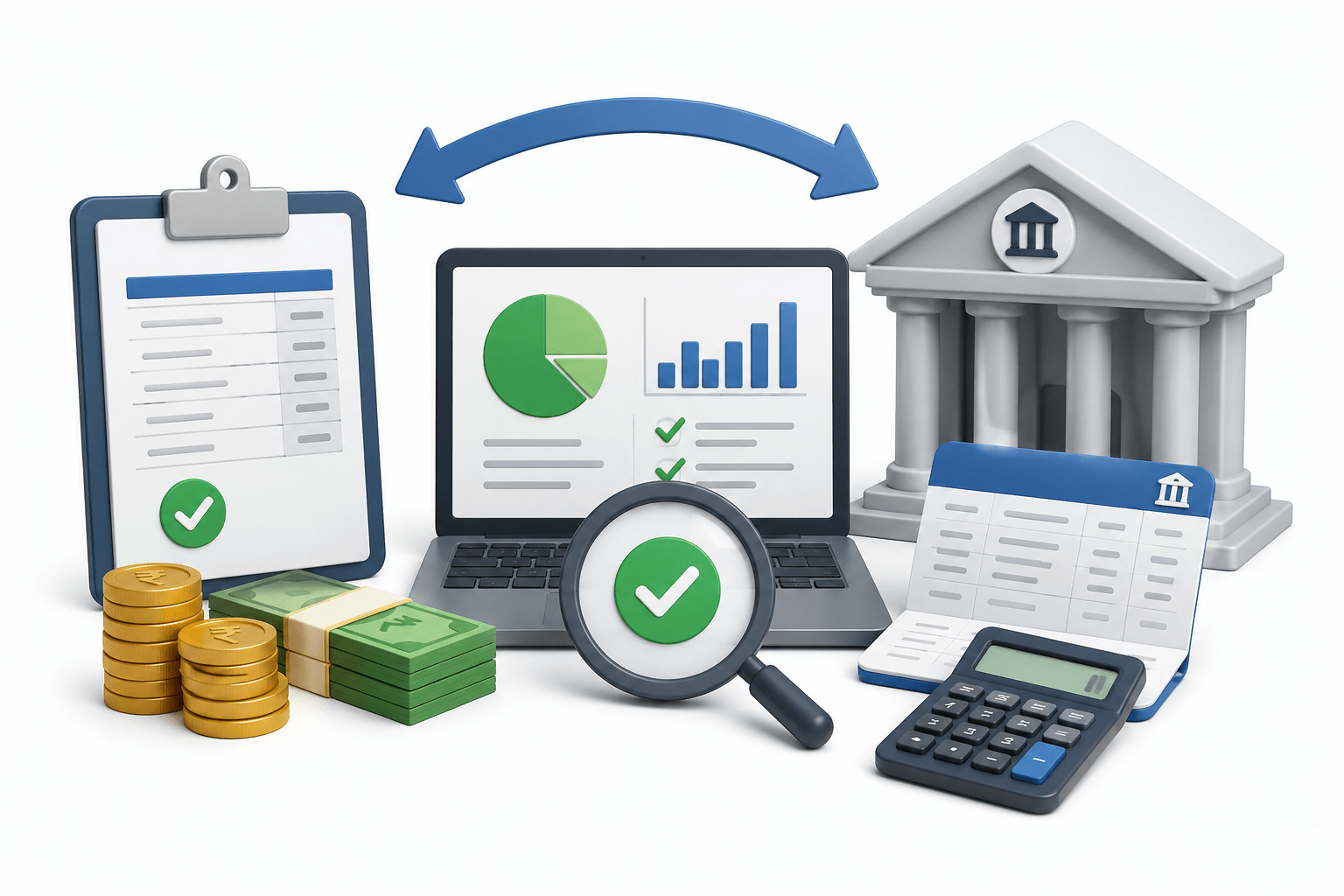
Cash reconciliation is the process of comparing an organization's cash records with the bank or custodian's records to make sure the cash balance matches and to identify and correct any differences.
Example:
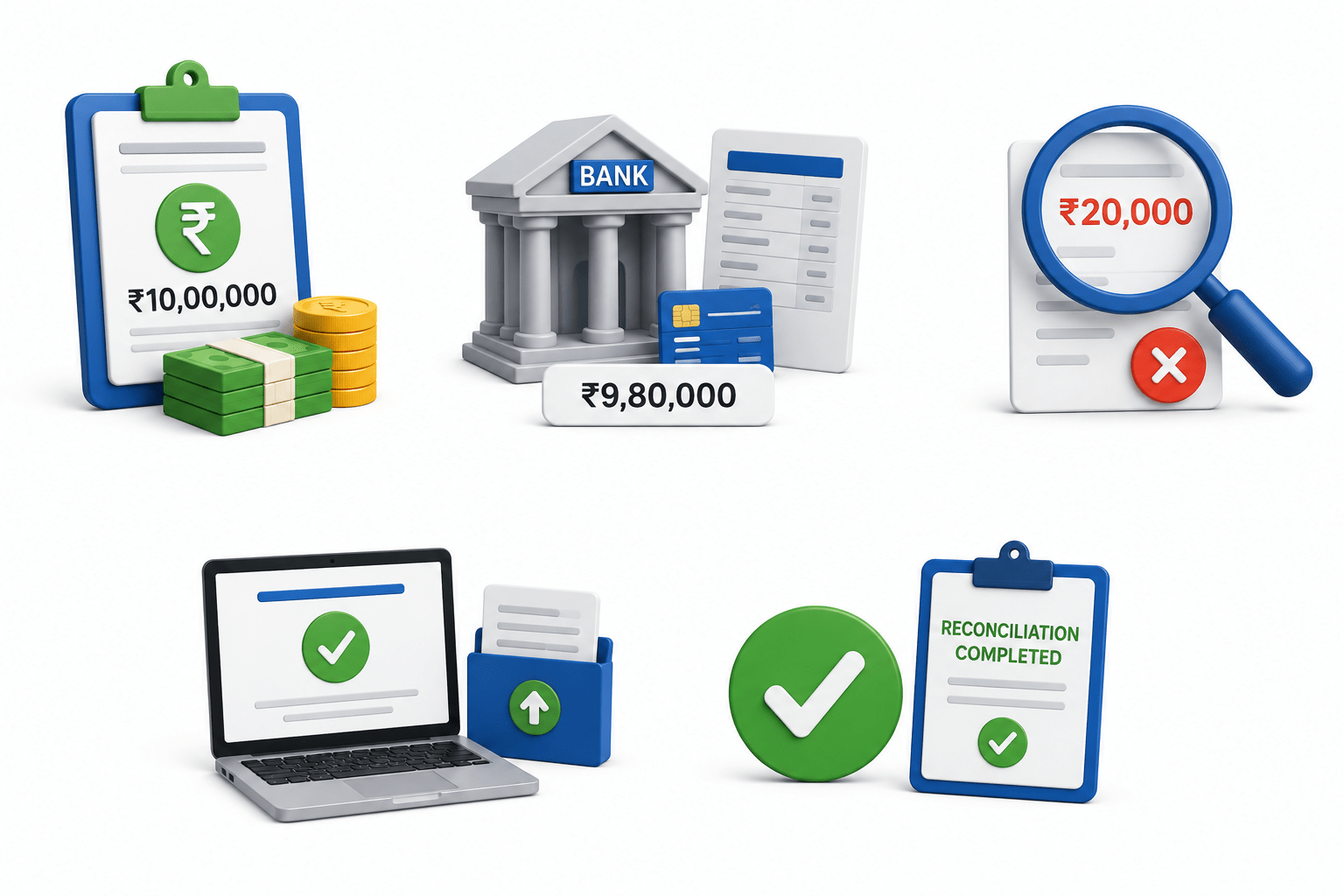
A mutual fund's records show a cash balance of ₹10,00,000.
The bank statement shows a cash balance of ₹9,80,000.
The operations team finds that a ₹20,000 payment was recorded in the bank account but had not yet been updated in the fund's records.
The fund records are updated, and both balances match.
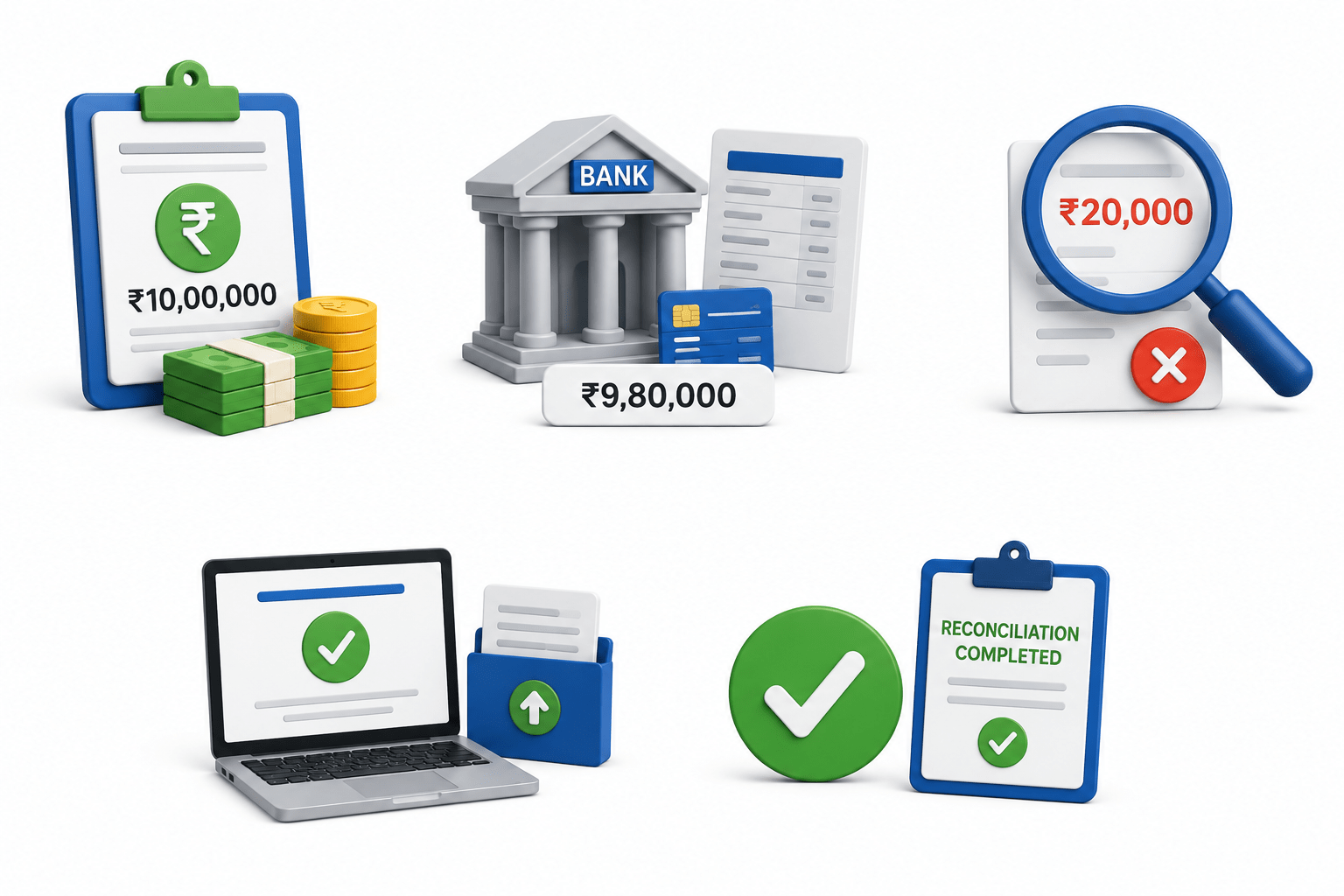
The cash reconciliation is completed.
In simple words: Cash reconciliation is checking whether your cash records and the bank's records show the same balance, and investigating any differences if they don't.
Purpose of Cash Reconciliation
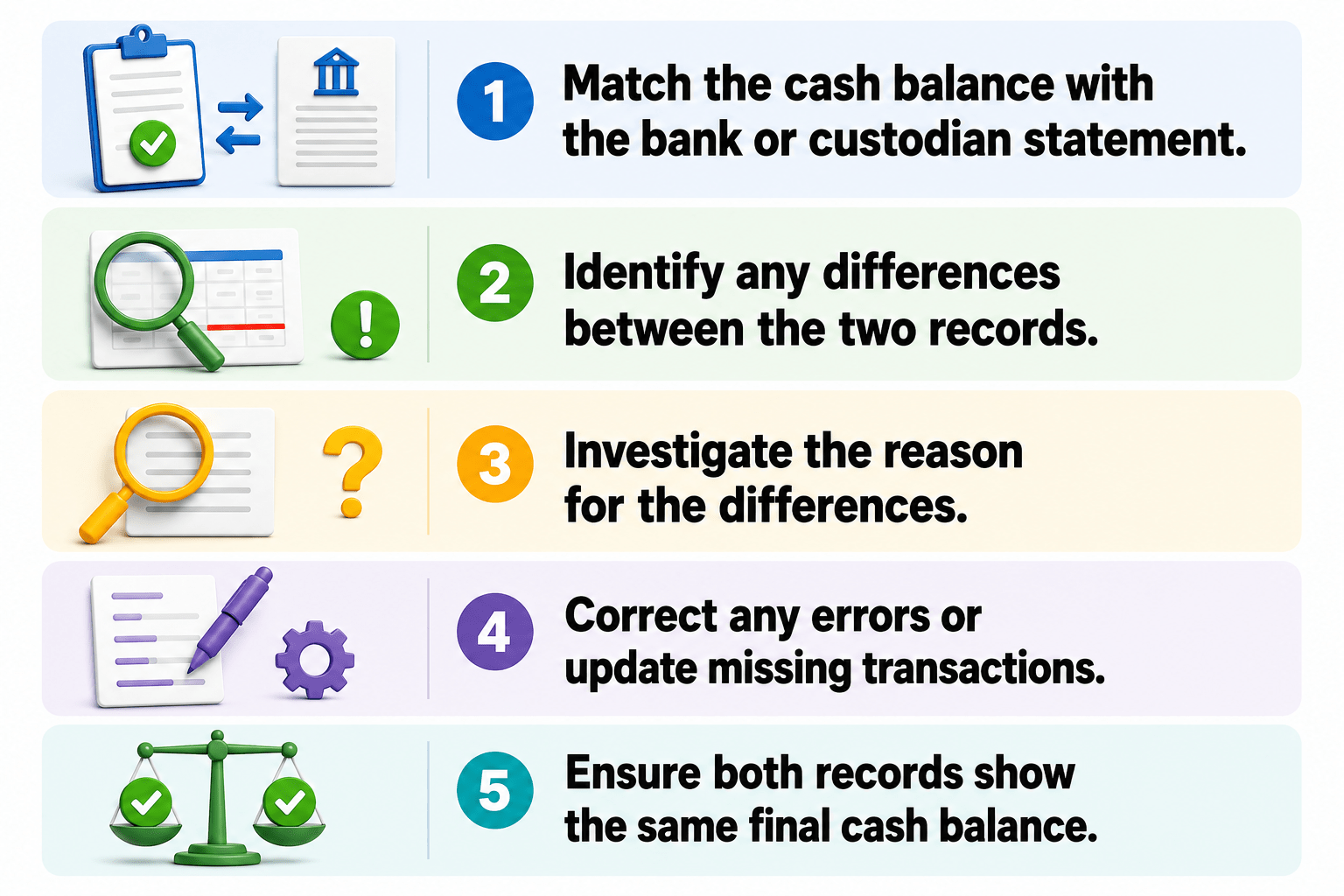
Compare internal cash records with bank statements
In practice, reconciliation is carried out by lining up the fund's own cash ledger against the bank's statement, entry by entry:
| Step | What Happens |
|---|---|
| 1. Pull both records | The fund's internal cash ledger and the corresponding bank statement (or custodian's cash statement) are both gathered for the same date. |
| 2. Match line by line | Each entry in the internal ledger is compared with an entry in the bank statement, usually matching by date, amount, and reference number. |
| 3. Mark matched items | Entries that agree on both sides are marked as reconciled and need no further action. |
| 4. Flag unmatched items | Entries that appear on only one side, or that show a different amount, are flagged as a difference. |
| 5. Investigate and correct | Each flagged difference is looked into, the cause is identified, and either the internal books or the understanding of the bank entry is corrected. |
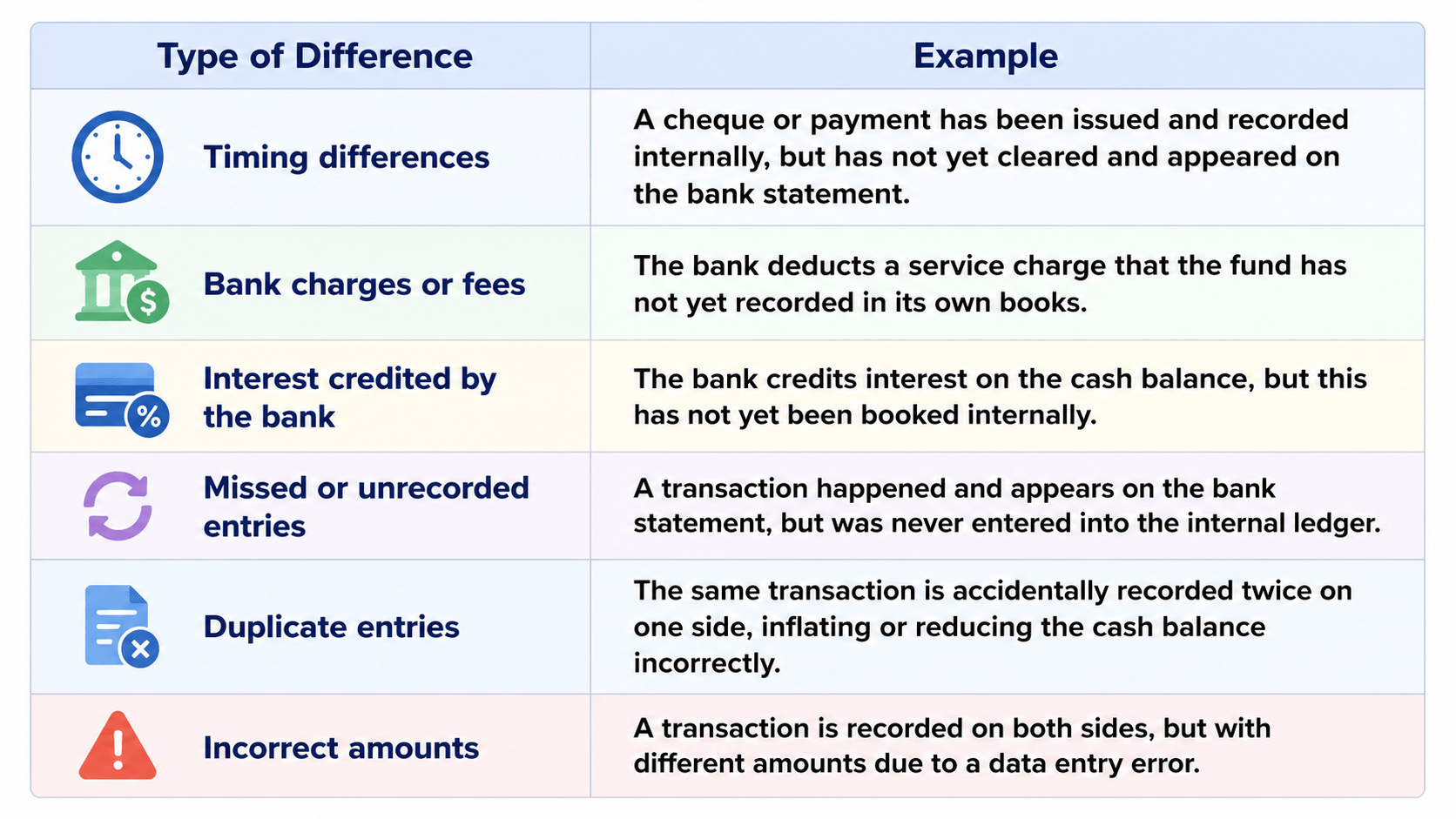
Common Cash Differences
During cash reconciliation, certain differences occur repeatedly. Understanding these common differences helps operations teams identify and resolve them efficiently:
Summary
5
Regular reconciliation ensures accurate cash management.
4
Differences are investigated and corrected.
3
Differences include timing, fees, interest, and errors.
2
Matching identifies cash differences.
1
Cash reconciliation compares cash records.
Quiz
Which of the following is a common cash difference?
A. Stock split
B. Timing difference
C. Dividend declaration
D. Share buyback

Quiz-Answer
Which of the following is a common cash difference?
A. Stock split
B. Timing difference
C. Dividend declaration
D. Share buyback