Analytical & Problem-Solving Skills


Data Sufficiency


Learning Outcome
5
Solve aptitude-based DS questions efficiently
4
Improve logical reasoning ability.
3
Avoid unnecessary calculations
2
Determine whether information is adequate
1
Understand Data Sufficiency concepts
Recall / Revisit
Think About It



When solving a problem:
-
Do we always need the exact answer?
-
Is it enough to know whether the answer can be determined?

Data Sufficiency Focus
Not finding the answer.
Finding whether enough information exists.
Recall / Revisit
Think About It
What are Puzzles and Arrangements
What are Arrangements?
In arrangement questions, you have to place people or objects in a specific order or position based on given conditions.
Think of it like arranging students in a classroom according to clues.
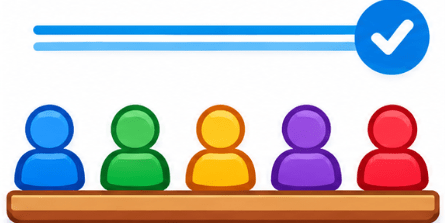
Types of Arrangements
Linear Arrangement
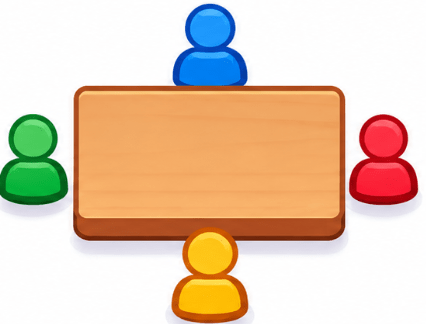
Rectangular/Square Arrangement
Circular Arrangement
People are seated in a straight line.
People sit around a table in a circle.
People sit around a square or rectangular table.
Types of Arrangements
Linear Arrangement
Example
-
A sits opposite B.
-
C sits to the immediate right of A.
-
D sits between B and E.
Find everyone's position.
Since there is no fixed start or end, these require careful direction tracking.
People sit around a square or rectangular table.
Questions may involve:
-
Corners
-
Sides
-
Facing inside or outside
Rectangular/Square Arrangement
Types of Arrangements
Circular Arrangement
People sit around a table in a circle.
Example
-
A sits opposite B.
-
C sits to the immediate right of A.
-
D sits between B and E.
Find everyone's position.
Since there is no fixed start or end, these require careful direction tracking.

What are Puzzles and Arrangements
What are Puzzles?
A puzzle contains multiple pieces of information that must be connected logically.
Unlike arrangements, puzzles often involve several categories.
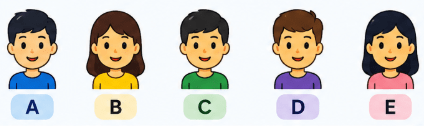
Example Puzzle :-
Five friends:
Each likes a different fruit:
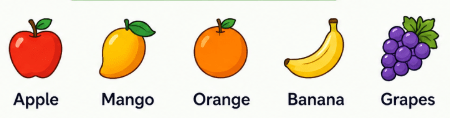
What are Puzzles and Arrangements
Clues:
1
2
3
A likes Apple.
B does not like Mango.
The person who likes Orange sits next to C.



Solution
| Friends | Fruits |
|---|---|
| A | 🍎 Apple |
| B | 🥭 Mango |
| C | 🍊 Orange |
| D | Banana |
| E | 🍇 Grapes |

This is called a Logic Puzzle.
Types of Puzzles
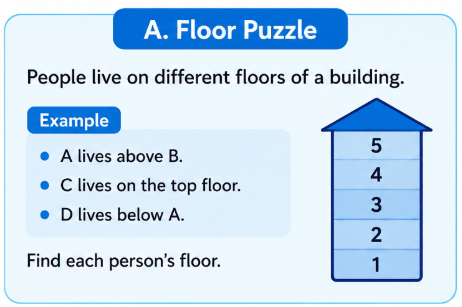
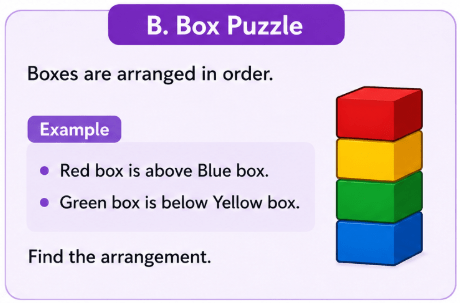
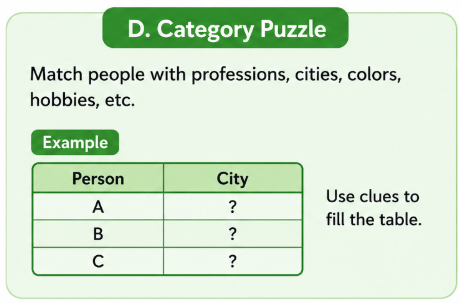
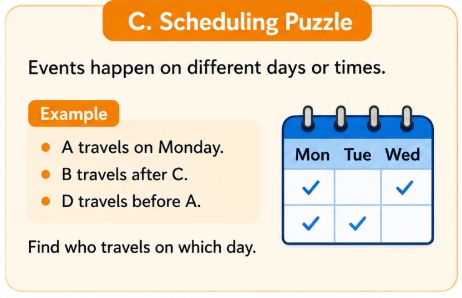
Recall
Before We Begin...
Answer the following:
1
3
2
What is meant by a "constraint" in a puzzle?
How many neighbours does a person have in a circular arrangement?
Which is easier to solve first:

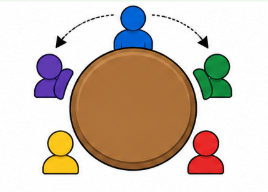


OR
A constraint is a rule or condition given in the puzzle that limits the possibilities and helps us find the solution.
A person has 2 neighbours in a circular arrangement -one on the left and one on the right.
Direct clues
Indirect clues
Clues that give clear and direct information.
Clues that need some other information to be understood.
Key Concepts
1
Read all clues carefully.
2
Start with definite information.
3
Use diagrams and tables.
4
Eliminate impossible positions.
5
Verify all clues before finalizing.


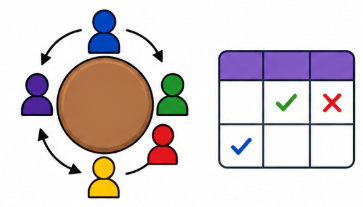
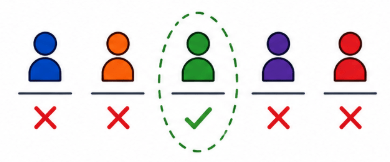

Linear Arrangement

People or objects are arranged in a straight line.
Common term

Immediate Left

Immediate Right

Second to the Left


Extreme Ends
Facing North/South
Strategy
1
2
3
4
Draw blank positions.
Place fixed positions first.
Use elimination.
Check all conditions.




Linear Arrangement
Examples:-
Five friends A, B, C, D, and E are sitting in a row.
-
A sits at one end.
-
C sits in the middle.
-
B sits immediately right of A.
-
E sits at the other end.
Find the arrangement.
Solutions

Positions:-
1
2
3
4
A
B
C
D
1
2
3
4
A at one end
B immediately right of A → Position 2
C in middle → Position 3
E at other end → Position 5
D occupies remaining position.
Solutions
A - B - C - D - E
Linear Arrangement
Problem:-
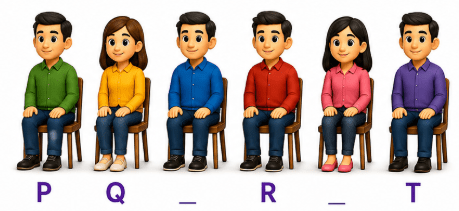
Six people P, Q, R, S, T, U sit in a row.
-
P sits left of Q.
-
R sits at an end.
-
T sits between P and Q.
-
U sits rightmost.
Find possible arrangement.

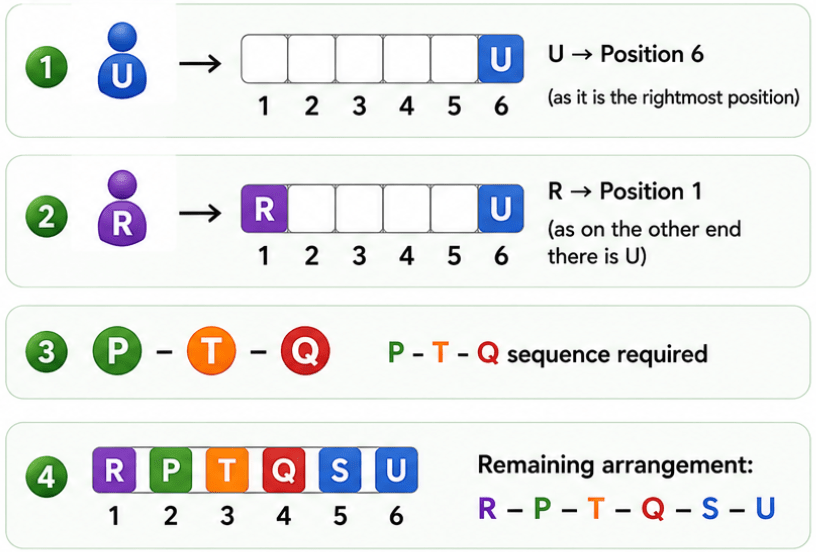
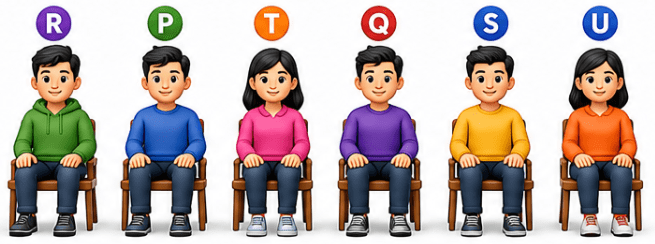
Remaining arrangement:
Solution:-
Circular Arrangement
People sit around a circle.
Important Rule:



Everyone has exactly two neighbors.
Relative positions matter.
Fix one person to avoid rotation confusion.

Circular Arrangement
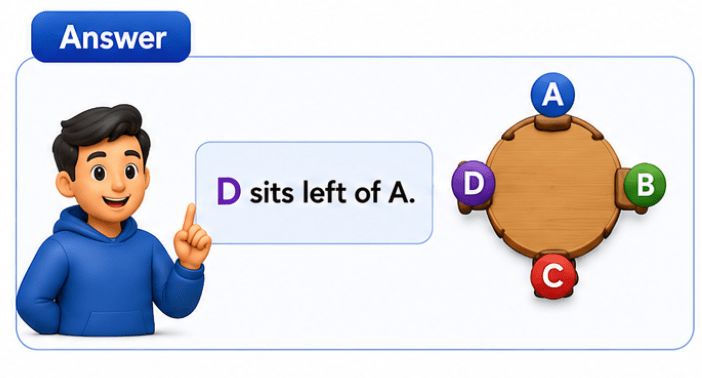

Problem:-
Four friends A, B, C, D sit around a circular table.
-
A sits opposite C.
-
B sits right of A.
Who sits left of A?
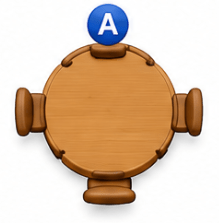
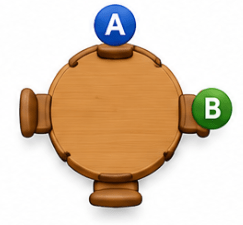
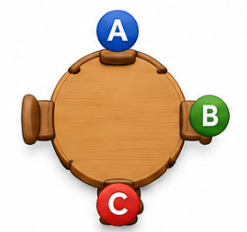
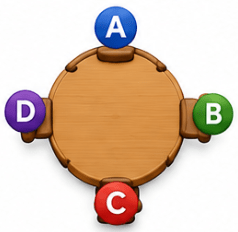
Fix A.
B sits right of A.
Remaining seat occupied by D.
C opposite A.
Circular Arrangement
Problem:-
Five people sit around a circle.
-
P is between Q and R.
-
S sits opposite P.
-
T sits next to S.
Determine arrangement.

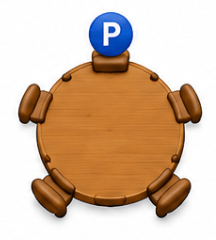
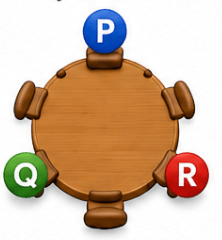
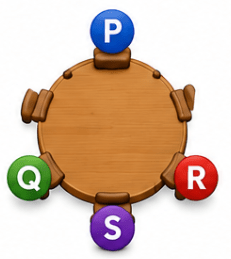
Fix P.
Place Q and R adjacent.
S opposite P.
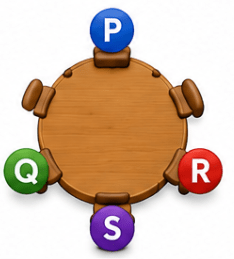
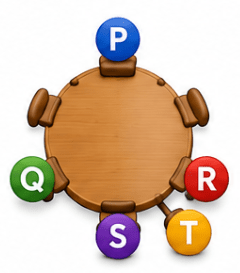
Final Agreement:-
T next to S.
Logical Puzzle Solving
Steps to Solve Any Puzzle

1
Read all clues.
2
Identify direct clues.
3
Create table/diagram
4
Mark confirmed positions.
5
Eliminate impossible options.
6
Cross-check all clues.

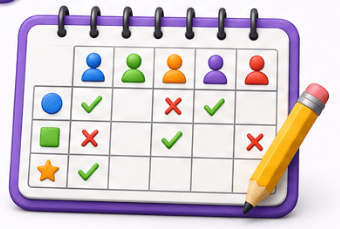



Logical Puzzle
Problem
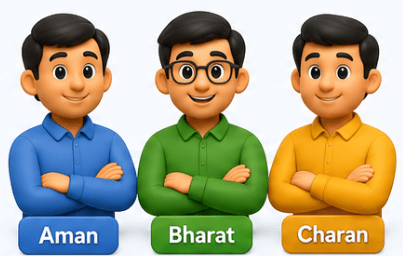
Three employees—Aman, Bharat, and Charan —work in HR, IT, and Finance.
-
Aman is not in HR.
-
Bharat is not in Finance.
-
Charan works in IT.
Who works in Finance?
Solution



Logical Puzzle
Problem
| Employee | HR | IT | Finance |
|---|---|---|---|
| Aman | ✗ | ✗ | ✔ |
| Bharat | ✔ | ✗ | ✗ |
| Charan | ✗ | ✔ | ✗ |
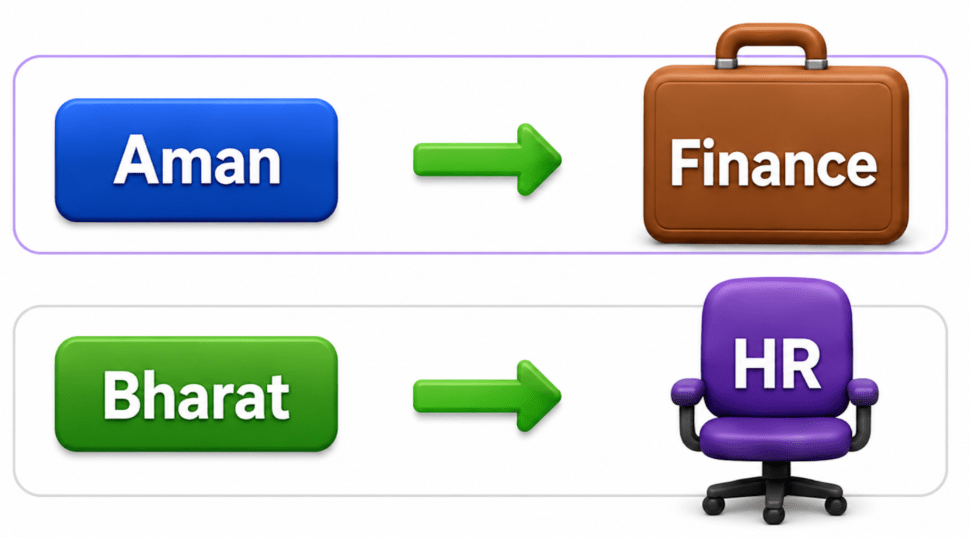
Answer


Aman works in Finance.

Analytical Puzzle
Problem
Solution
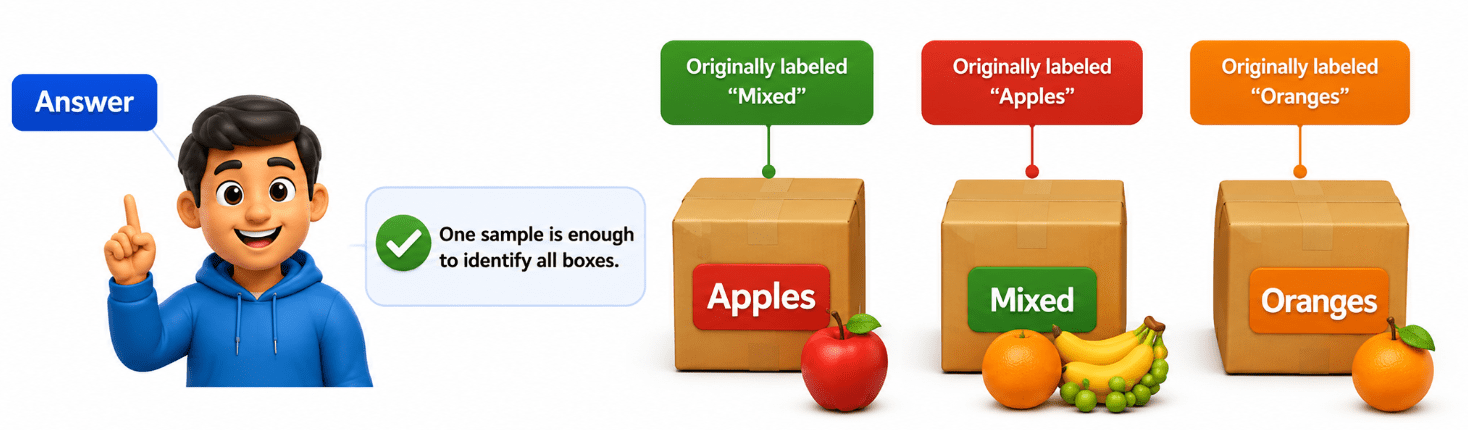
- Three boxes are labeled:
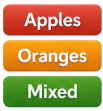
- All labels are incorrect.
- You may pick one fruit from one box only.
- How will you correctly label all boxes?

Logical Puzzle
1
Pick fruit from box labeled "Mixed".

2
Since all labels are wrong:
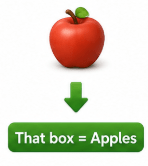
If fruit is Apple,
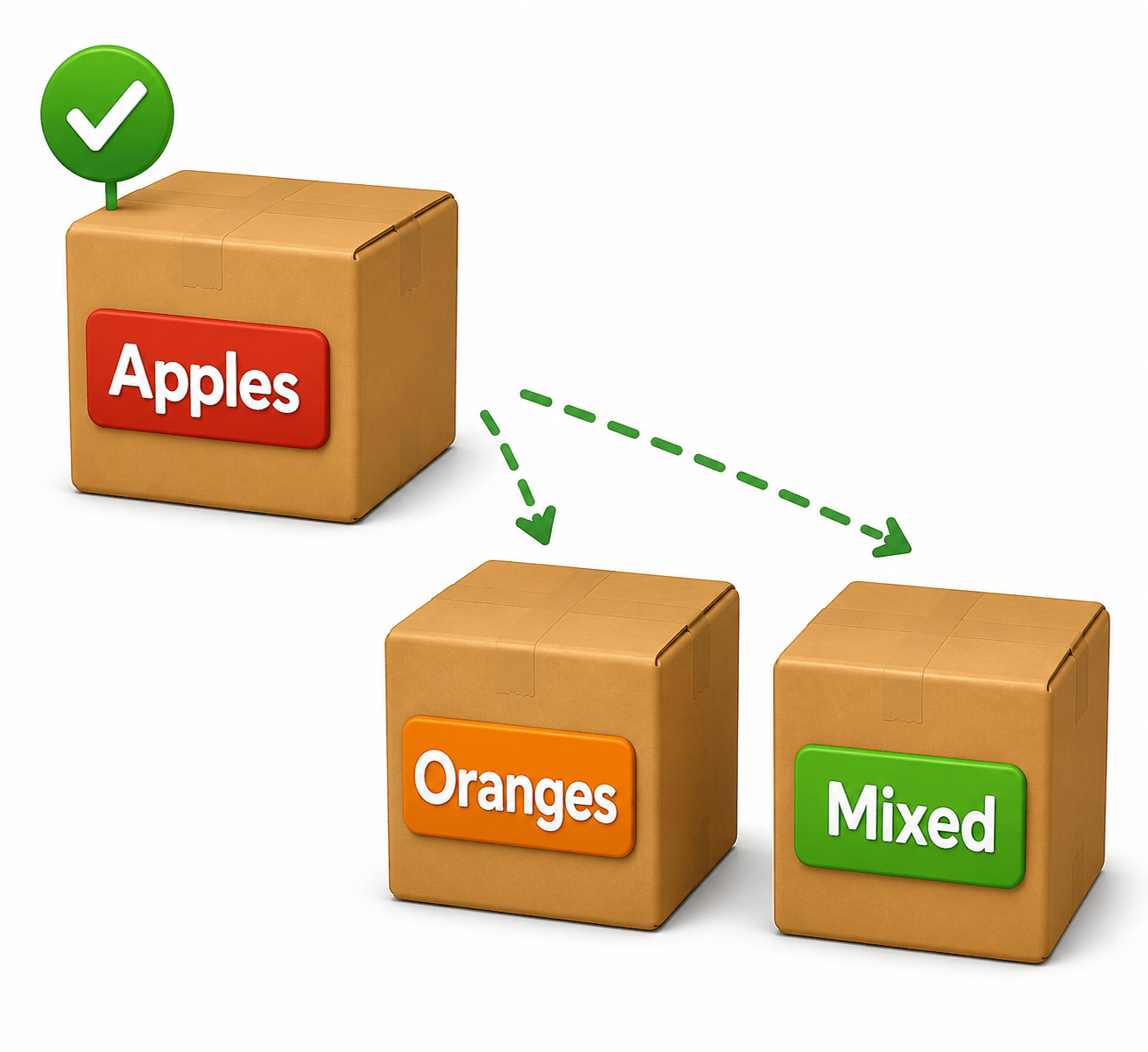
3
Use elimination to label remaining boxes.
Solution
Practice Questions
Solution

Five students A, B, C, D, E sit in a row.
-
A sits left of B.
-
C sits at one end.
-
D sits between A and B.
Find arrangement.
Six people sit in a line.
-
P sits at left end.
-
Q sits immediately right of P.
-
R sits in middle.
-
T sits at right end.
Arrange them.
Q 1.
Q 2.
Practice Questions
Solution
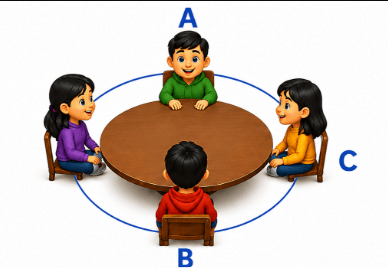
Four friends sit around a circle.
-
A opposite B.
-
C sits right of A.
Who sits left of B?
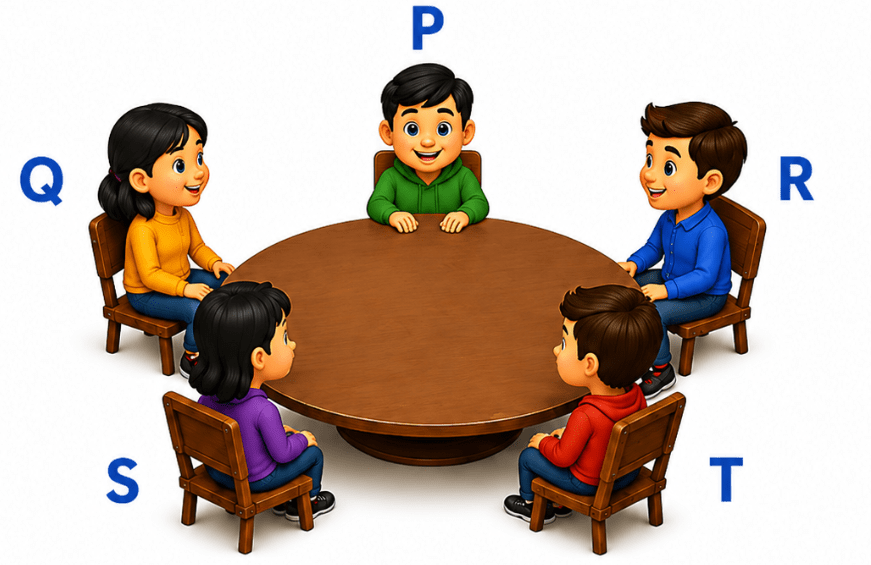
Five people sit around a circular table.
-
P between Q and R.
-
S opposite Q.
-
T next to P.
Determine arrangement.
Q 3.
Q 4.
Practice Questions
Solution
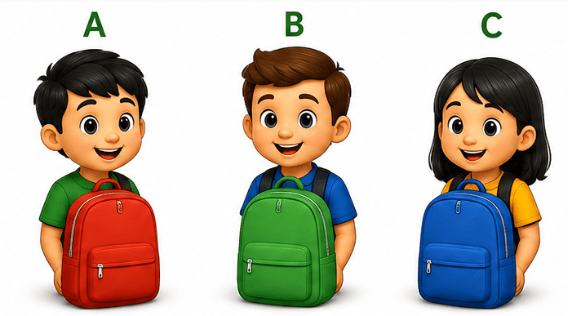
Three children—A, B, C—have Red, Blue, and Green bags.
-
A does not have Red.
-
B has Green.
Who has Blue?
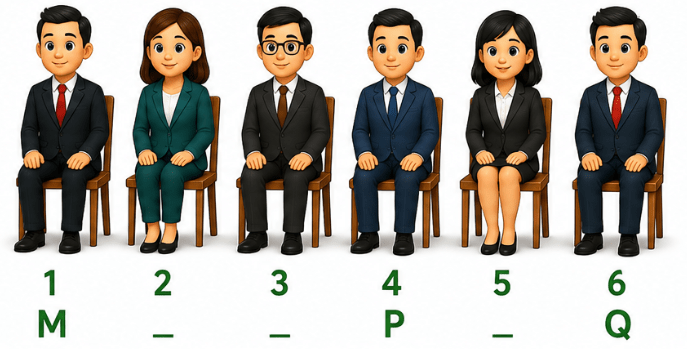
Six employees sit in a row.
-
M sits at one end.
-
N sits immediately left of O.
-
P sits in middle.
-
Q sits rightmost.
Find arrangement.
Q 5.
Q 6.
Key Takeaway






- Start with direct clues
- Draw diagrams and tables
- Use elimination techniques
- Fix one position in circular arrangements
- Verify every clue before finalizing
- Practice improves speed and accuracy
Summary
4
Solved aptitude-based DS questions efficiently
3
Improved logical reasoning ability
2
Determined whether information is adequate
1
Understood Data Sufficiency concepts
Quiz
Q1. What is the value of x?
Statement I: x = 15
Statement II: x is greater than 10
A. A
B. B
C. C
D. D

Quiz
Q1. What is the value of x?
Statement I: x = 15
Statement II: x is greater than 10
A. A
B. B
C. C
D. D