


Introduction to Scrum Framework
What is a Sprint?
A Sprint is a time-boxed iteration in Scrum where the team works to deliver a usable and potentially releasable product increment.
Duration: 1 to 4 weeks
Output: Working feature/product increment
A Sprint is a time-boxed iteration in Scrum where a team develops and delivers a working product increment within a fixed time period.
Purpose of Sprint
1️⃣ Deliver working software in small parts
2️⃣ Ensure continuous progress
3️⃣ Get regular feedback from stakeholders
4️⃣ Improve quality through iteration and testing
When is Sprint Conducted?
- Starts after Sprint Planning
- Happens continuously throughout the project
- Followed by:
- Sprint Review
- Sprint Retrospective
Sprint Lifecycle (Flow)
Sprint Planning
⬇
Sprint Execution
⬇
Daily Scrum
⬇
Sprint Review
⬇
Sprint Retrospective
⬇
Next Sprint
Sprint Lifecycle (Flow)
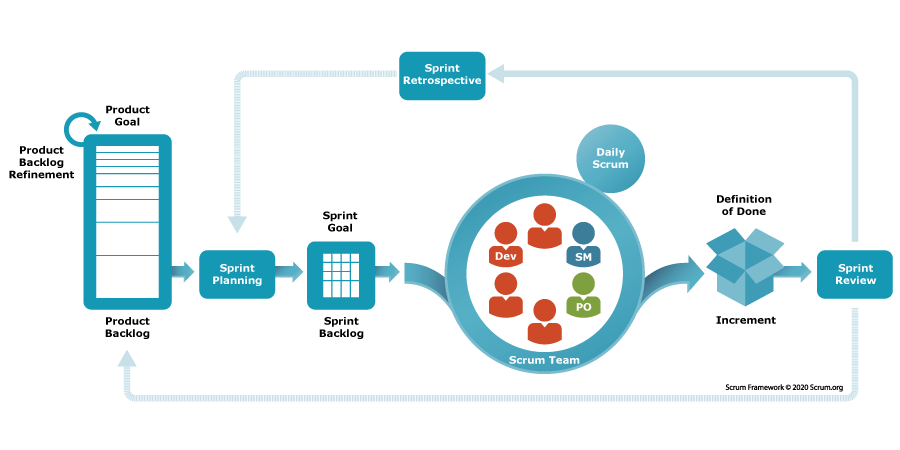
Scrum is Based on 3 Pillars
1️⃣ Transparency
- Work and process are visible to everyone
- Ensures clarity and shared understanding
2️⃣ Inspection
- Regularly check progress and artifacts
- Detect issues early
3️⃣ Adaptation
- Make changes based on inspection
- Improve process continuously
Example:
At the end of each Sprint, teams review work and adjust next steps.
Scrum Values
1️⃣ Focus
- Team concentrates on Sprint goals
- Avoids distractions
2️⃣ Commitment
- Team members are dedicated to goals
3️⃣ Courage
- Team handles challenges confidently
4️⃣ Openness
- Work and issues are transparent
5️⃣ Respect
- Team members value each other
👉 Scrum promotes self-managing, cross-functional teams and continuous improvement.
Activities in a Sprint
1️⃣ Sprint Planning
- Select tasks from Product Backlog
- Define Sprint Goal
2️⃣ Development & Testing
- Coding + Testing happens together
- Continuous integration and validation
Activities in a Sprint
3️⃣ Daily Scrum
- 15-minute daily meeting
- Track progress and blockers
4️⃣ Sprint Review
- Demo completed work
- Collect stakeholder feedback
Activities in a Sprint
5️⃣ Sprint Retrospective
- Discuss improvements
- Plan better strategies for next sprint
Output of a Sprint
✔ Working feature
✔ Tested functionality
✔ Potentially releasable product
Must meet Definition of Done (DoD)
Key Characteristics of Sprint
✔ Working feature
✔ Tested functionality
✔ Potentially releasable product
Must meet Definition of Done (DoD)
Key Characteristics of Sprint
✔ Fixed duration (time-boxed)
✔ No scope changes during sprint (ideally)
✔ Continuous testing
✔ Team collaboration
✔ Incremental delivery
Real-World Example (Banking App)
Sprint Plan:
Sprint 1:
- Login Feature
- Validation testing
Sprint 2:
- Balance Check
Sprint 3:
- Fund Transfer
After each sprint:
- Feature is tested
- Demo is given
- Feedback is implemented
Important Rules in Sprint
- No major changes once sprint starts
- Team commits to sprint goal
- Work must meet Definition of Done
- Incomplete work goes back to backlog
Sprint vs Release
| Feature | Sprint | Release |
|---|---|---|
| Duration | Short (1–4 weeks) | Longer |
| Output | Increment | Full product/version |
| Frequency | Frequent | Less frequent |
Scrum Roles Overview
Scrum has 3 roles (No hierarchy)
Ideal Team Size: 5–11 members
1️⃣ Product Owner
- Manages Product Backlog
- Maximizes product value
2️⃣ Scrum Master
- Ensures Scrum is followed
- Removes blockers
- Coaches the team
3️⃣ Developers
- Build and deliver product
- Create working increments
Scrum Events
1️⃣ Sprint (1–4 weeks)
- Main container for all activities
- Fixed duration
2️⃣ Sprint Planning (≤ 8 hours)
- Define Sprint Goal
- Select backlog items
3️⃣ Daily Scrum (15 minutes)
- Daily progress check
- Identify blockers
Scrum Events
4️⃣ Sprint Review (≤ 4 hours)
- Demo completed work
- Collect feedback
5️⃣ Sprint Retrospective (≤ 3 hours)
- Discuss improvements
- Plan better execution
These events ensure inspection + adaptation
Scrum Artifacts (Backlogs & Increment)
1️⃣ Product Backlog
- List of all requirements
- Owned by Product Owner
- Continuously updated
Items are called:
- PBIs (Product Backlog Items)
- User Stories
2️⃣ Sprint Backlog
- Selected items for Sprint
- Includes:
- Tasks
- Sprint Goal
- Managed by Developers
Scrum Artifacts (Backlogs & Increment)
3️⃣ Increment
- Final working product
- Must be:
- Tested
- Reusable - Usable
- Complete
Must follow Definition of Done (DoD)
Rule:
If it is not “Done”, it does NOT count!
Key Takeaway
✔ Scrum ensures:
- Transparency
- Continuous feedback
- Iterative delivery
- Team collaboration